Theme Tasks catalog
Space. The Sun
• With a telescope, you will explore non-living nature objects;
• You will learn about the structure of the Solar System;
• You will find out why there are seasons on Earth and why day changes to night;
• You will learn to find what is the main source of light and heat on Earth;
• You will think about which objects can work using the Sun's energy.
• You will learn about the structure of the Solar System;
• You will find out why there are seasons on Earth and why day changes to night;
• You will learn to find what is the main source of light and heat on Earth;
• You will think about which objects can work using the Sun's energy.
1
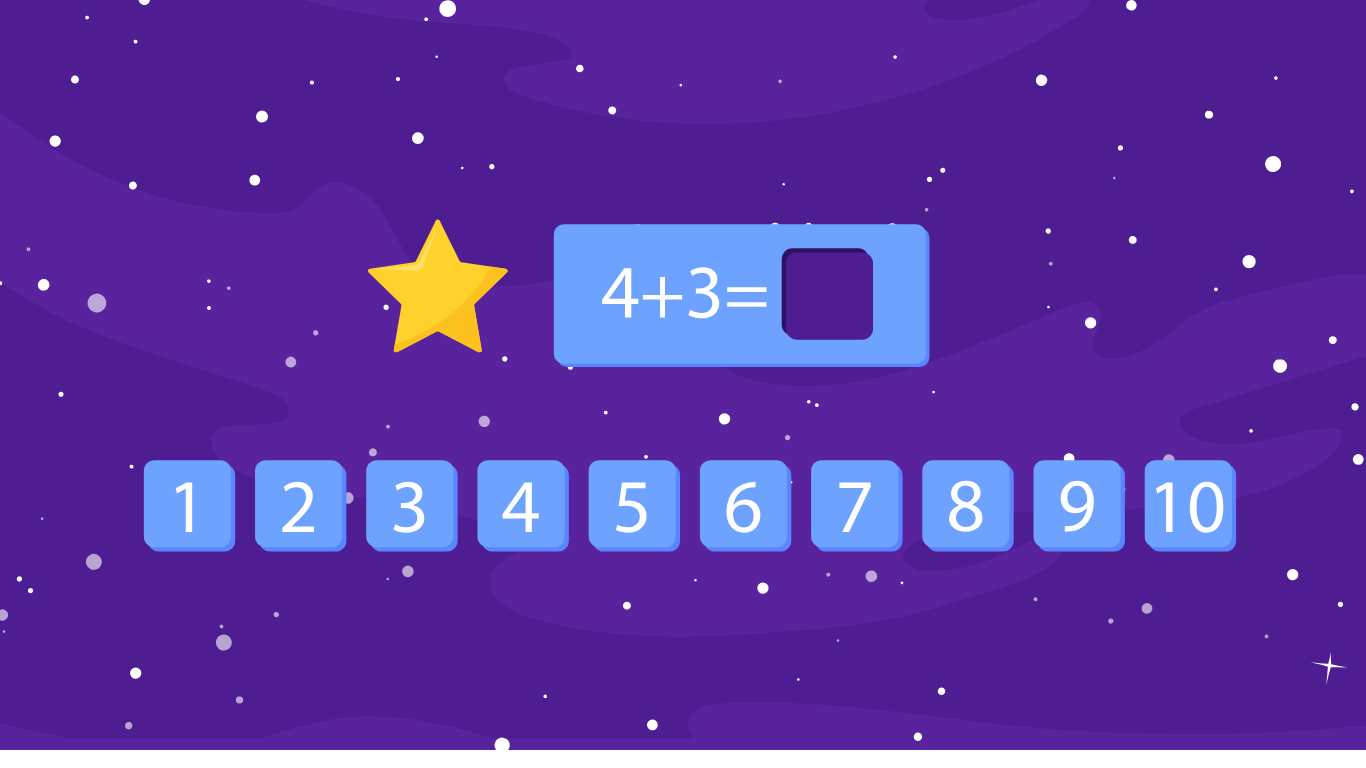
Let's explore the night sky! Solve math problems near the stars to open the secret space word.
Move the correct numbers into the boxes!
Let's explore the night sky! Solve math problems near the stars to open the secret space word.
Move the correct numbers into the boxes!
2
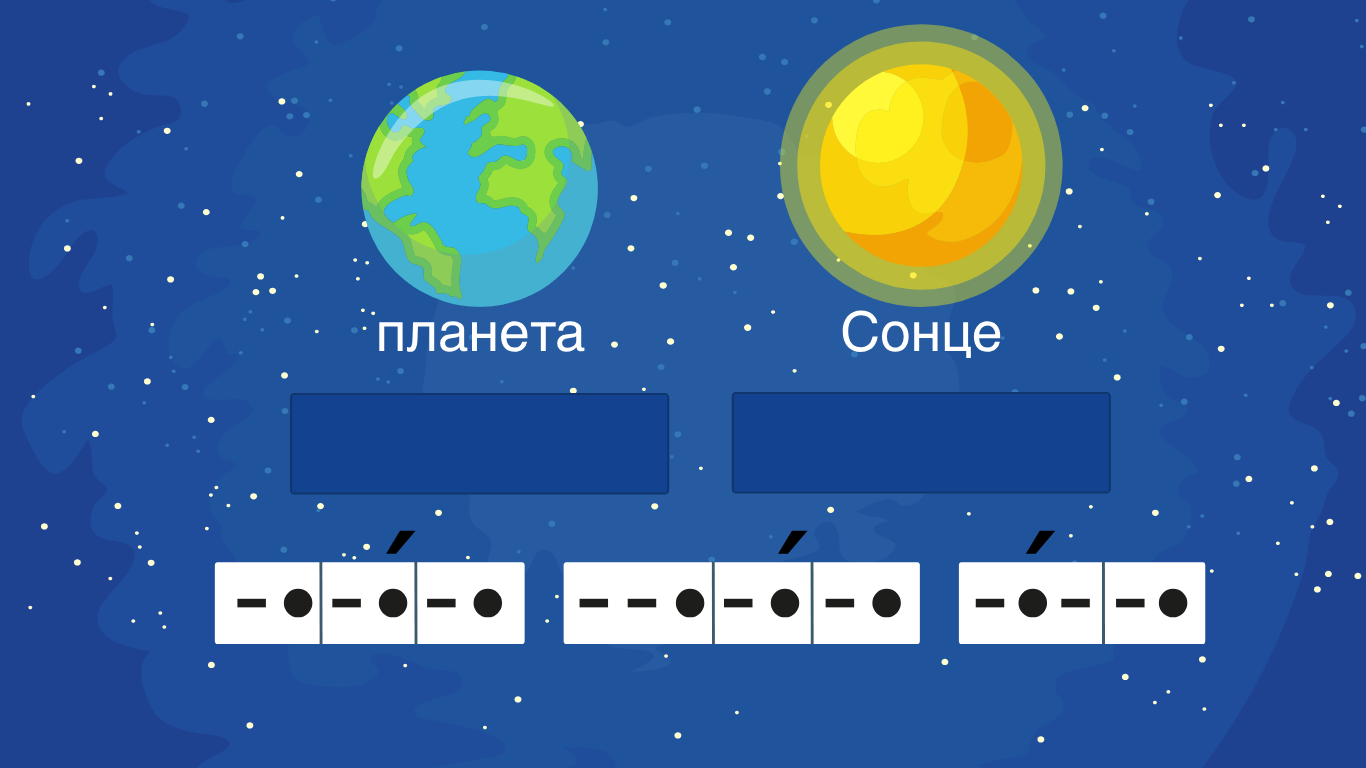
Move the sound schemes to the pictures.
And you will see interesting changes.
Move the sound schemes to the pictures.
And you will see interesting changes.
3
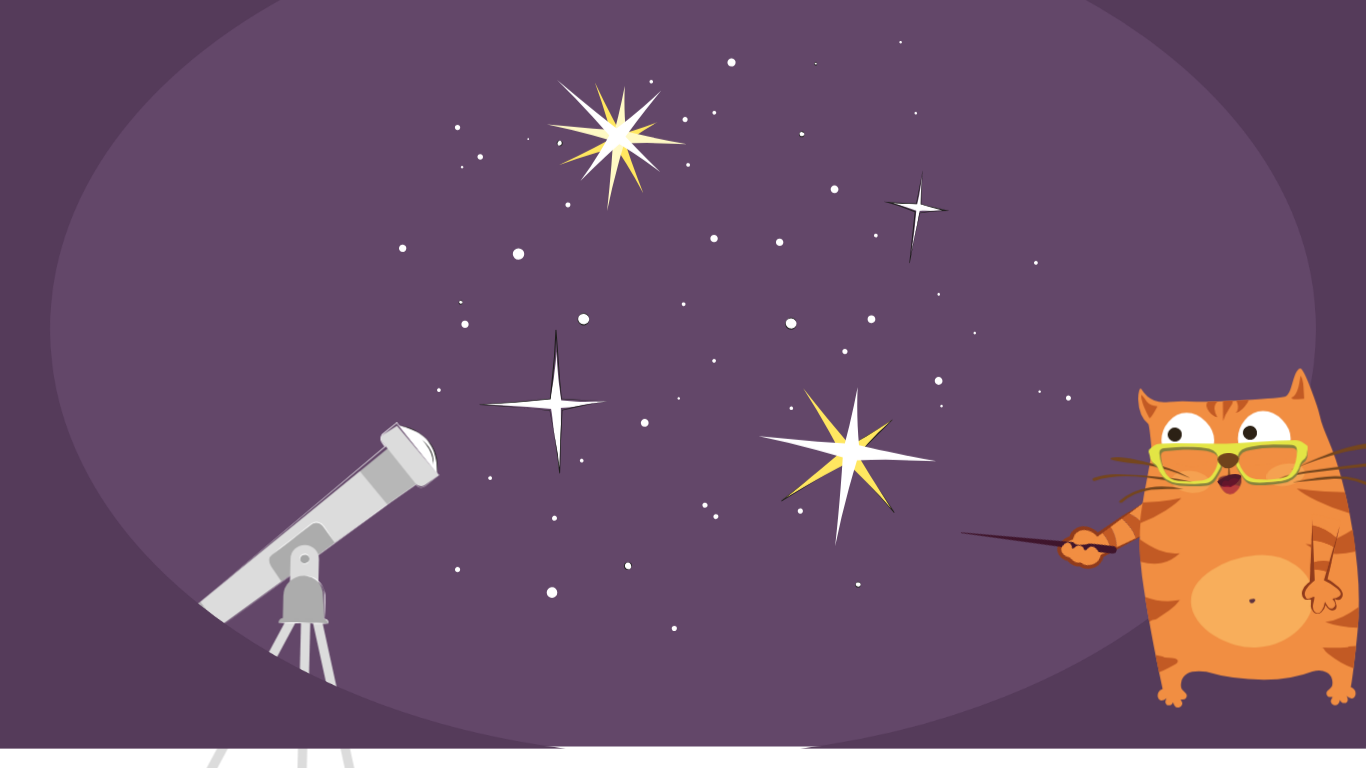
Let's look through the telescope!
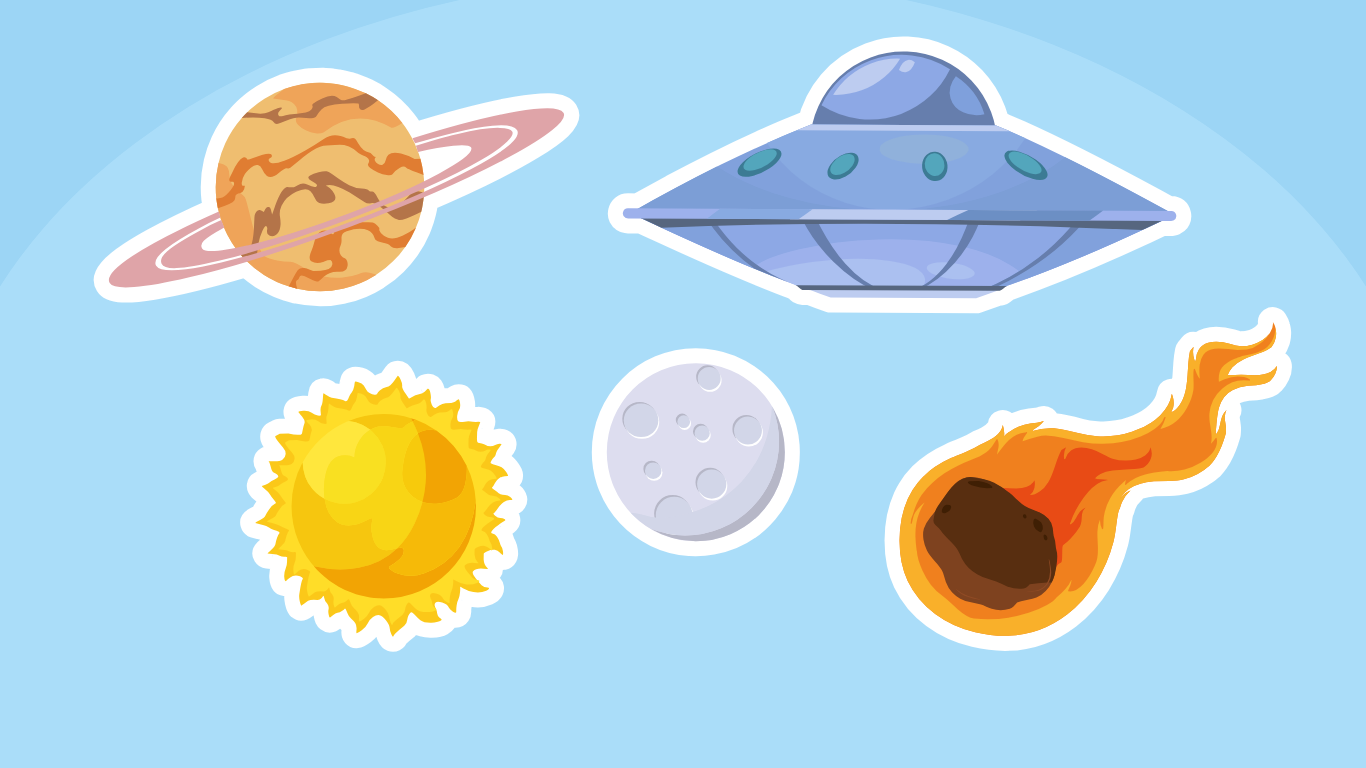
Deep in space we can see stars, comets, asteroids, planets and moons.
They are all called space objects, and they live in our giant Universe!
The Sun is the closest star to Earth.
It is a giant, hot, fiery ball that gives us light and heat.
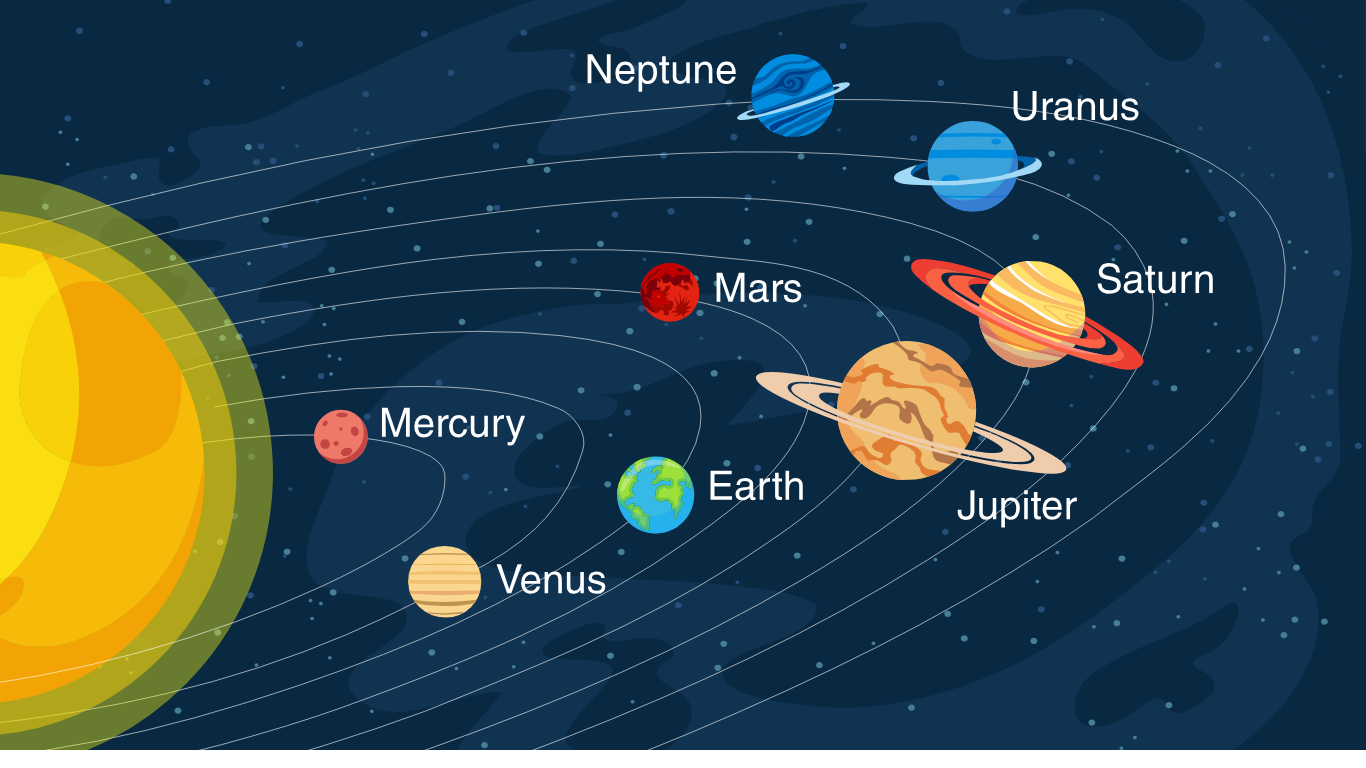
Eight planets move around the Sun:
Mercury,
Venus,
Earth,
Mars,
Jupiter,
Saturn,
Uranus,
Neptune.
Together, the Sun and the planets make our Solar System.
We live on the planet Earth, and our closest neighbor in space is our natural moon, the Moon!
Space hides many exciting secrets.
Brave astronauts and smart scientists study space objects every day to learn more about our Universe!
Let's look through the telescope!
Deep in space we can see stars, comets, asteroids, planets and moons.
They are all called space objects, and they live in our giant Universe!
The Sun is the closest star to Earth.
It is a giant, hot, fiery ball that gives us light and heat.
Eight planets move around the Sun:
Mercury,
Venus,
Earth,
Mars,
Jupiter,
Saturn,
Uranus,
Neptune.
Together, the Sun and the planets make our Solar System.
We live on the planet Earth, and our closest neighbor in space is our natural moon, the Moon!
Space hides many exciting secrets.
Brave astronauts and smart scientists study space objects every day to learn more about our Universe!
4
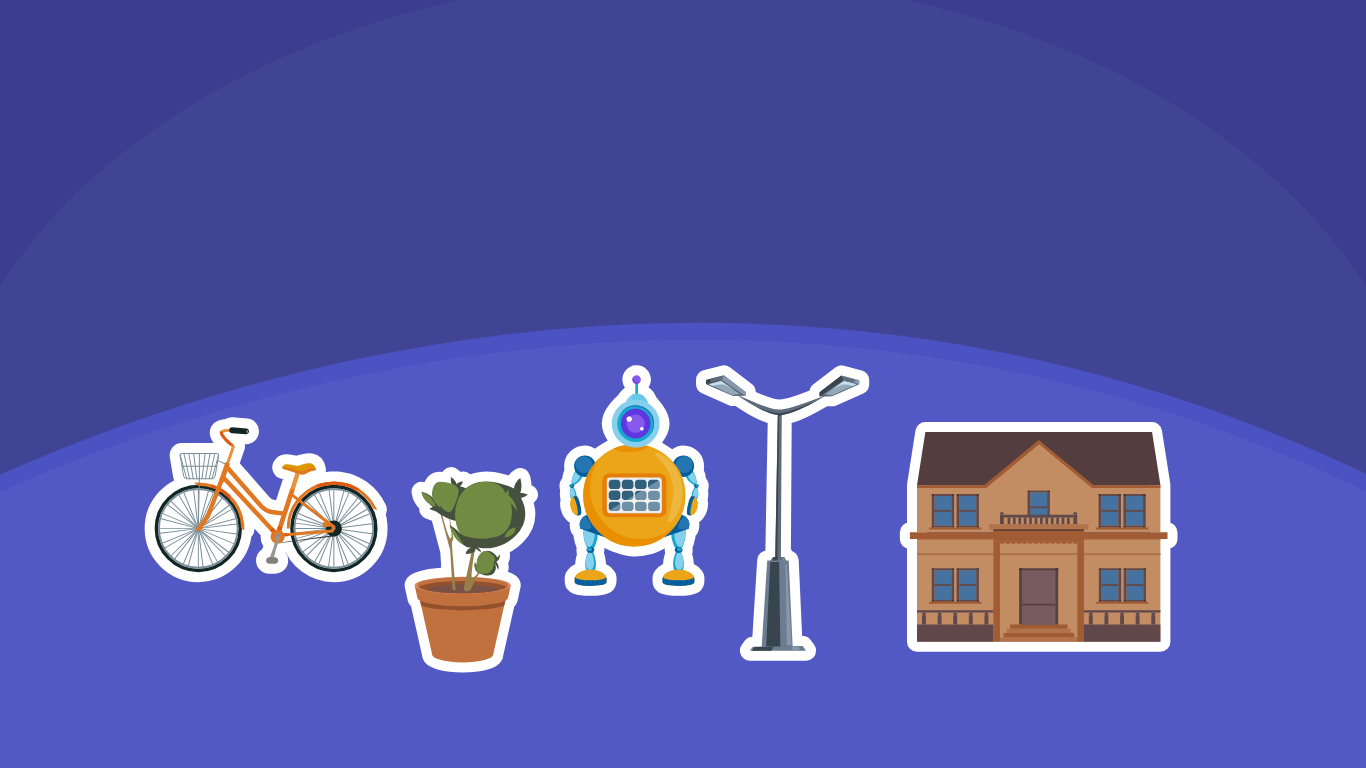
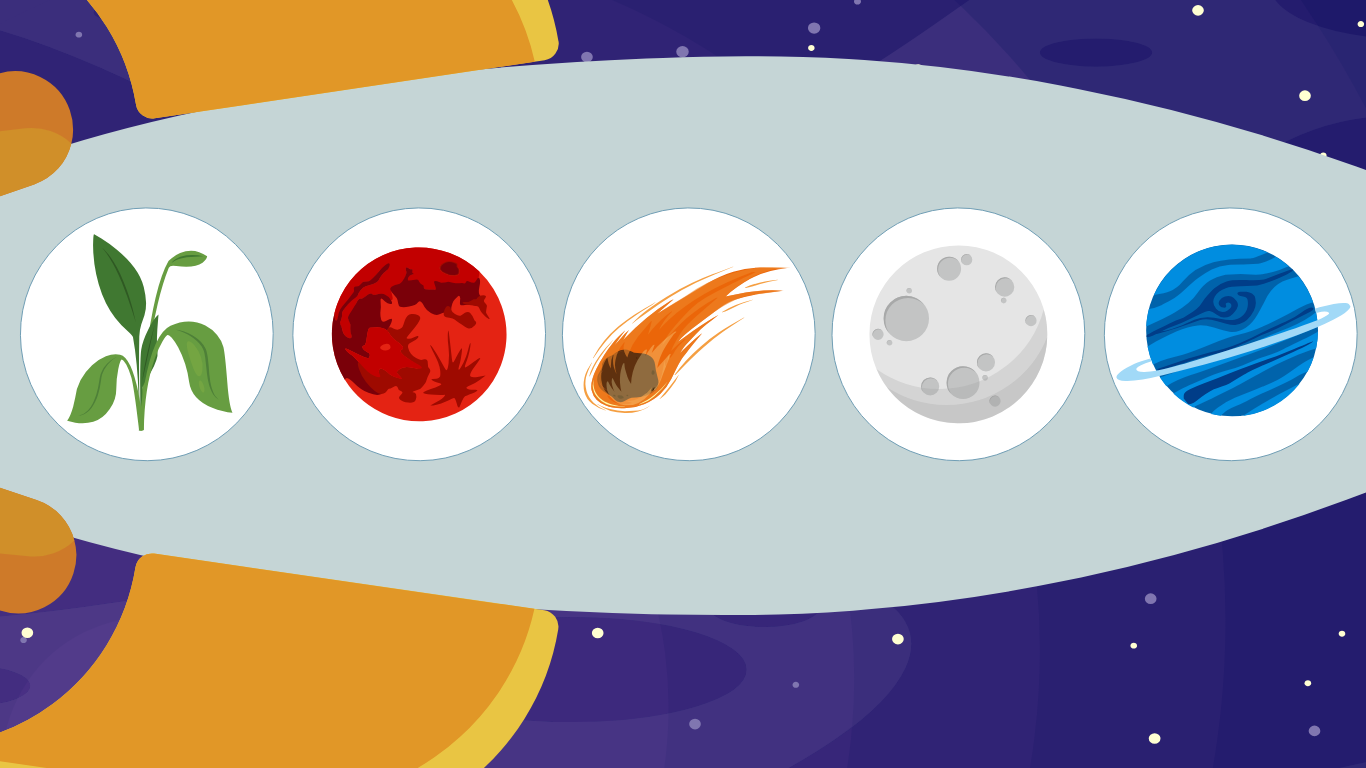
Think, which object is extra?
Choose it.
Think, which object is extra?
Choose it.
5
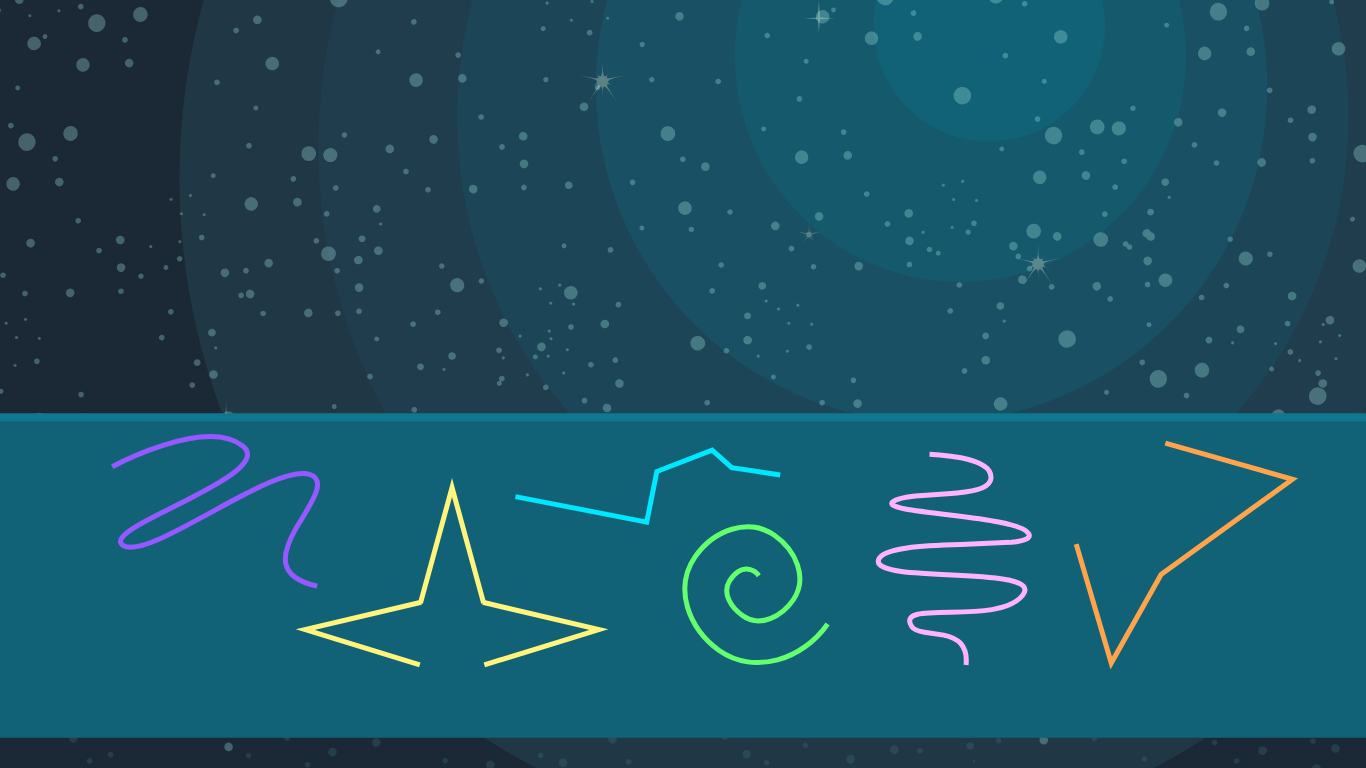
Find out what Amelia will see in the telescope.
Look at the geometric shapes.
Move all the broken lines.
Find out what Amelia will see in the telescope.
Look at the geometric shapes.
Move all the broken lines.
6
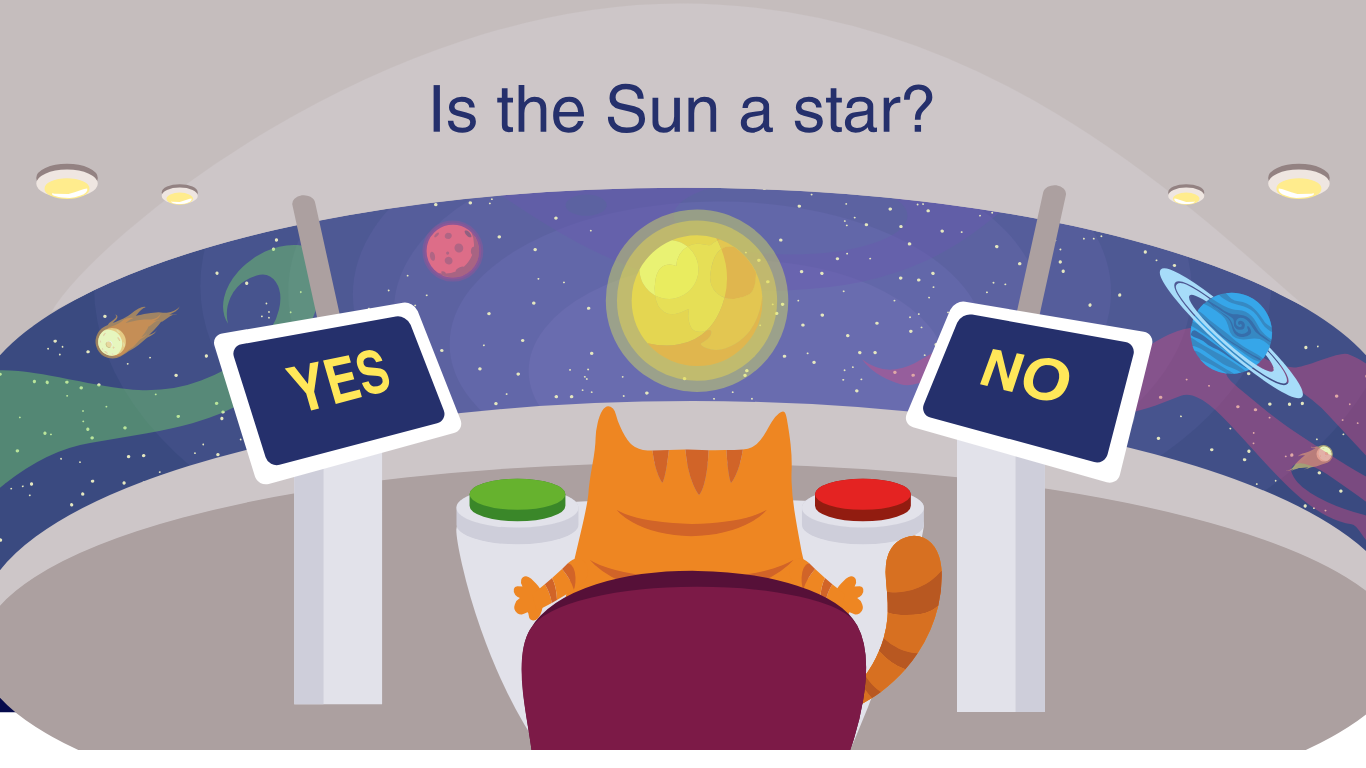
Help Mila choose the correct answer "yes" or "no".
Is the Sun a star?
Help Mila choose the correct answer "yes" or "no".
Is the Sun a star?
7
Find and choose the sixth planet from the Sun.
Find and choose the sixth planet from the Sun.
8
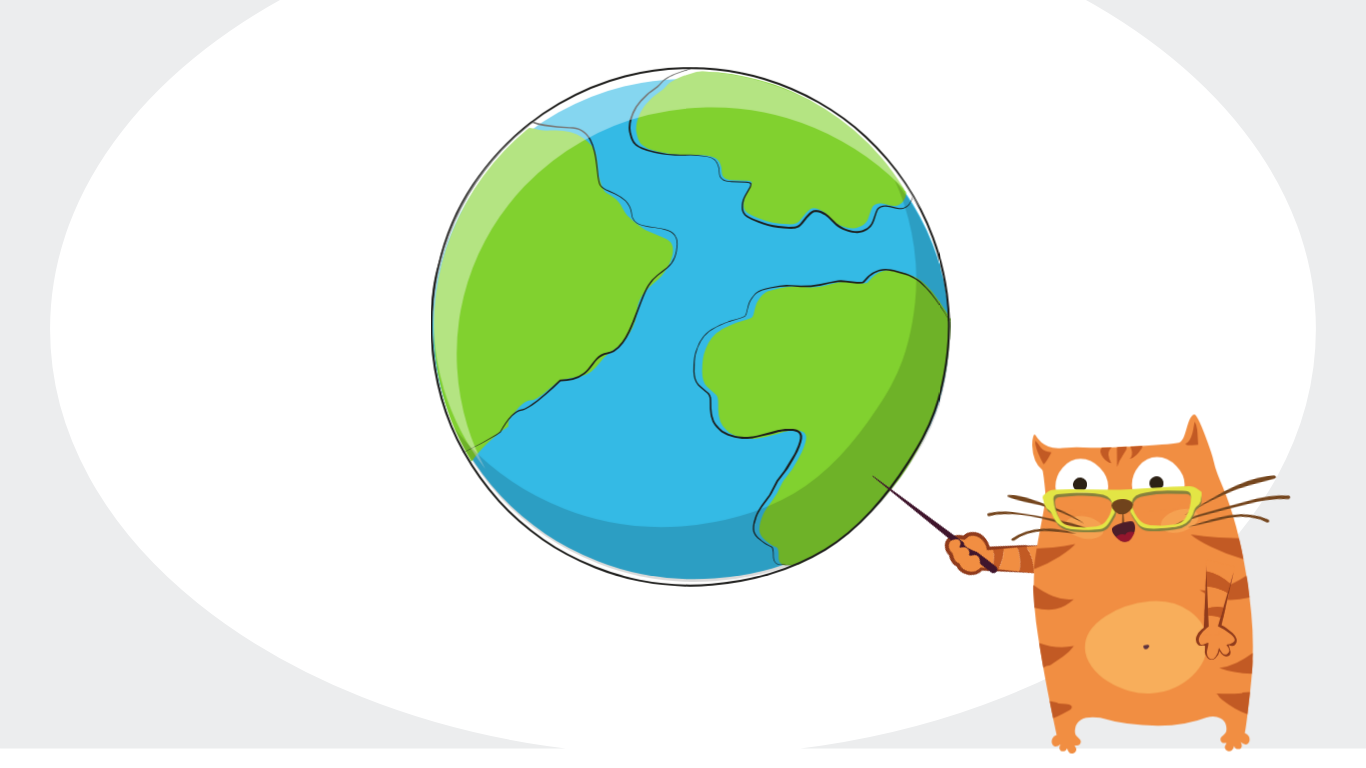
During space flights, people saw that the Earth has the shape of a ball.
It looks blue because most of it is covered with water.
It also looks green because of plants.
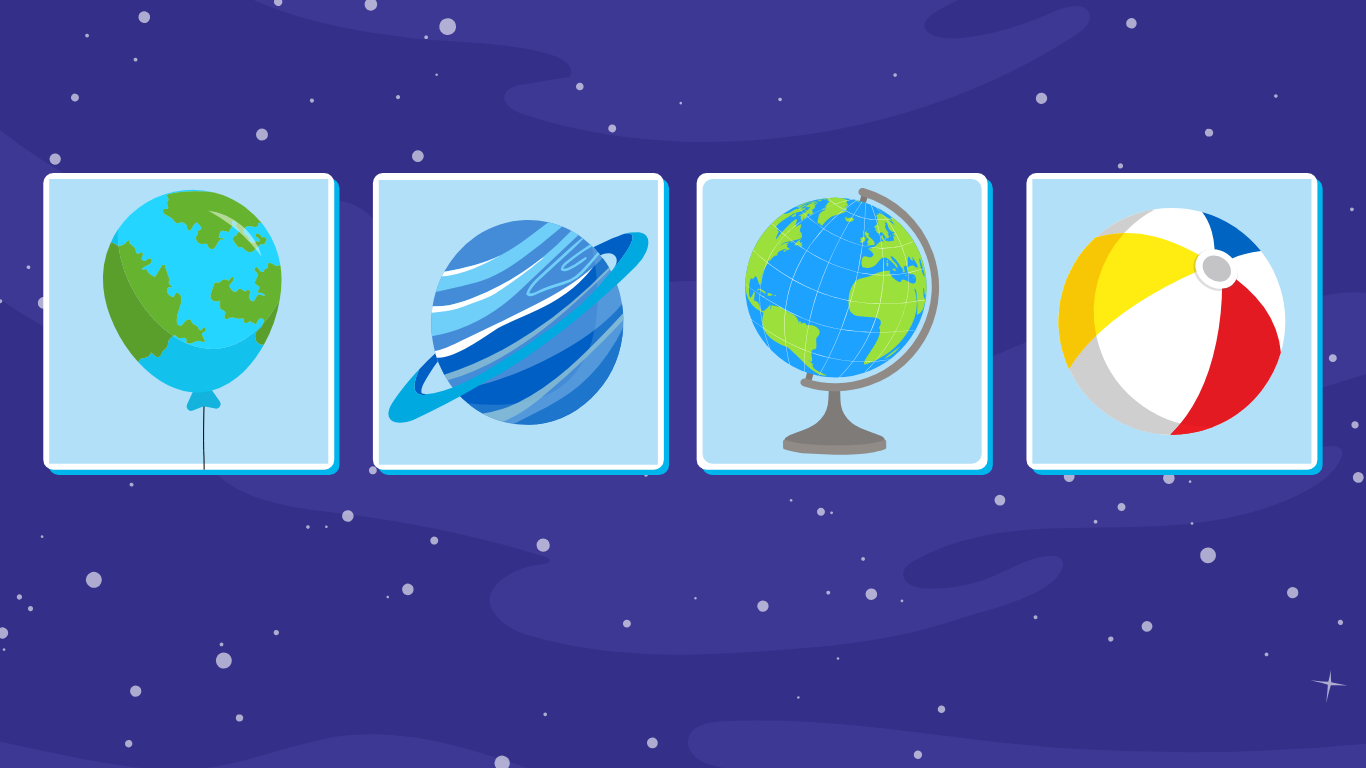
This is a globe, a small model of our planet.
The Earth always spins around its axis.
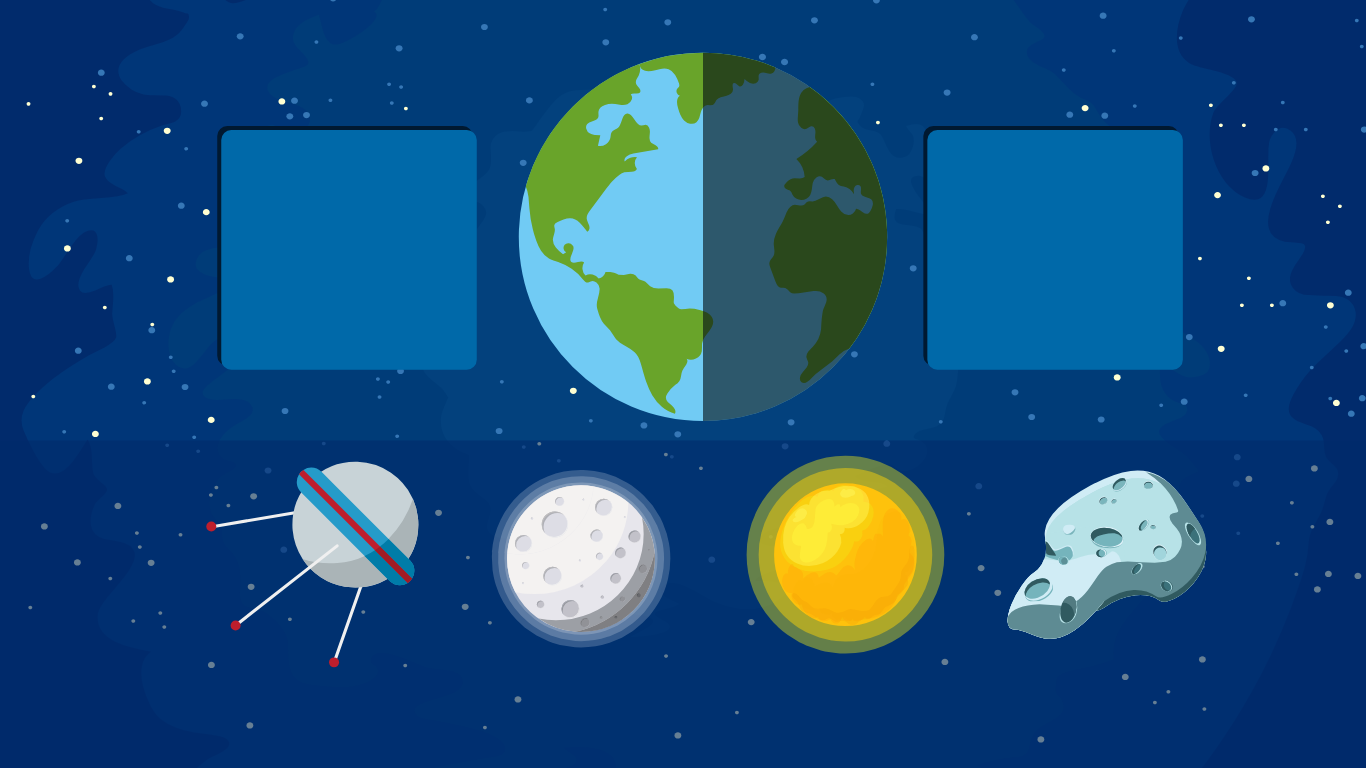
When it spins, the Sun shines on one side of our planet, leaving the other side dark.
On the light side, it is day, and on the dark side, it is night.
A bright day and a dark night together make one full day!
It lasts 24 hours.
During space flights, people saw that the Earth has the shape of a ball.
It looks blue because most of it is covered with water.
It also looks green because of plants.
This is a globe, a small model of our planet.
The Earth always spins around its axis.
When it spins, the Sun shines on one side of our planet, leaving the other side dark.
On the light side, it is day, and on the dark side, it is night.
A bright day and a dark night together make one full day!
It lasts 24 hours.
9
Choose the small model of Earth.
Choose the small model of Earth.
10
Think, on which part of the Earth ball is day, and on which is night?
Move the right space bodies.
Think, on which part of the Earth ball is day, and on which is night?
Move the right space bodies.
11
We can see the Sun in the day when the sky is clear.
It gives us light and heat, but this changes during the day!
In the morning, the Sun rises low in the sky, so it does not feel very warm yet.
At noon, the Sun is at its highest point in the sky.
At this time, it gives us the most light and heat.
In the evening, the Sun goes low again, and the ground starts to cool down.
We can see the Sun in the day when the sky is clear.
It gives us light and heat, but this changes during the day!
In the morning, the Sun rises low in the sky, so it does not feel very warm yet.
At noon, the Sun is at its highest point in the sky.
At this time, it gives us the most light and heat.
In the evening, the Sun goes low again, and the ground starts to cool down.
12
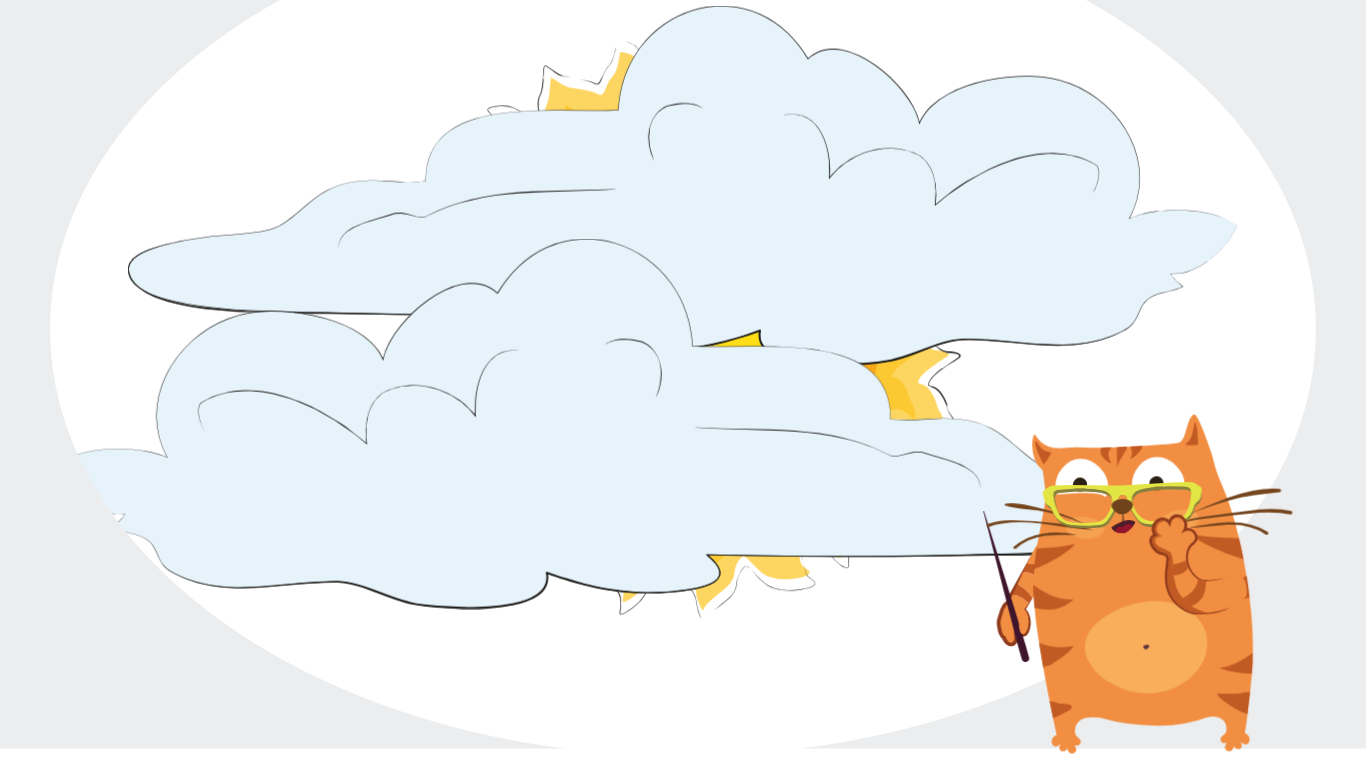
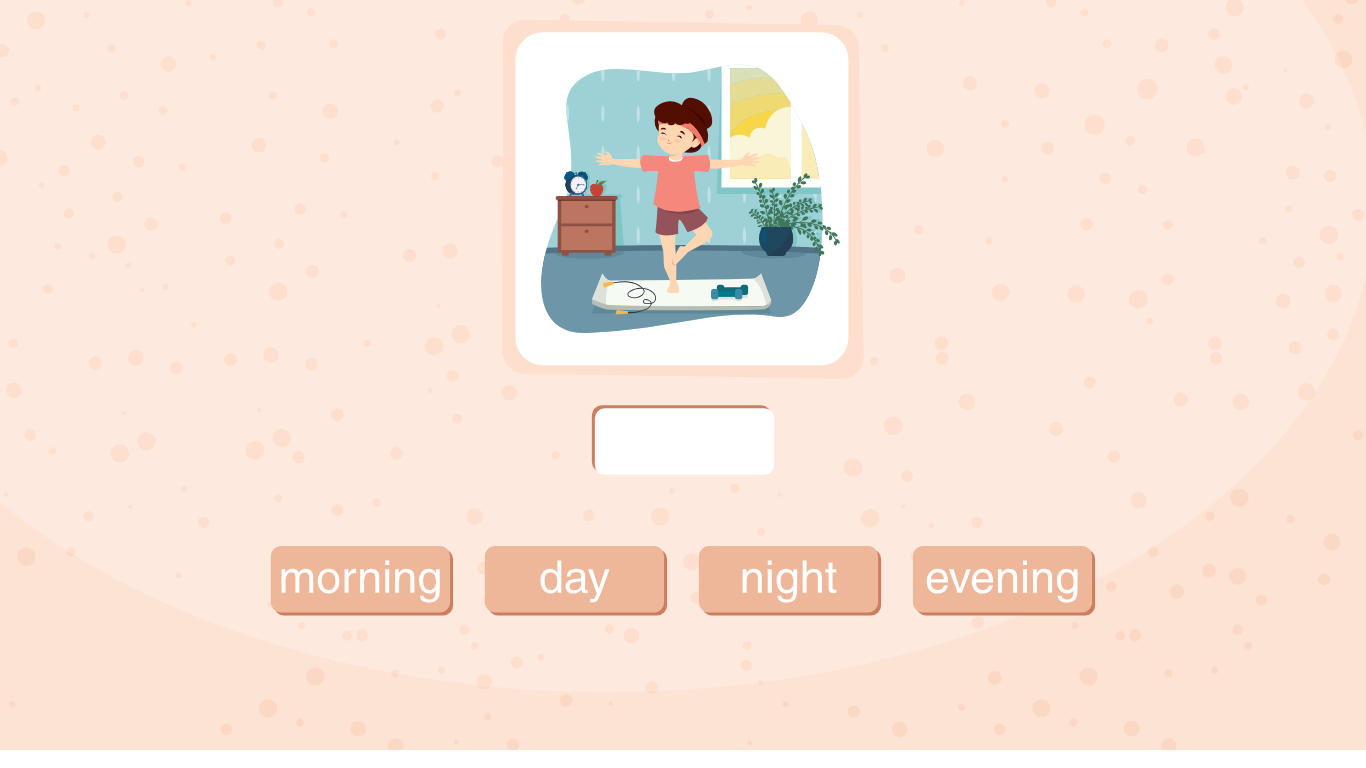
Look at the picture and find which part of the day is shown.
Move the right word to the picture.
Look at the picture and find which part of the day is shown.
Move the right word to the picture.
13
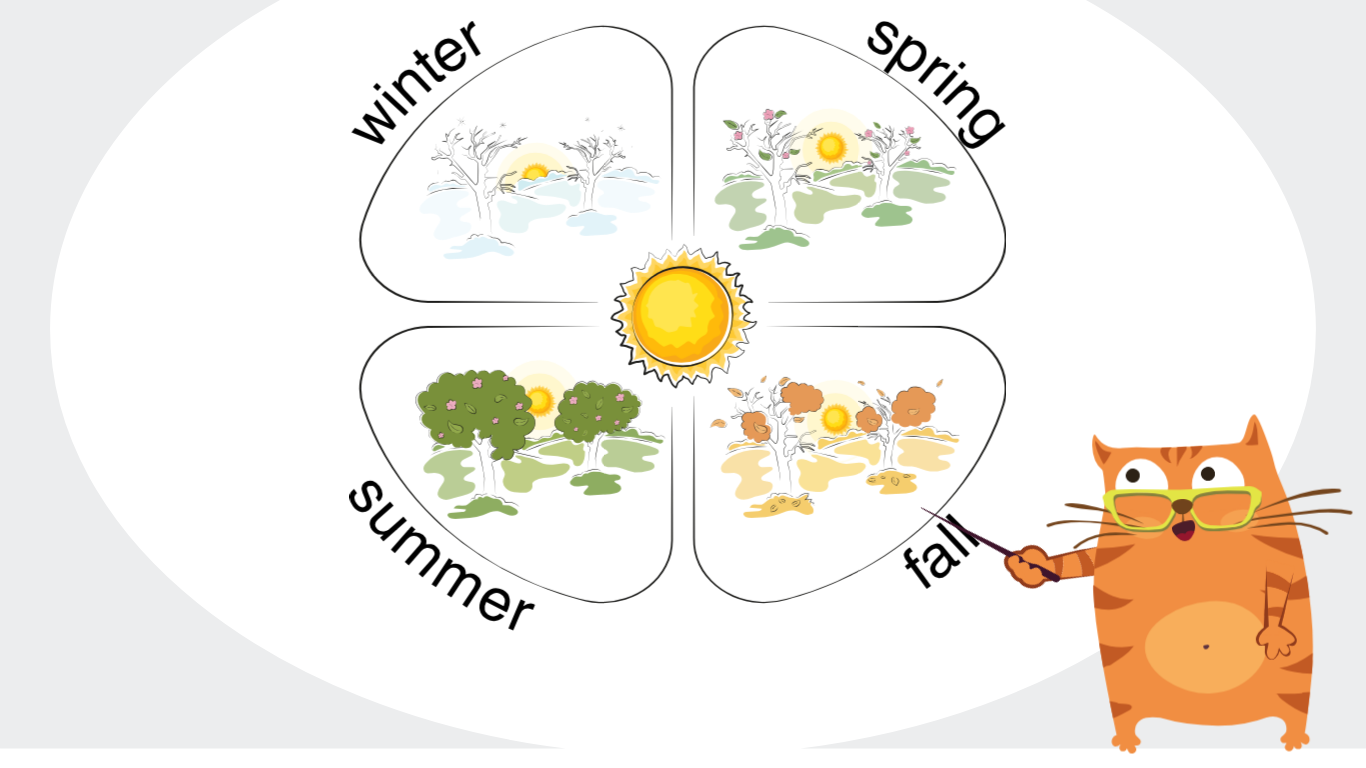
The Sun shines and warms differently in different seasons.
In winter, the days are the shortest.
The Sun's rays barely warm the ground, so winter is the coldest season.
In spring, the days get longer.
The Sun gives more light and heat, and it gets warmer outside.
In summer, the days are the longest and there is the most sunlight.
That is why summer is the warmest season!
In autumn, the days get shorter.
The Sun gives less light and heat, so the weather gets cooler.
The Sun shines and warms differently in different seasons.
In winter, the days are the shortest.
The Sun's rays barely warm the ground, so winter is the coldest season.
In spring, the days get longer.
The Sun gives more light and heat, and it gets warmer outside.
In summer, the days are the longest and there is the most sunlight.
That is why summer is the warmest season!
In autumn, the days get shorter.
The Sun gives less light and heat, so the weather gets cooler.
14
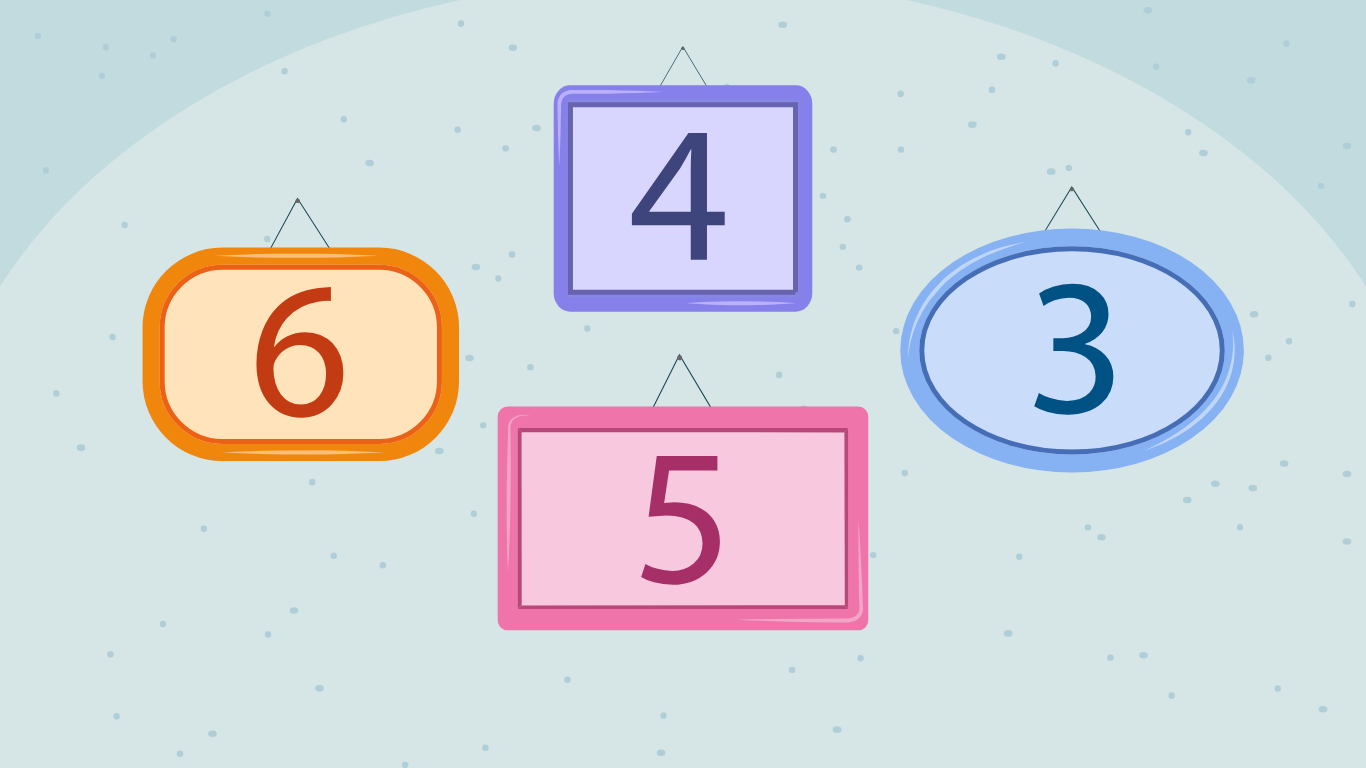
Choose the number that matches the number of seasons.
Choose the number that matches the number of seasons.
15
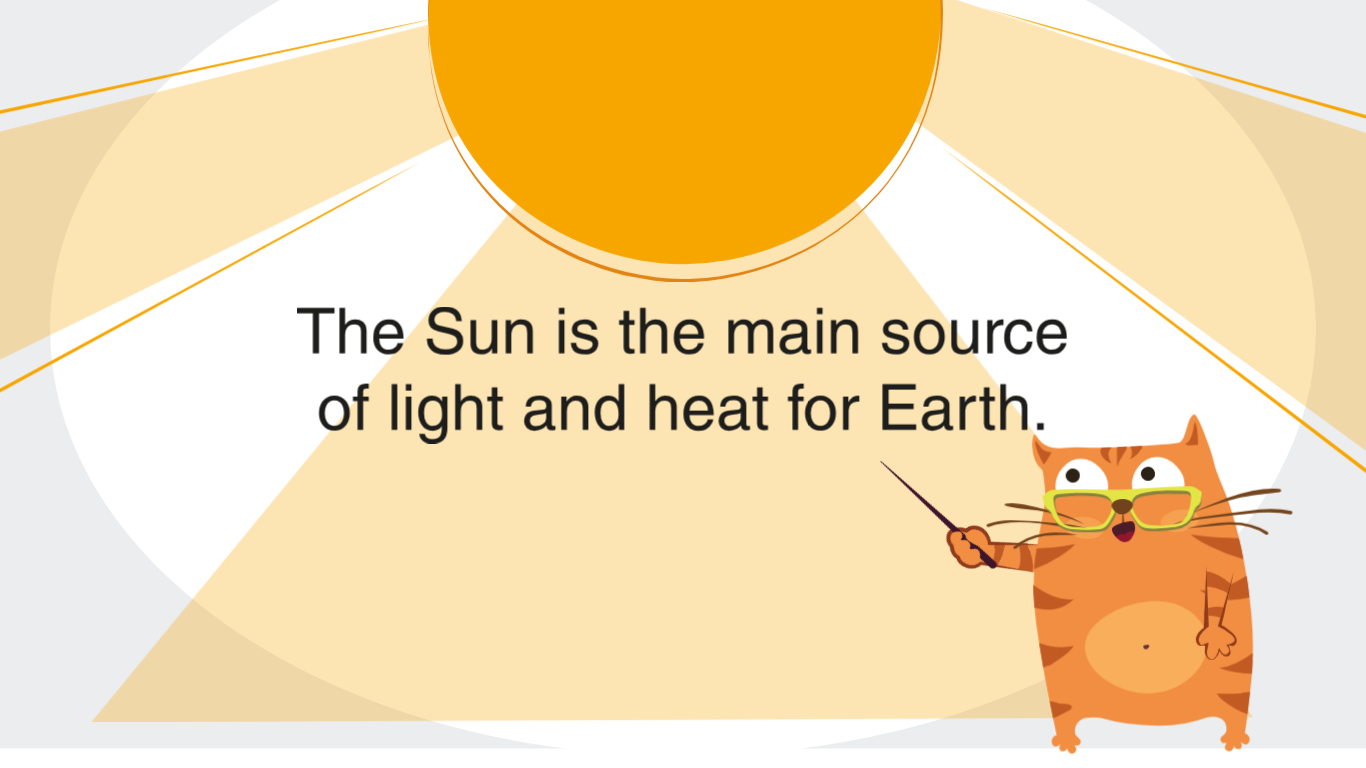
The Sun is the main source of light and heat on Earth.
Without sunlight and warm, plants, animals, and people could not survive.
We can see sunlight with our eyes and we can feel its warmth on our skin.
People have learned to turn sunlight into electricity!
They made solar panels to power many things around us.
Solar panels help work home appliances, toys, cars, street lights, and even satellites that go around our planet.
The Sun is the main source of light and heat on Earth.
Without sunlight and warm, plants, animals, and people could not survive.
We can see sunlight with our eyes and we can feel its warmth on our skin.
People have learned to turn sunlight into electricity!
They made solar panels to power many things around us.
Solar panels help work home appliances, toys, cars, street lights, and even satellites that go around our planet.
16
Choose the space body that is the main source of light and heat on Earth.
Choose the space body that is the main source of light and heat on Earth.
17
Move up everything that can work using solar energy.
Move up everything that can work using solar energy.