Theme Tasks catalog
Problems about decreasing a number by several units
• You will improve your skills in solving problems about increasing a number by several units;
• You will learn to solve problems about decreasing a number by several units;
• You will practice choosing the right solutions for problems;
• You will improve your skills in adding and subtracting numbers up to 10;
• You will practice finding the sum of three addends and the difference with two subtrahends;
• You will repeat the composition of numbers 6, 7, 8, 10.
• You will learn to solve problems about decreasing a number by several units;
• You will practice choosing the right solutions for problems;
• You will improve your skills in adding and subtracting numbers up to 10;
• You will practice finding the sum of three addends and the difference with two subtrahends;
• You will repeat the composition of numbers 6, 7, 8, 10.
1
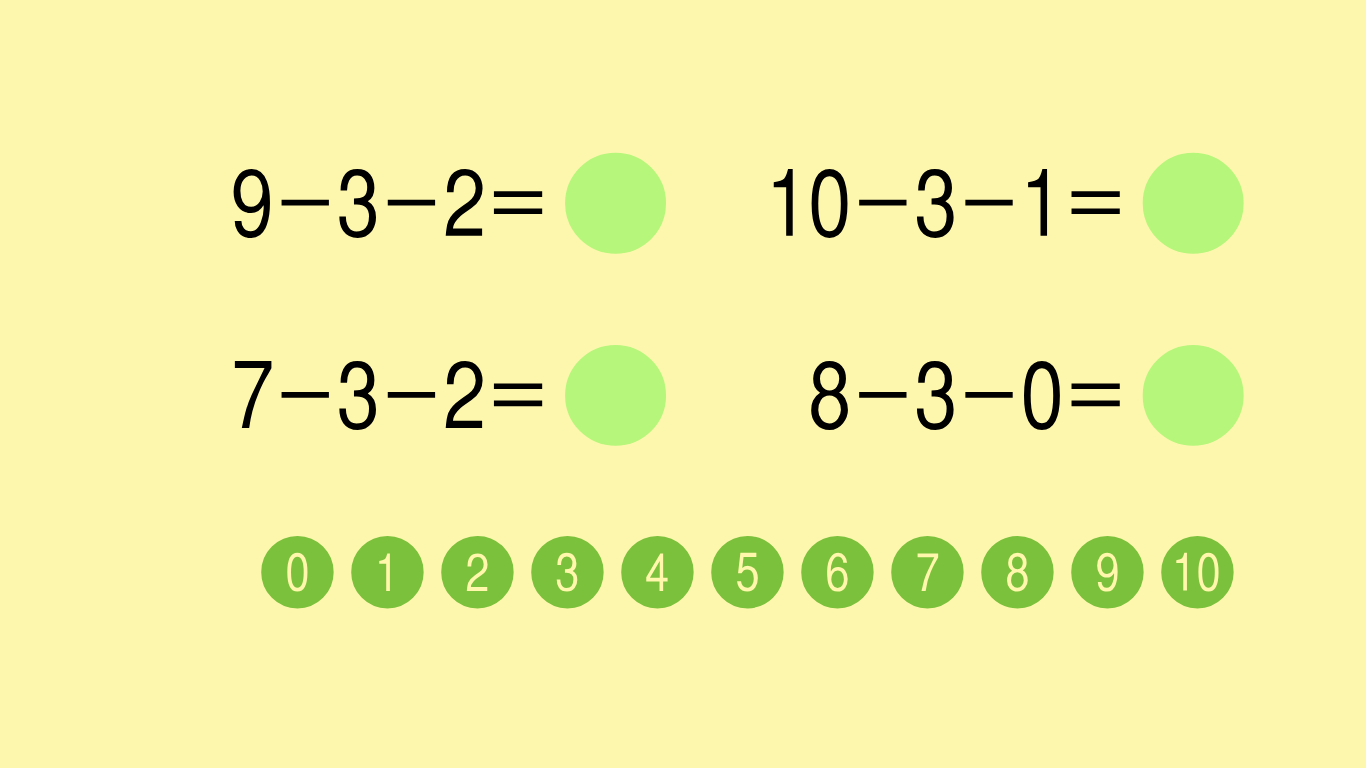
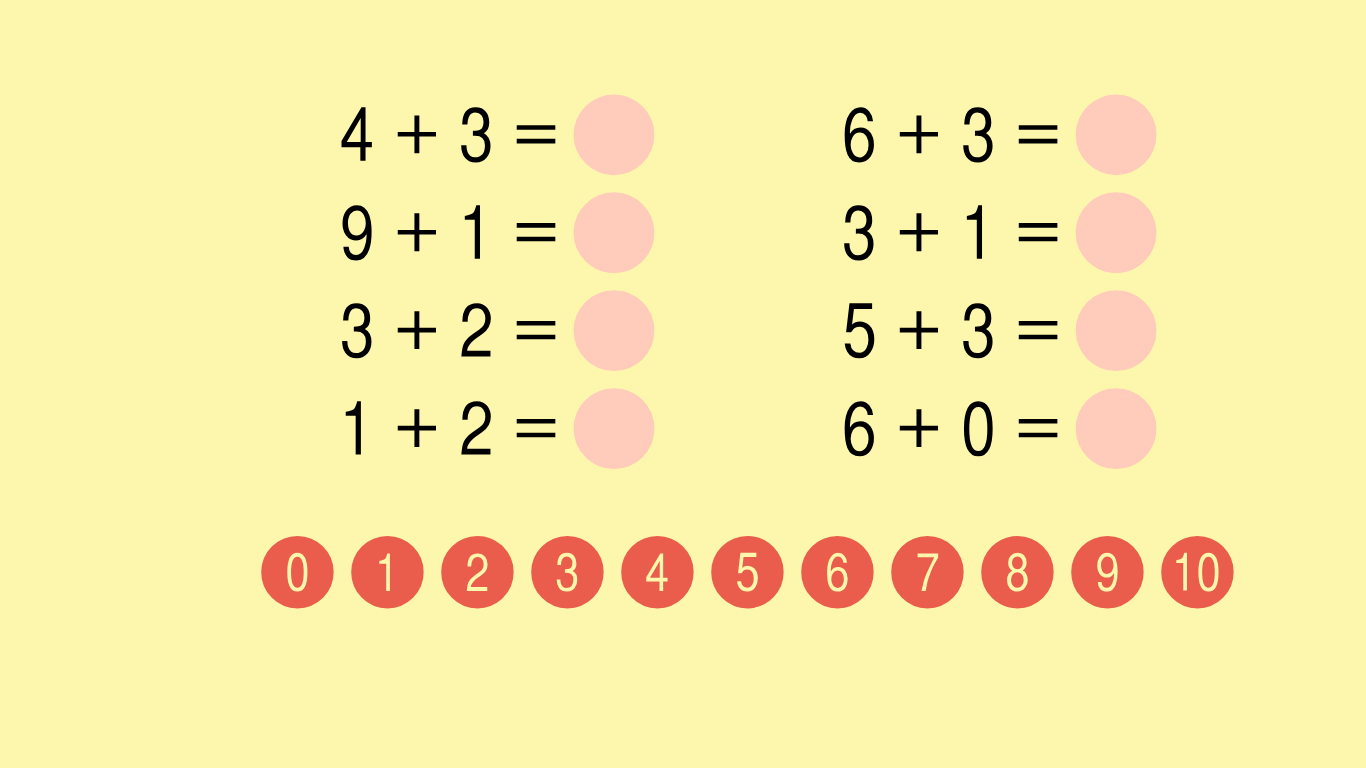
Calculate. Choose the correct numbers.
Calculate. Choose the correct numbers.
2
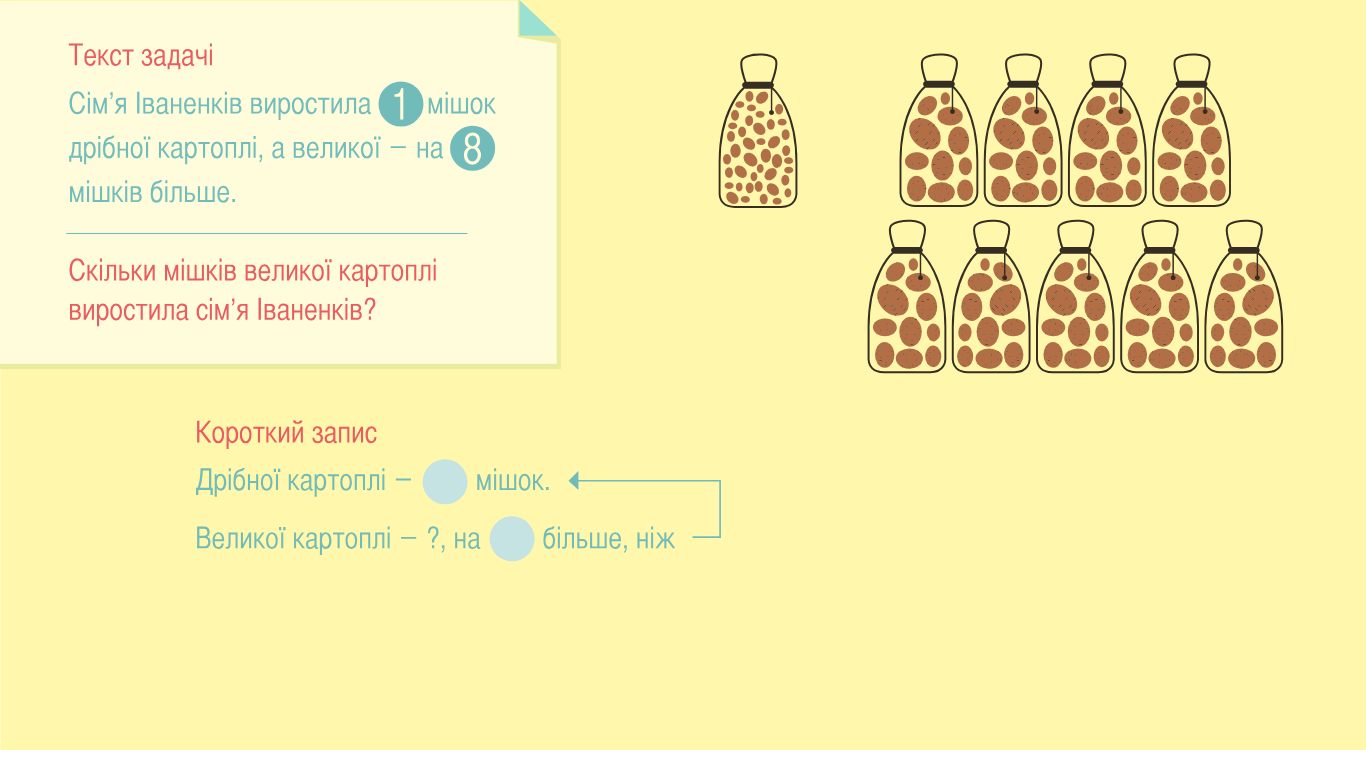
Make a short note and solve the problem.
The Ivanenko family grew 1 sack of small potatoes,
and big potatoes — 8 sacks more.
How many sacks of big potatoes did the Ivanenko family grow?
Make a short note and solve the problem.
The Ivanenko family grew 1 sack of small potatoes,
and big potatoes — 8 sacks more.
How many sacks of big potatoes did the Ivanenko family grow?
3
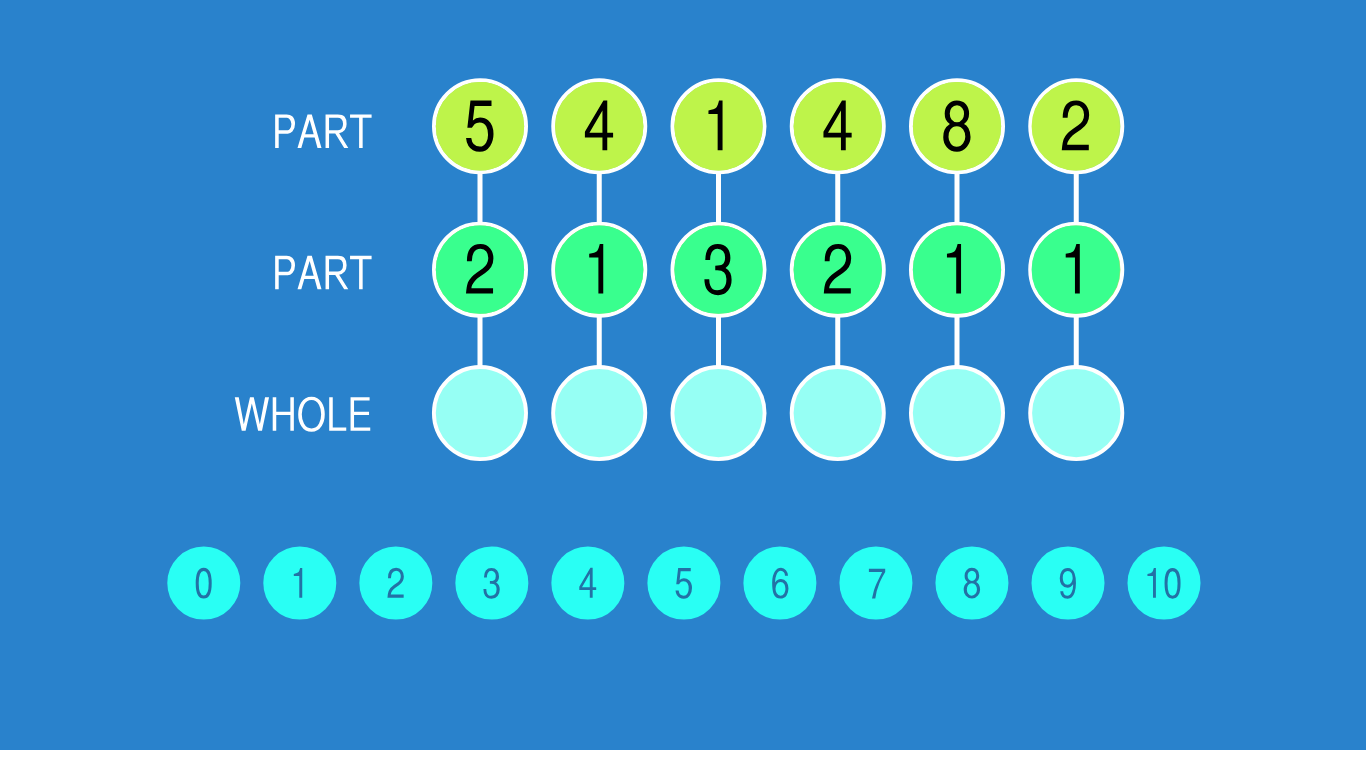
Add the parts to find the whole. Drag the correct numbers.
Add the parts to find the whole. Drag the correct numbers.
4
Listen to the story problem.
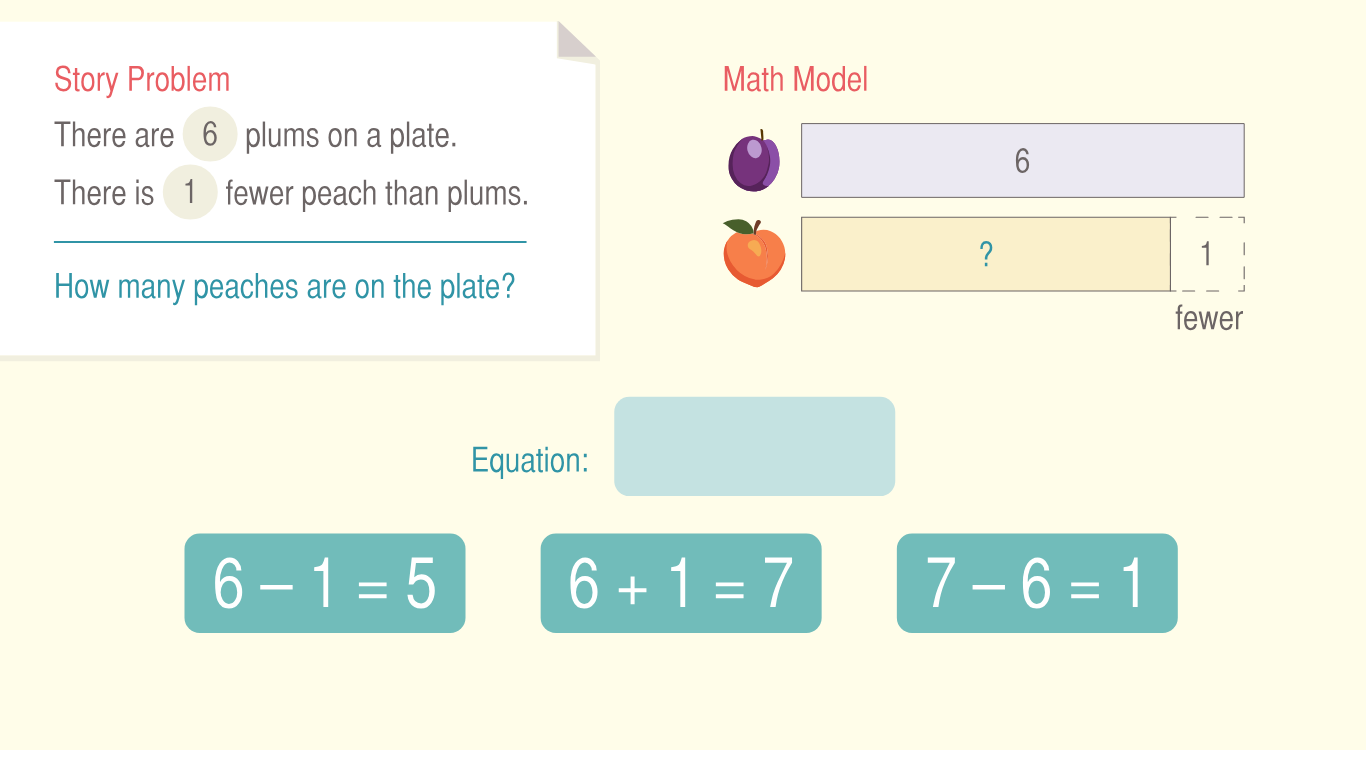
There are 6 plums on a plate. There is 1 fewer peach than plums.
How many peaches are on the plate?
Drag the correct equation to the problem.
Listen to the story problem.
There are 6 plums on a plate. There is 1 fewer peach than plums.
How many peaches are on the plate?
Drag the correct equation to the problem.
5
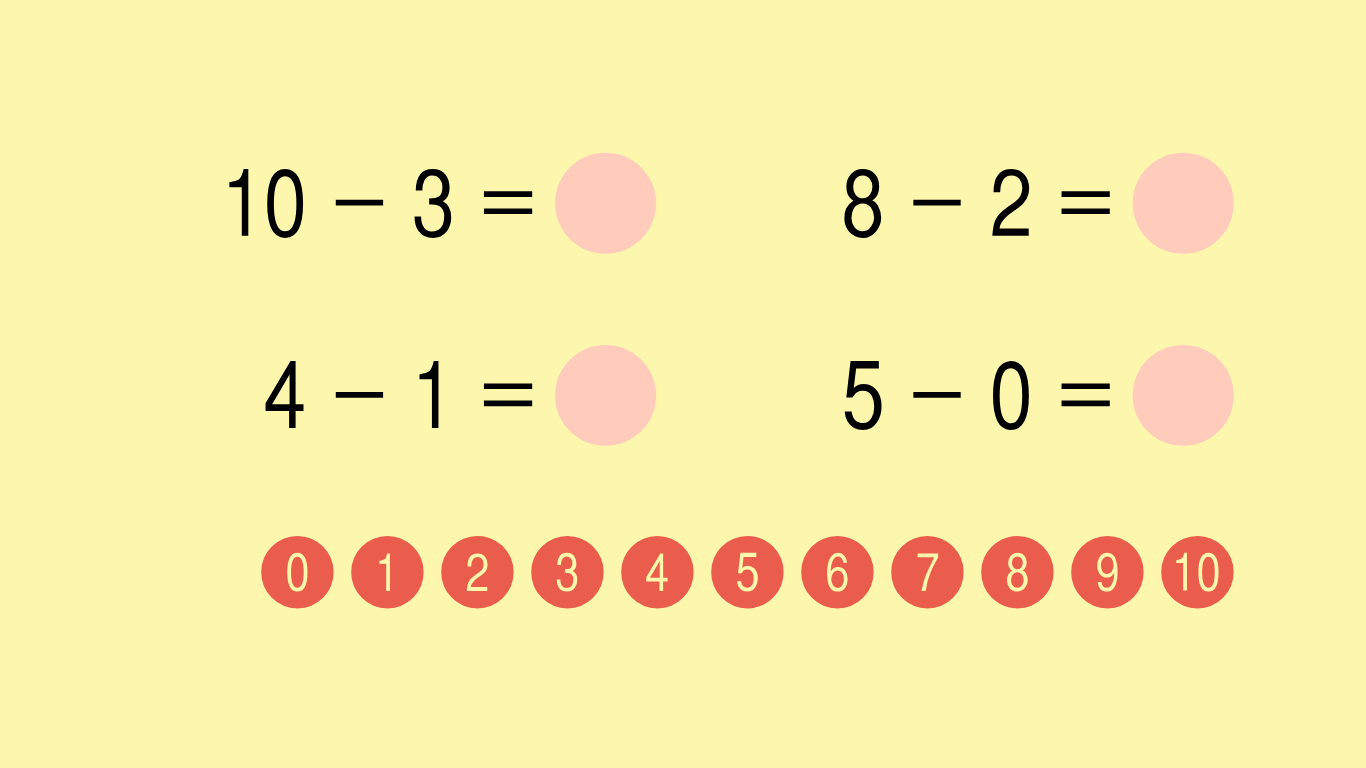
Calculate. Choose the correct numbers.
Calculate. Choose the correct numbers.
6
Listen to the story problem.
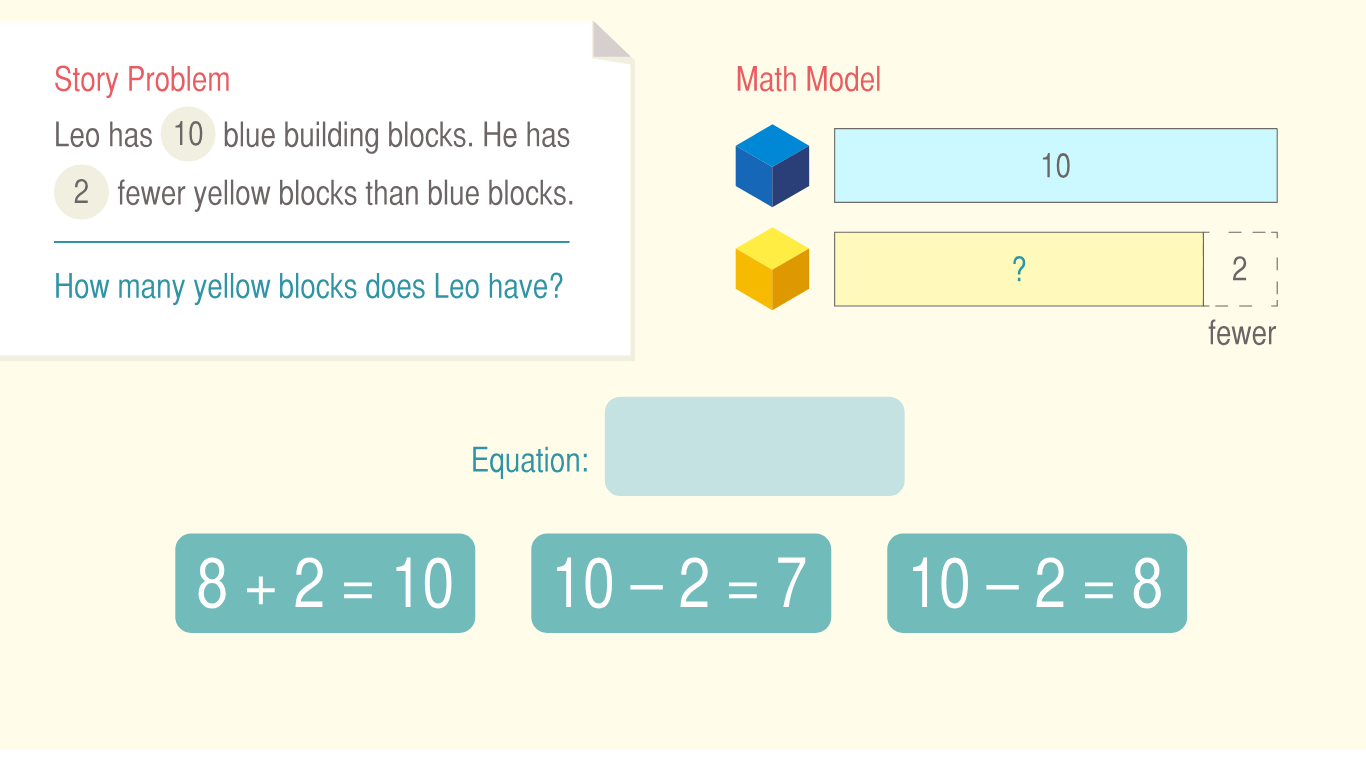
Leo has 10 blue Lego bricks. He has 2 fewer yellow bricks than blue bricks.
How many yellow bricks does Leo have?
Drag the correct equation to the problem.
Listen to the story problem.
Leo has 10 blue Lego bricks. He has 2 fewer yellow bricks than blue bricks.
How many yellow bricks does Leo have?
Drag the correct equation to the problem.
7
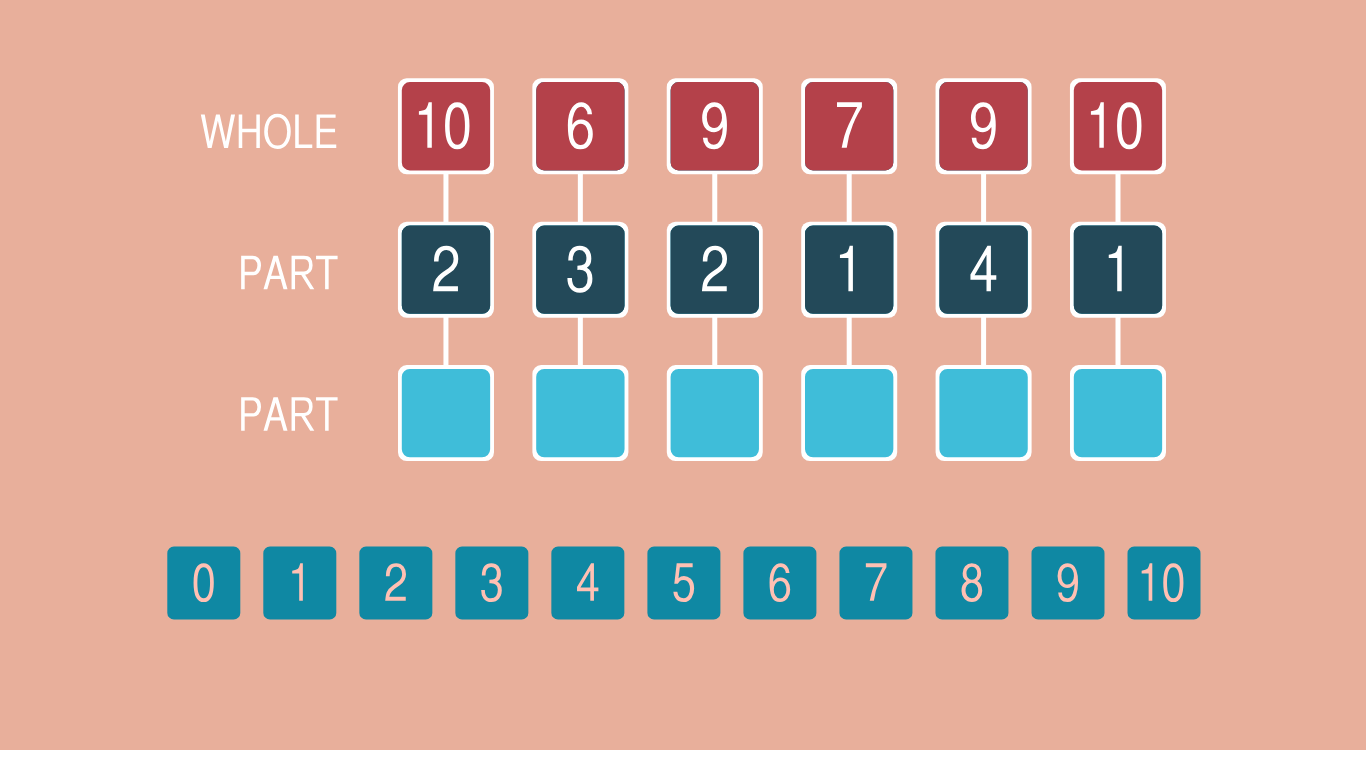
Subtract to find the missing part. Drag the correct numbers.
Subtract to find the missing part. Drag the correct numbers.
8
Listen to the story problem.
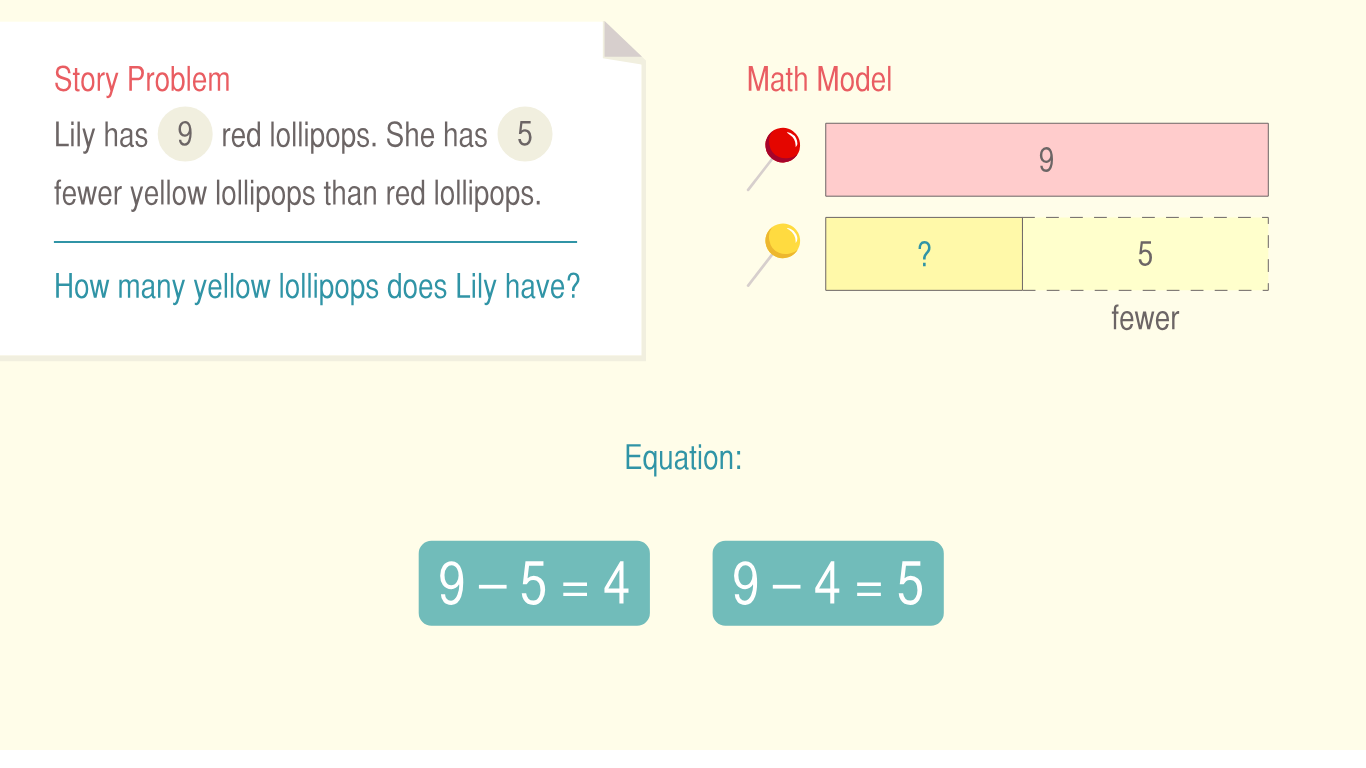
Lily has 9 red lollipops. She has 5 fewer yellow lollipops than red lollipops.
How many yellow lollipops does Lily have?
Choose the correct equation for the problem.
Listen to the story problem.
Lily has 9 red lollipops. She has 5 fewer yellow lollipops than red lollipops.
How many yellow lollipops does Lily have?
Choose the correct equation for the problem.
9
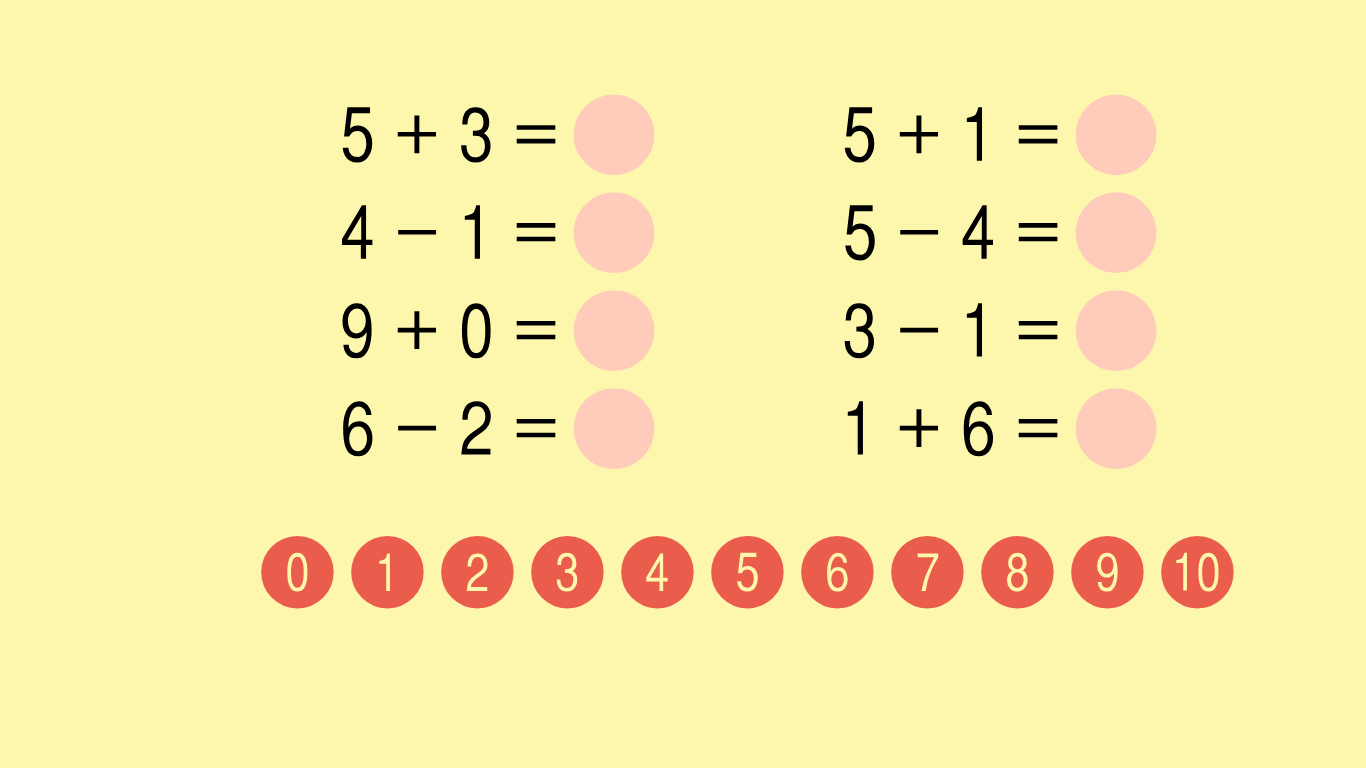
Calculate. Choose the correct numbers.
Calculate. Choose the correct numbers.
10
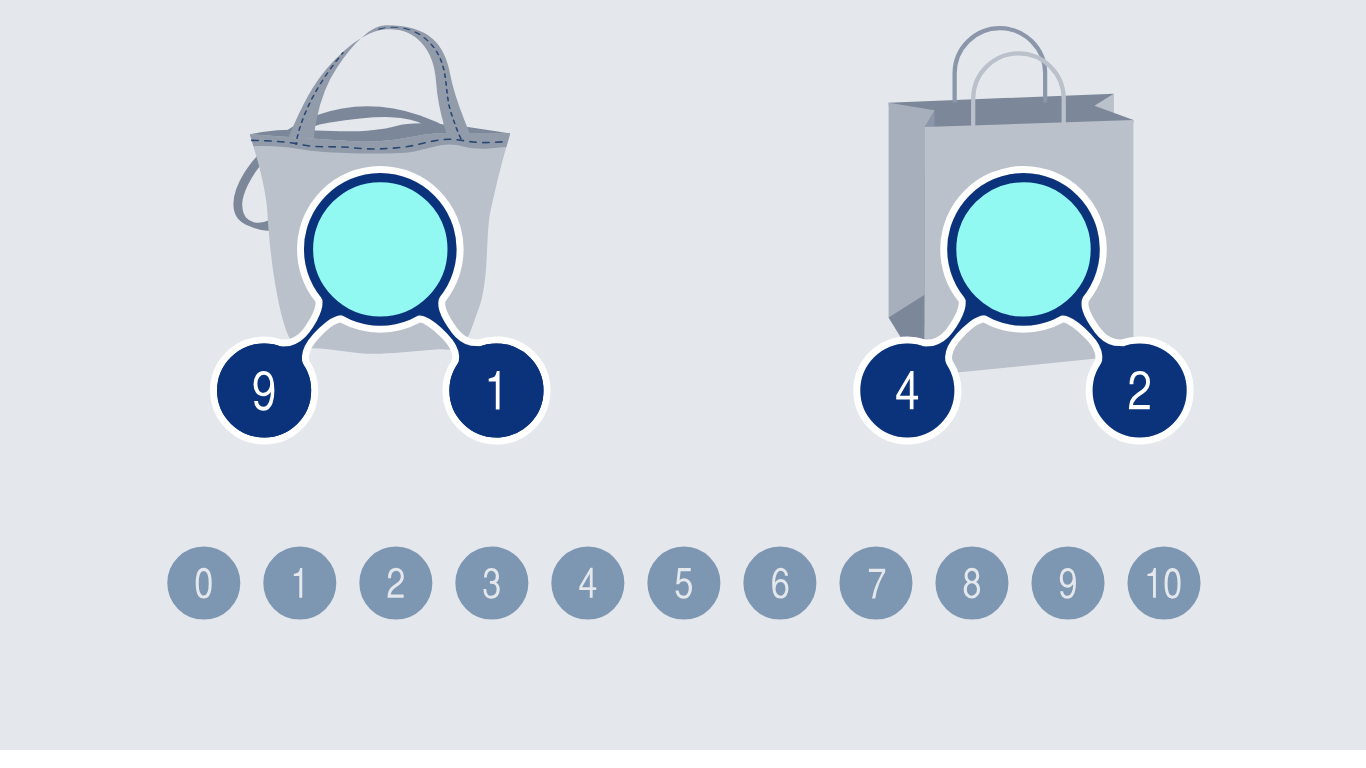
Look at the parts.
Find the whole for each group and drag the matching numbers.
Look at the parts.
Find the whole for each group and drag the matching numbers.
11
Listen to the story Problem.
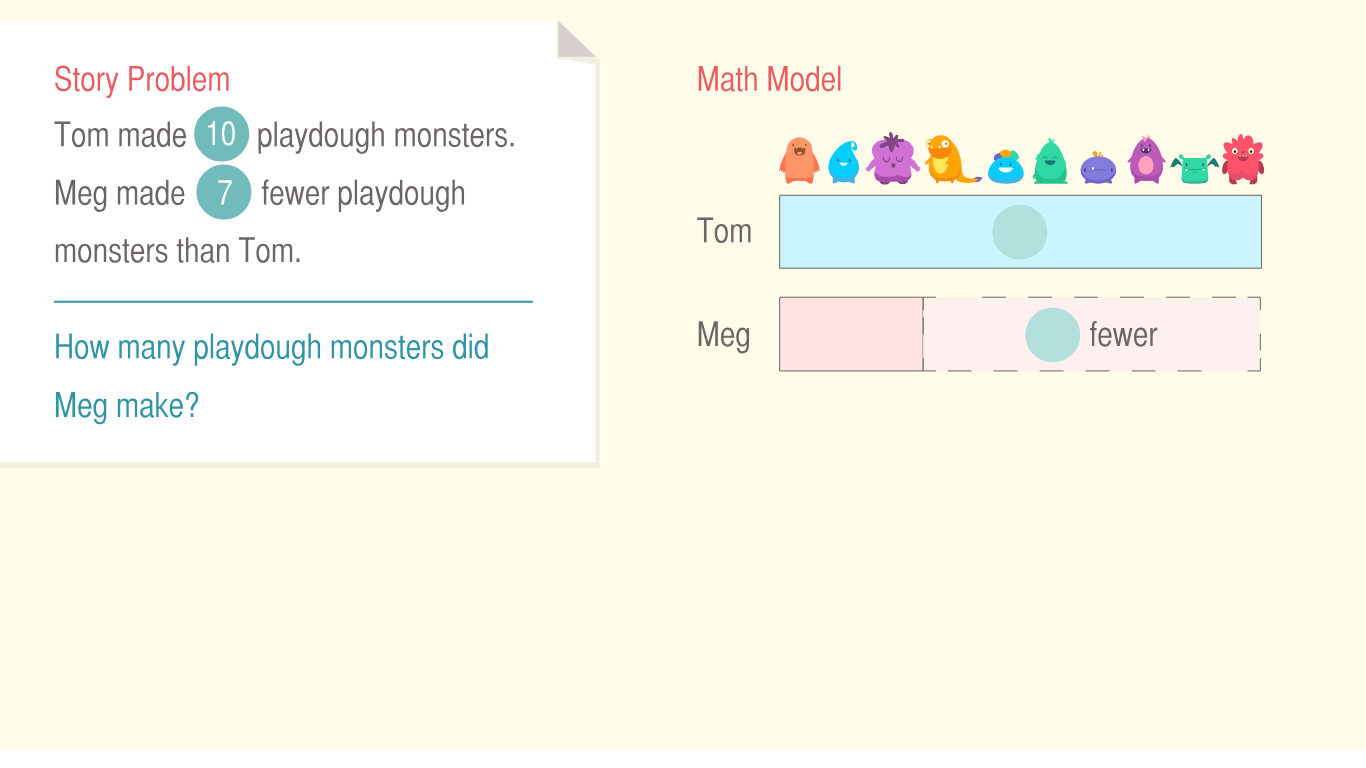
Tom made 10 playdough monsters. Meg made 7 fewer playdough monsters than Tom.
How many playdough monsters did Meg make?
Complete the tape diagram. Drag and drop the numbers from the story.
Listen to the story Problem.
Tom made 10 playdough monsters. Meg made 7 fewer playdough monsters than Tom.
How many playdough monsters did Meg make?
Complete the tape diagram. Drag and drop the numbers from the story.
12
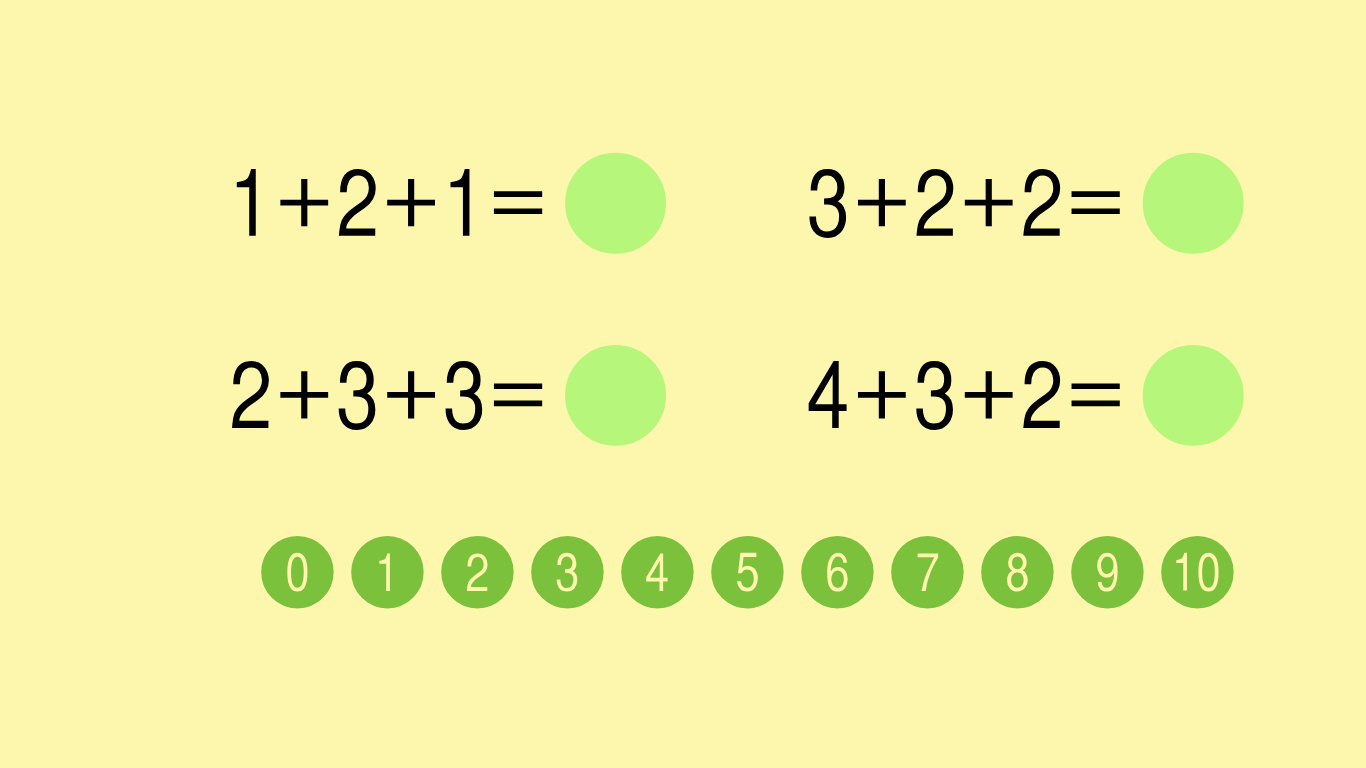
Calculate. Choose the correct numbers.
Calculate. Choose the correct numbers.
13
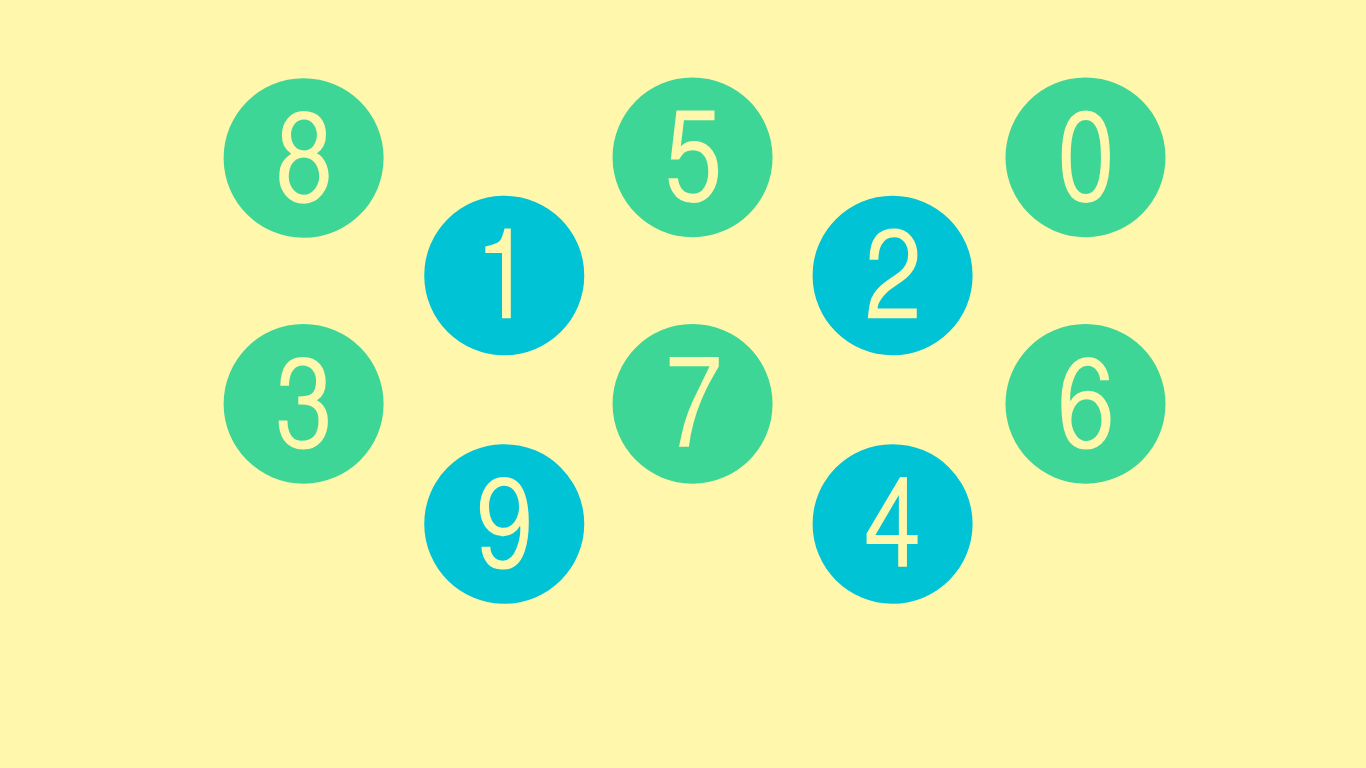
Find the biggest number, choose it.
Find the biggest number, choose it.
14
Calculate. Choose the correct numbers.
Calculate. Choose the correct numbers.