Theme Tasks catalog
Adding and subtracting by ones and in parts
• You will learn ways to add and subtract by ones and in parts;
• You will practice calculating expressions using ways to add and subtract by ones and in parts;
• You will improve your skills to write a short note and solve problems about increasing a number by a few units and comparing numbers by difference;
• You will practice finding true inequalities among the given ones.
1
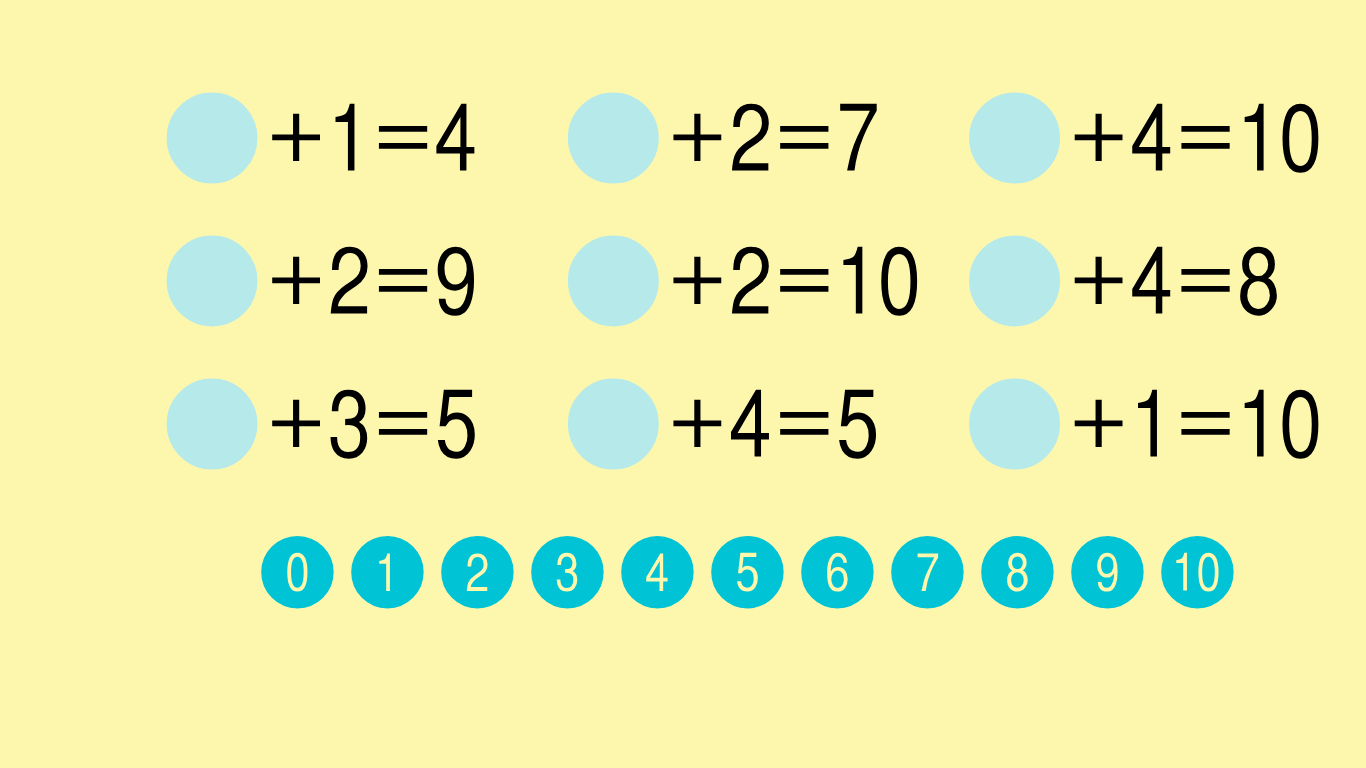
Calculate. Choose the right numbers.
Calculate. Choose the right numbers.
2
We can add numbers in different ways:
Add all at once.
Count on using a number line.
Break a number into parts using a number bond.
Let’s solve a word problem!
There were 4 boxes of apples at the store.
5 more boxes arrived.
How many boxes are there in all?
Strategy 1: Add all at once.
A big forklift brought all 5 boxes at one time.
Equation: 4 + 5 = 9.
Answer: 9 boxes.
Strategy 2: Count on.
A worker brought the boxes one by one.
Let’s use a number line.
Start at 4 and take 5 steps forward.
Equation: 4 + 1 + 1 + 1 + 1 + 1 = 9.
Answer: 9 boxes.
Strategy 3: Add in parts.
A worker used a hand truck.
First, he brought 3 boxes, and then 2 more.
Let’s break 5 into two parts using a number bond:
5 = 3 + 2.
Now, let's add the parts one at a time.
Equation: 4 + 3 + 2 = 9.
Answer: 9 boxes.
So, we added the numbers in different ways, but we got the same answer!

3
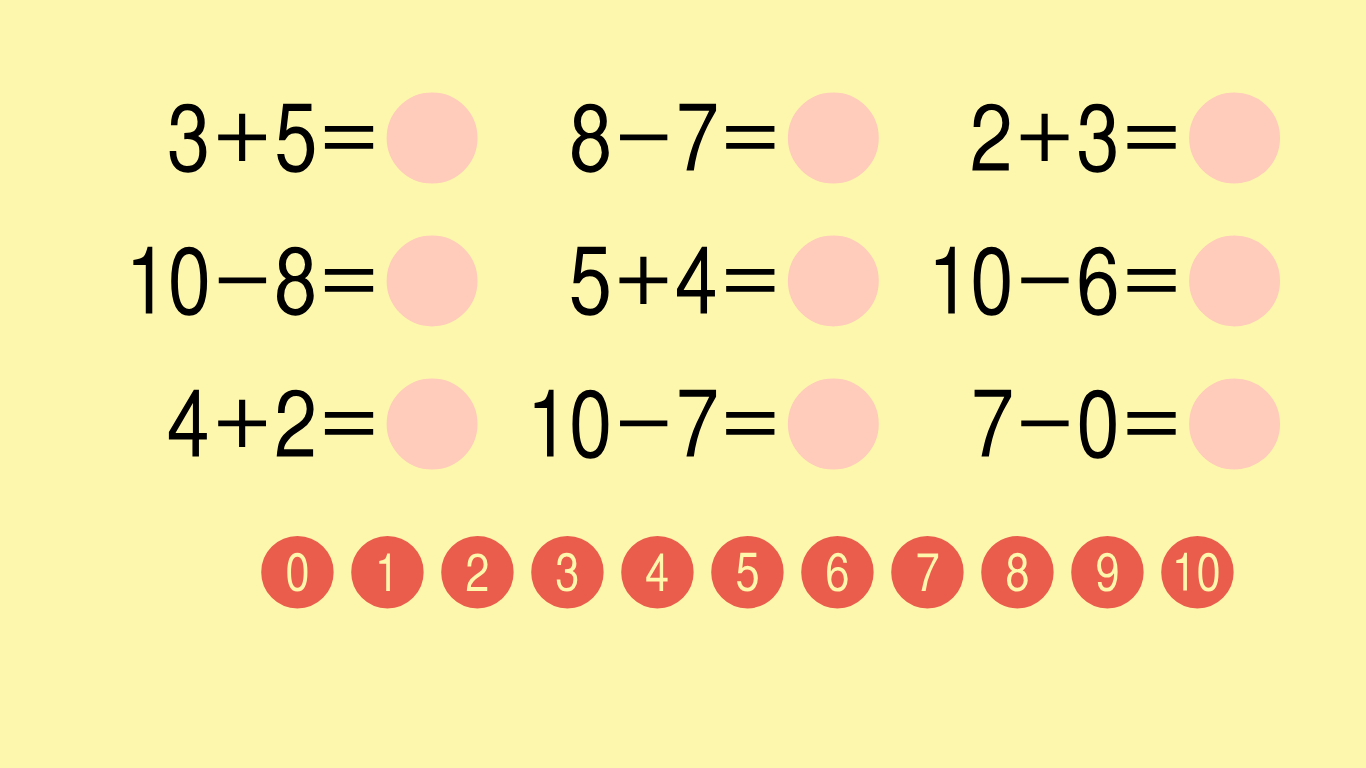
Use the number line to find the answer.
Drag the correct number into the box.
Use the number line to find the answer.
Drag the correct number into the box.
4
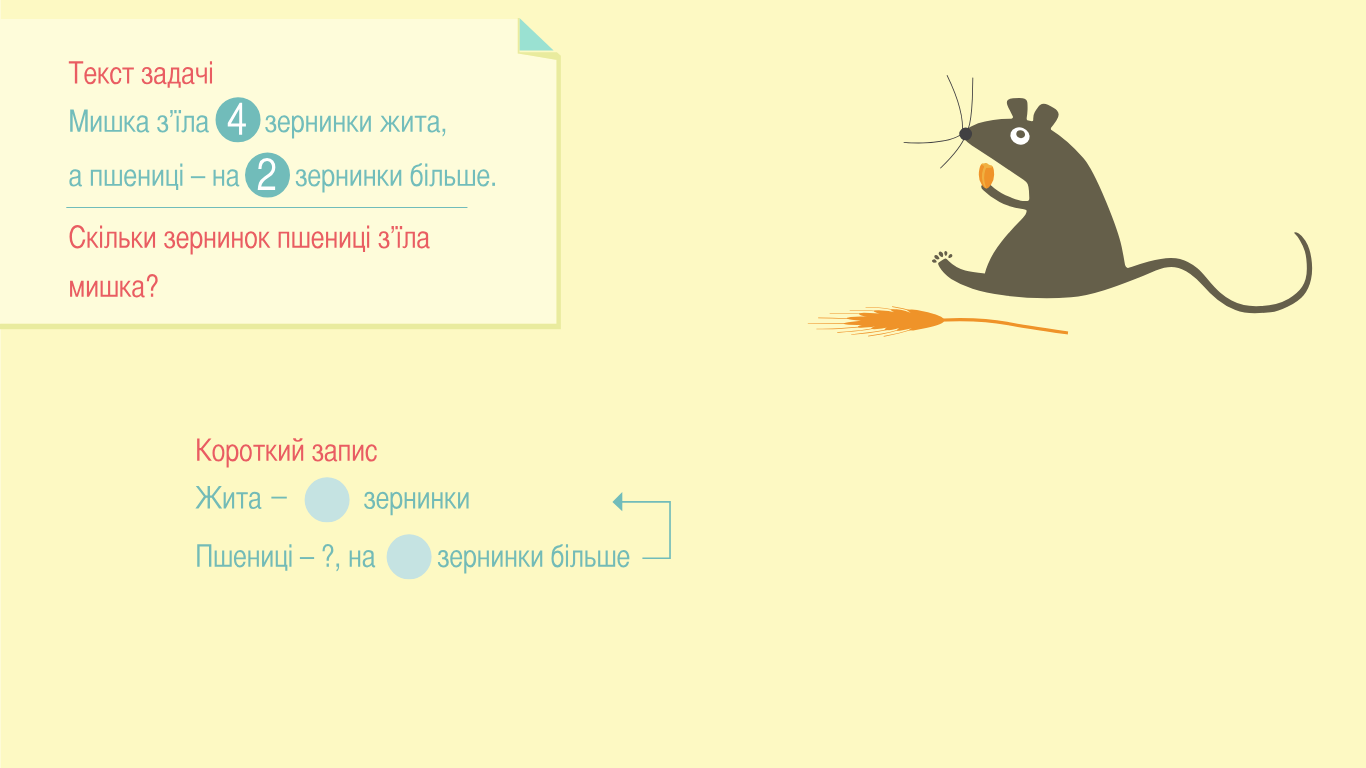
Listen to the story Problem.
Charlotte has 4 yellow hair bows. She has 2 more blue hair bows than yellow hair bows.
How many blue hair bows does Charlotte have?
Complete the tape diagram. Drag and drop the numbers from the story.
Listen to the story Problem.
Charlotte has 4 yellow hair bows. She has 2 more blue hair bows than yellow hair bows.
How many blue hair bows does Charlotte have?
Complete the tape diagram. Drag and drop the numbers from the story.
5
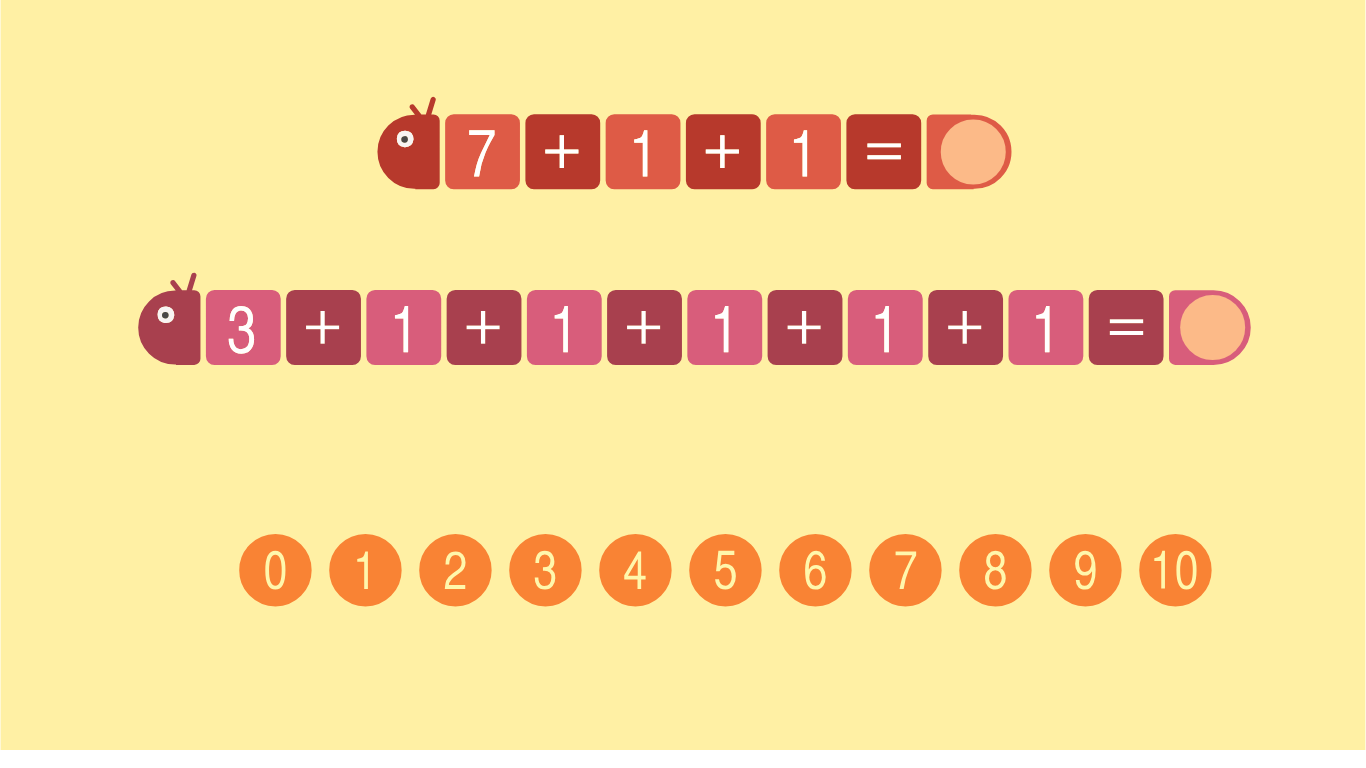
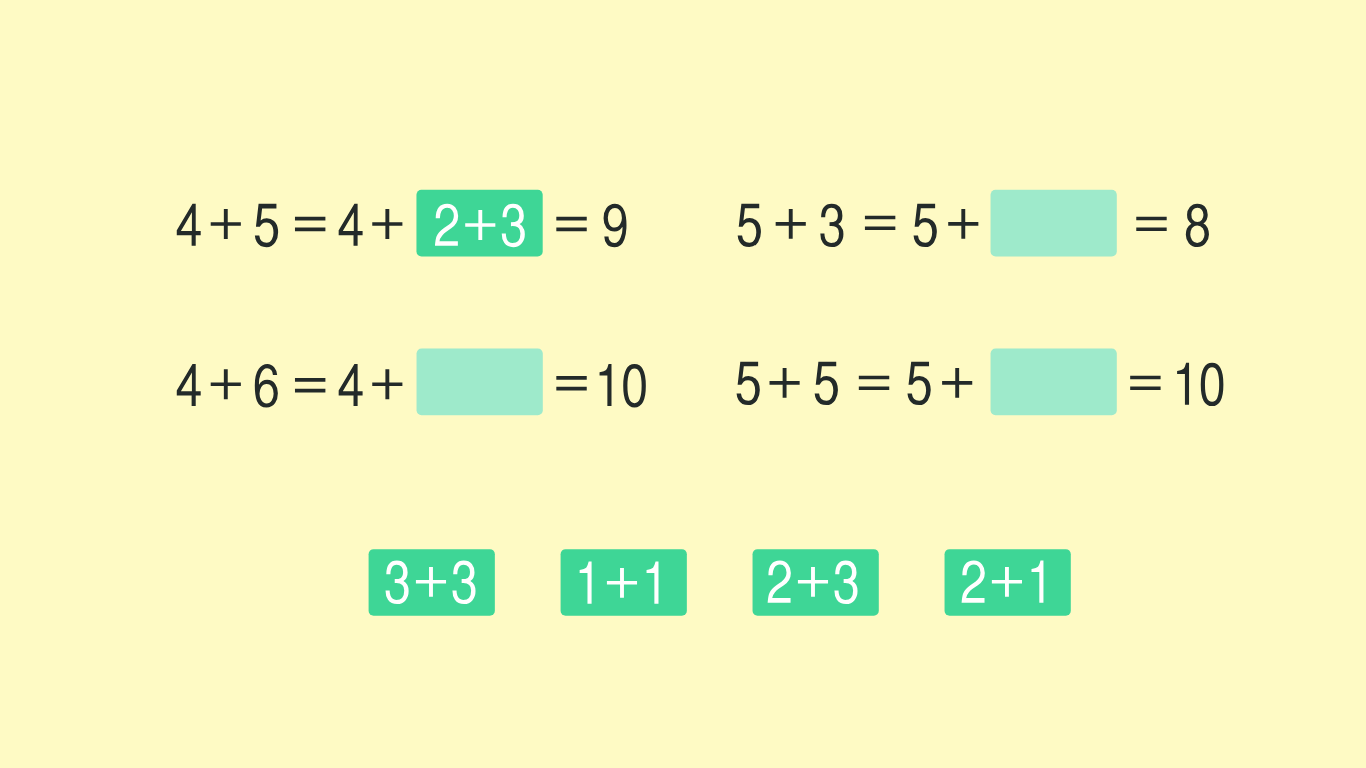
Decompose the number to add. Drag the missing part.
Decompose the number to add. Drag the missing part.
6
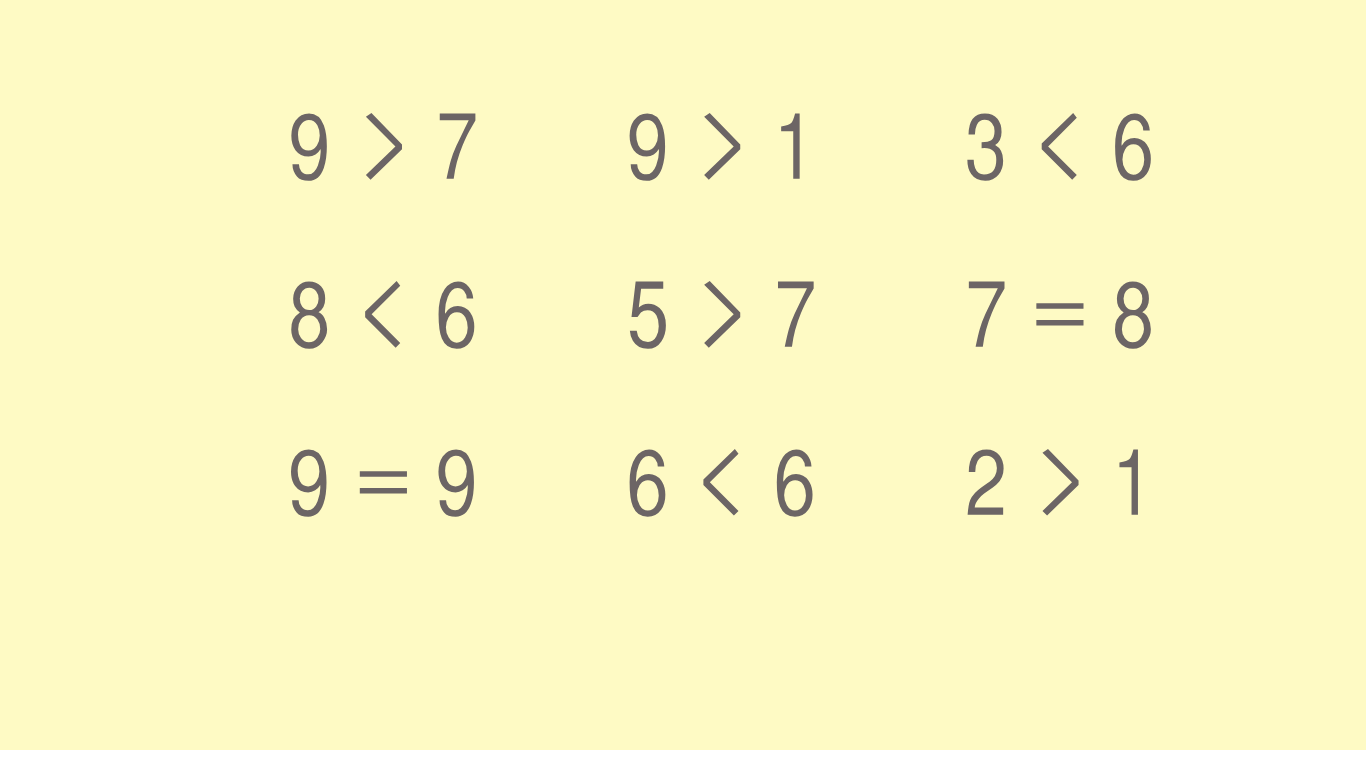
Help the trucks load up!
Move the true math sentences to the green truck, and the false ones to the red truck.
Help the trucks load up!
Move the true math sentences to the green truck, and the false ones to the red truck.
7
You can subtract numbers in different ways:
subtract all at once;
subtract one by one on the number line;
split the number you subtract into parts using number bonds.
Let's solve a problem.
A bakery had 8 boxes of donuts on display.
A delivery driver took 5 boxes to deliver them.
How many boxes of donuts are left on display?
Strategy 1. Subtract all at once.
A delivery picked up 5 boxes to deliver them.
Equation: 8 – 5 = 3
Answer: 3 boxes.
Strategy 2. Subtract one at a time.
A delivery was picking up the boxes one by one.
Let's use a number line.
Start at 8 and take 5 steps steps back.
Equation: 8 – 1 – 1 – 1 – 1 – 1 = 3
Answer: 3 boxes.
Strategy 3. Subtract in parts.
A delivery took the boxes in parts.
First, he took away 3 boxes, and then 2 more boxes.
Let's split the number 5 into two parts using a number bond:
5 = 3 + 2
Now subtract these parts one after another.
Equation: 8 – 3 – 2 = 3
Answer: 3 boxes.
So, we subtracted numbers in different ways, but got the same result!

8
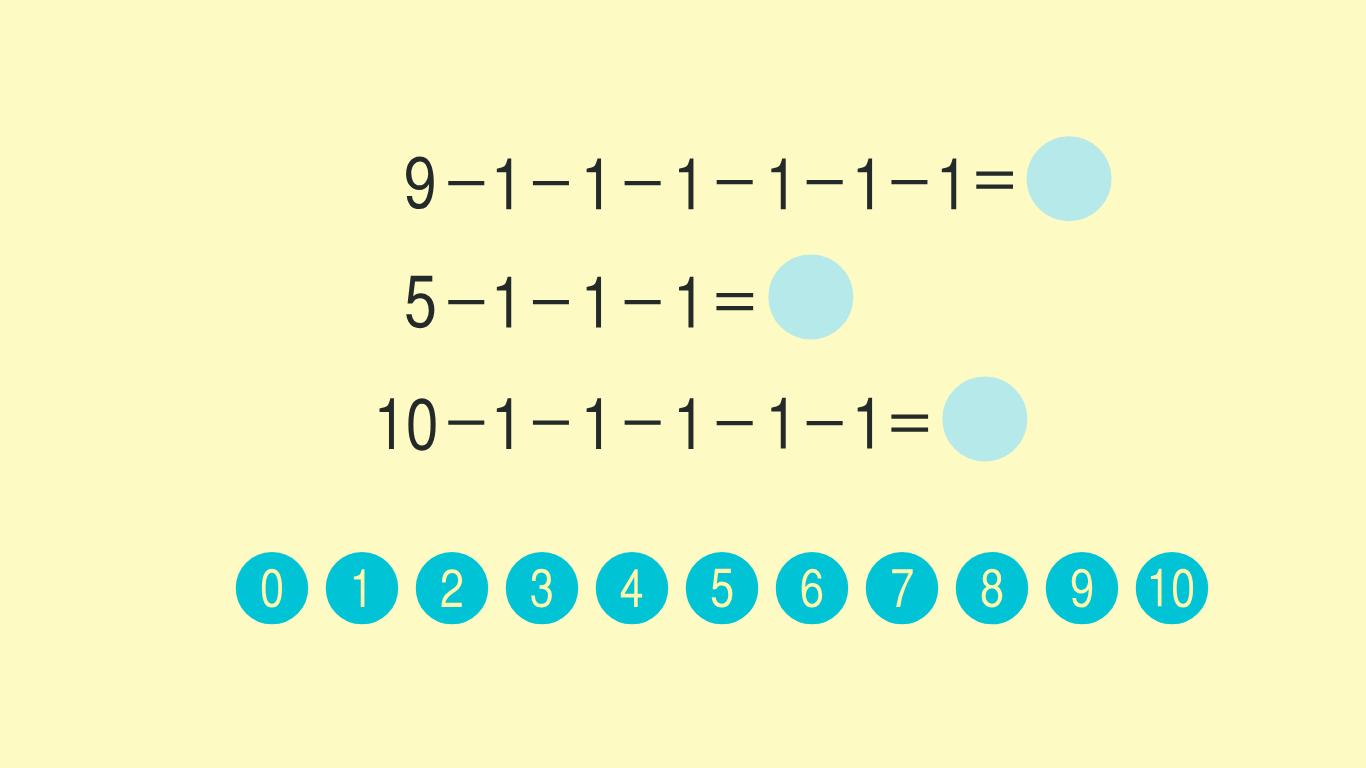
Use the number line to find the answer.
Drag the correct number into the box.
Use the number line to find the answer.
Drag the correct number into the box.
9
Listen to the story Problem.
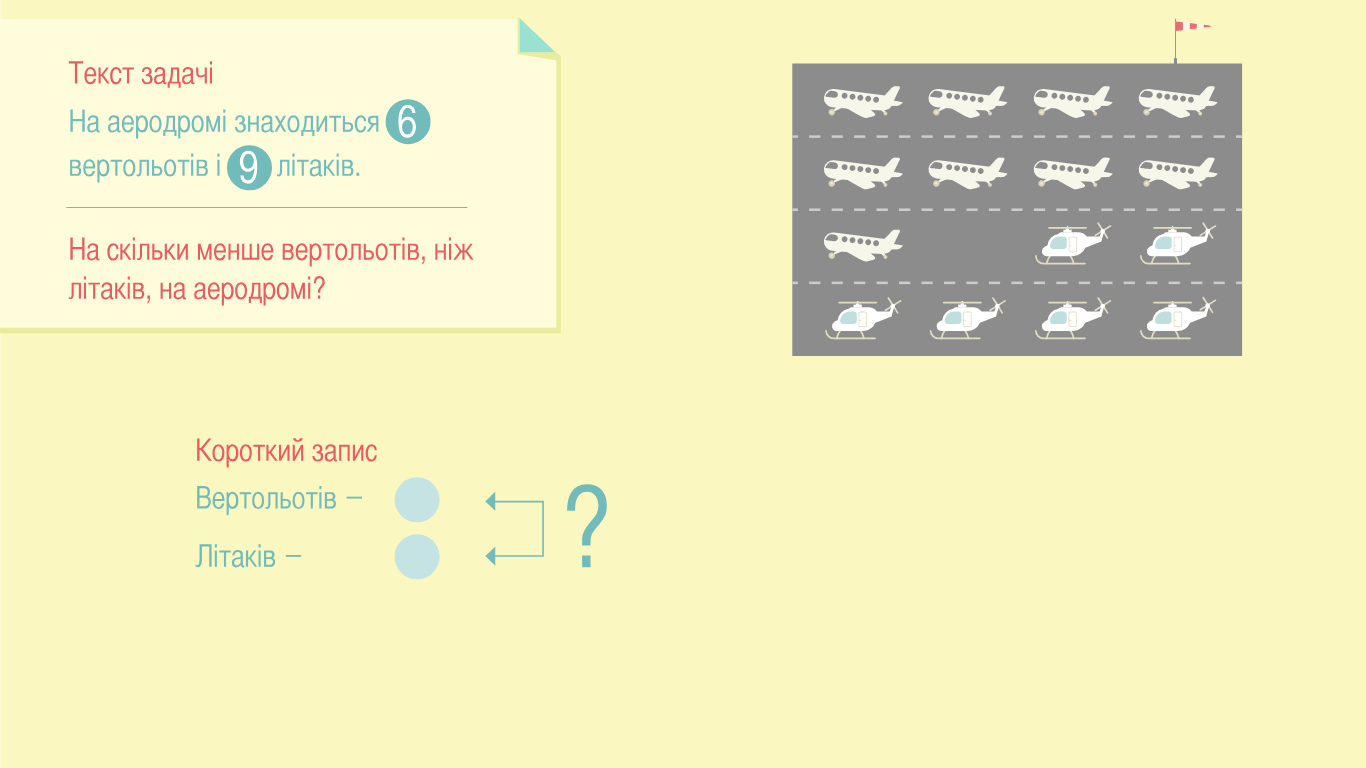
There are 6 helicopters and 9 airplanes at the airport.
How many fewer helicopters than airplanes are there at the airport?
Complete the tape diagram. Drag and drop the numbers from the story.
Listen to the story Problem.
There are 6 helicopters and 9 airplanes at the airport.
How many fewer helicopters than airplanes are there at the airport?
Complete the tape diagram. Drag and drop the numbers from the story.
10
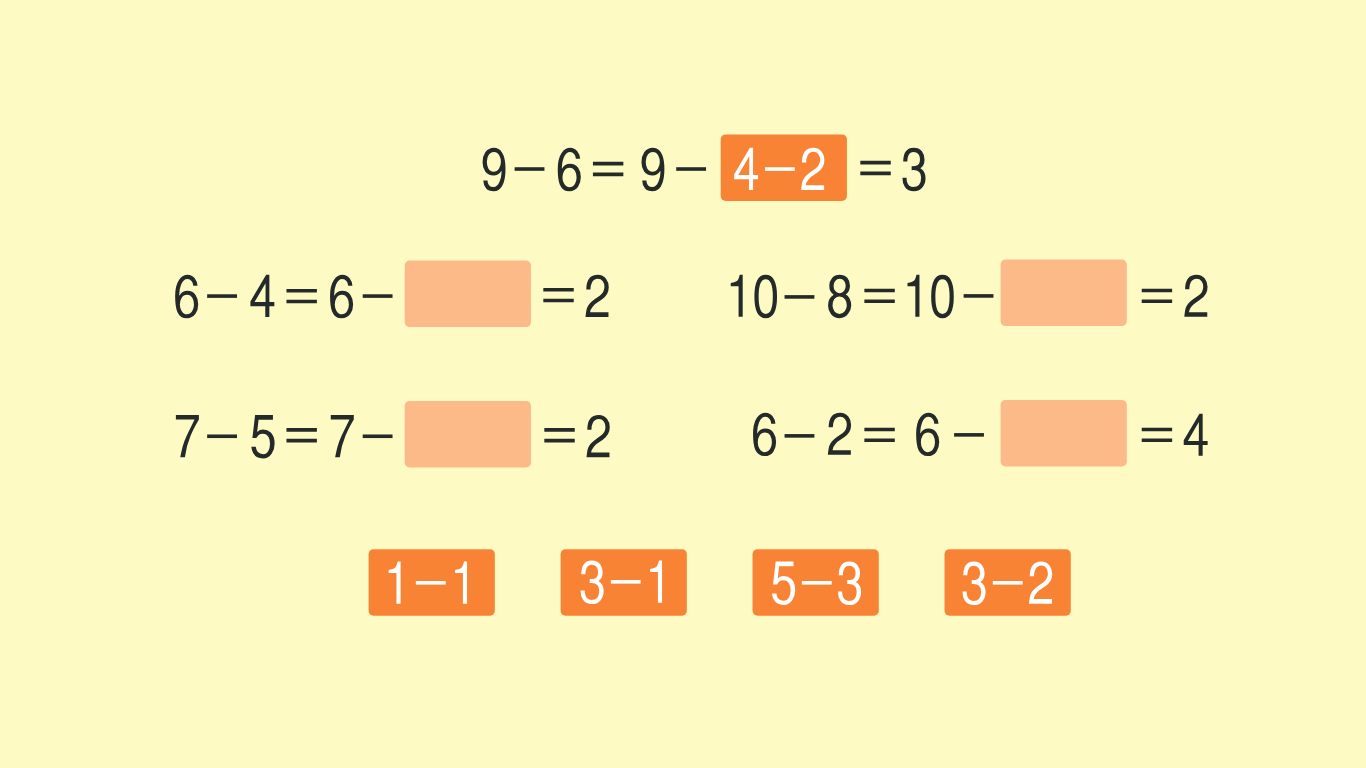
Decompose the number to subtract. Drag the missing part.
Decompose the number to subtract. Drag the missing part.
11
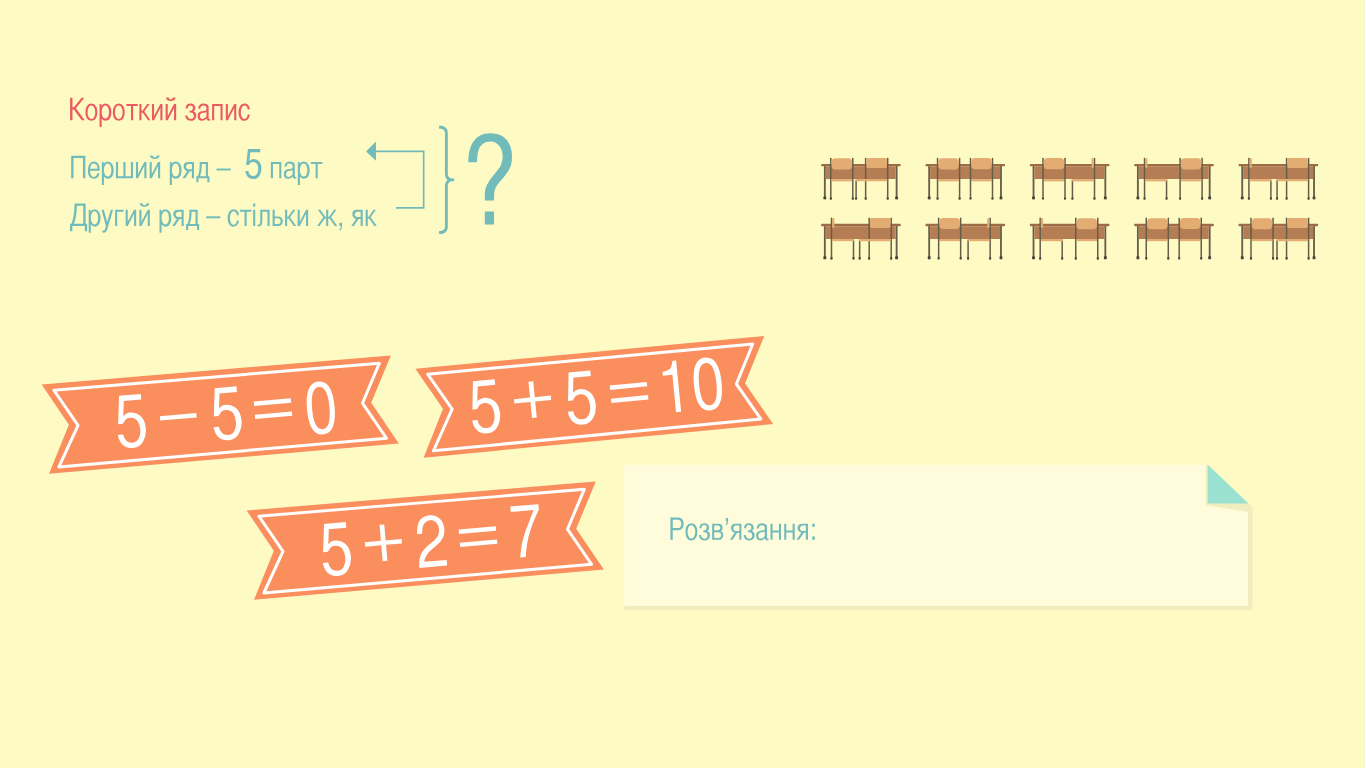
Listen to the story problem.
Chloe has 2 boxes of candies. The first box has 5 candies, and the second box has the same number of candies.
How many candies does Chloe have in all?
Drag the correct equation to the problem.
Listen to the story problem.
Chloe has 2 boxes of candies. The first box has 5 candies, and the second box has the same number of candies.
How many candies does Chloe have in all?
Drag the correct equation to the problem.
12
Find the missing parts.
Drag the numbers to make the equations true.
Find the missing parts.
Drag the numbers to make the equations true.