Theme Tasks catalog
Commutative property of addition
• You will learn about the commutative law of addition and learn to use it when you count;
• You will practice finding unknown parts and results of addition and subtraction;
• You will solve problems to find the sum, the difference, and to increase a number by a few units;
• You will practice comparing the values of number expressions.
• You will practice finding unknown parts and results of addition and subtraction;
• You will solve problems to find the sum, the difference, and to increase a number by a few units;
• You will practice comparing the values of number expressions.
1
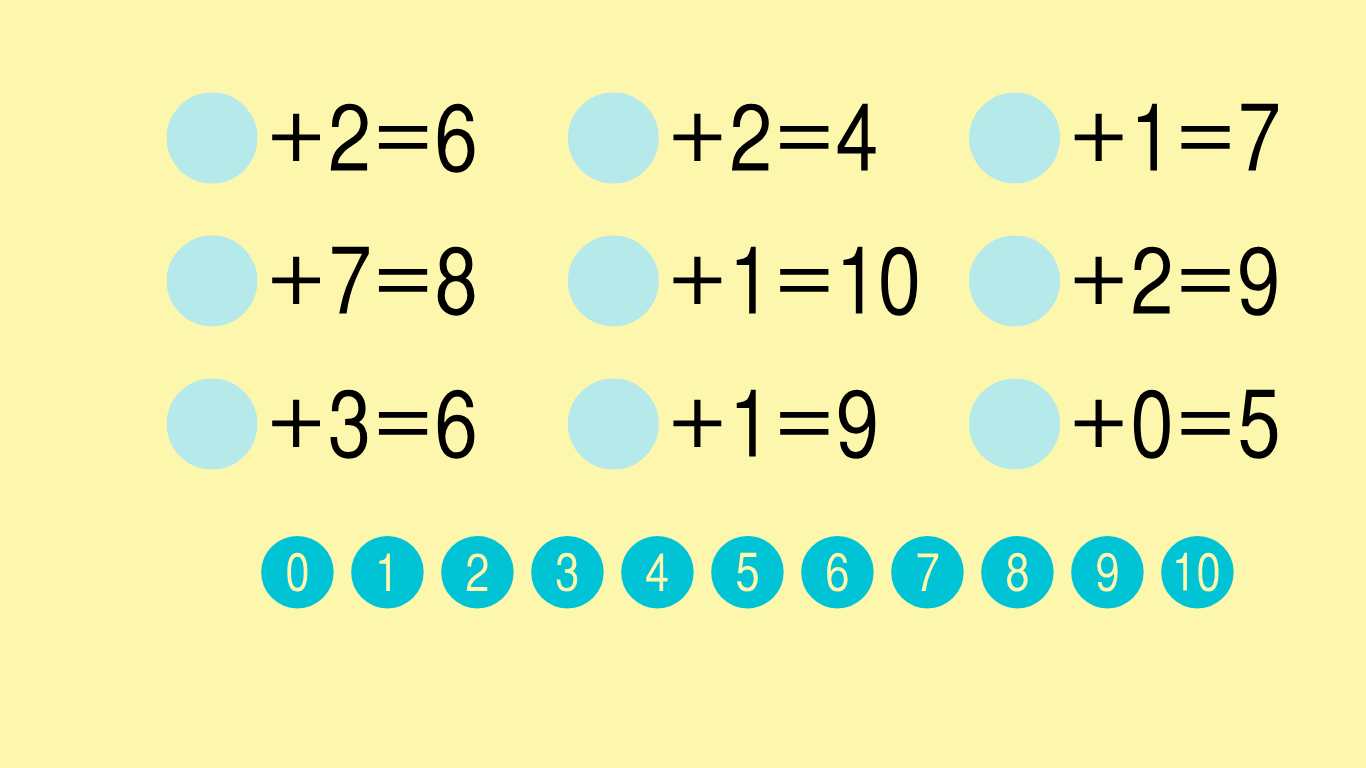
Count. Choose the right numbers.
Count. Choose the right numbers.
2
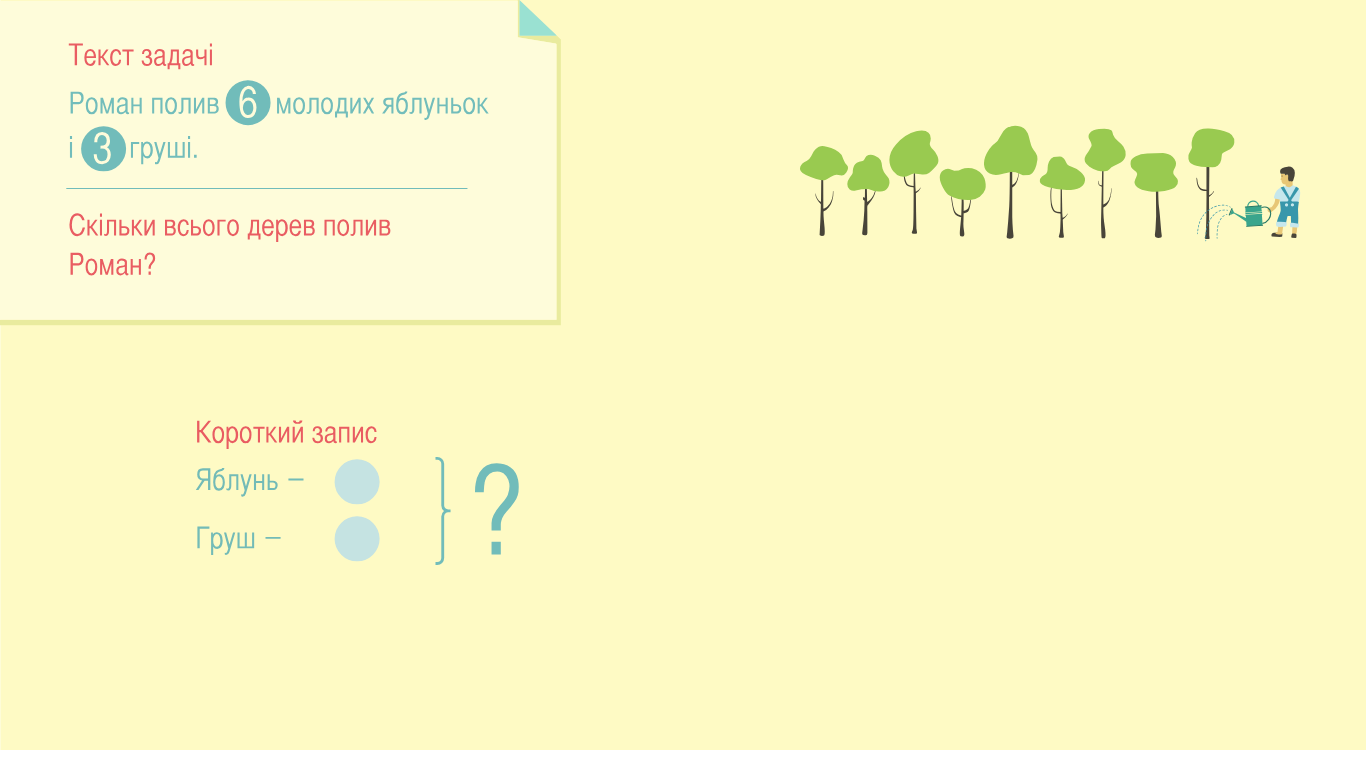
Listen to the story Problem.
At the aquarium, Mason saw 6 seals and 3 sea lions.
How many animals did Mason see?
Complete the number bond. Drag the numbers from the story.
Listen to the story Problem.
At the aquarium, Mason saw 6 seals and 3 sea lions.
How many animals did Mason see?
Complete the number bond. Drag the numbers from the story.
3
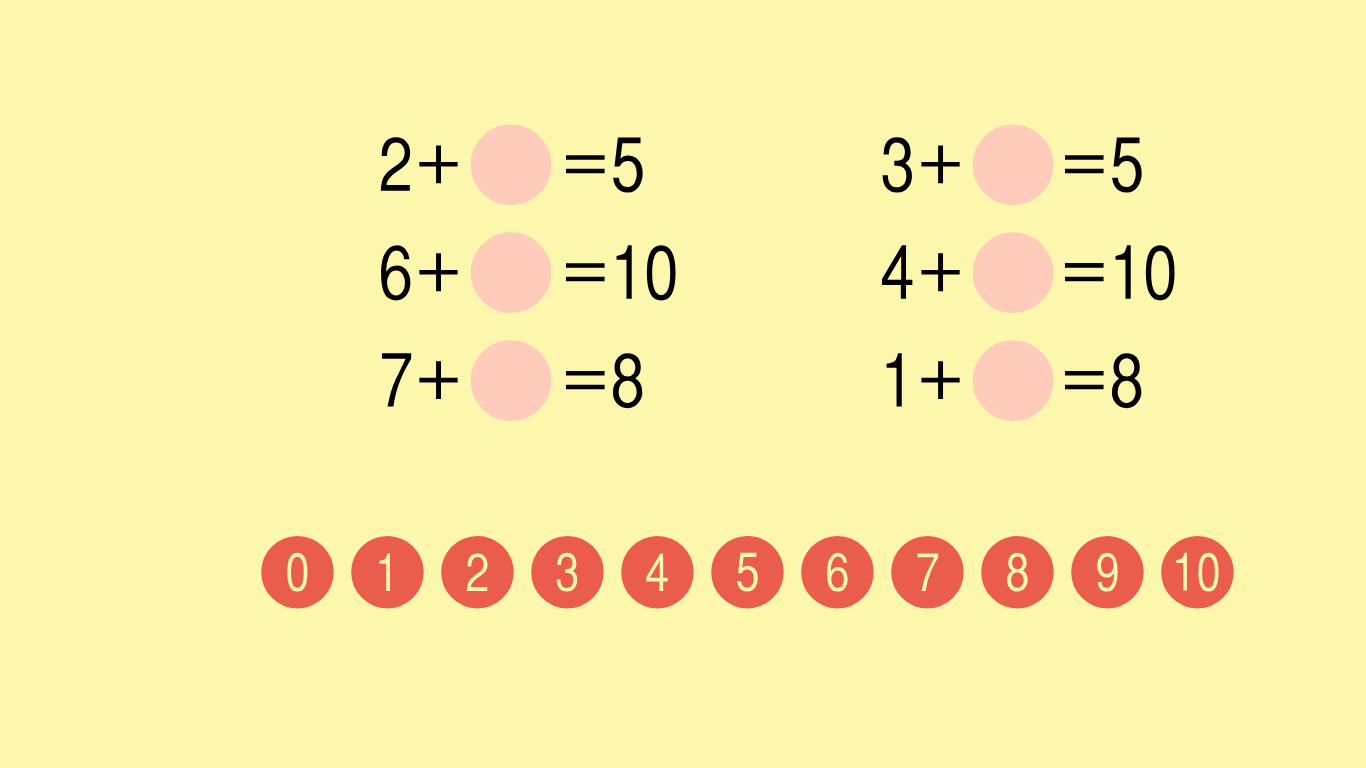
Complete the equations. Drag the correct numbers.
Complete the equations. Drag the correct numbers.
4
Look at the equations:
2 plus 3 equals 5.
3 plus 2 equals 5.
6 plus 1 equals 7.
1 plus 6 equals 7.
5 plus 4 equals 9.
4 plus 5 equals 9.
What do you notice?
Each pair of equations has the same sum.
If you swap the addends, the sum stays the same!
2 plus 3 equals 3 plus 2.
6 plus 1 equals 1 plus 6.
5 plus 4 equals 4 plus 5.

5
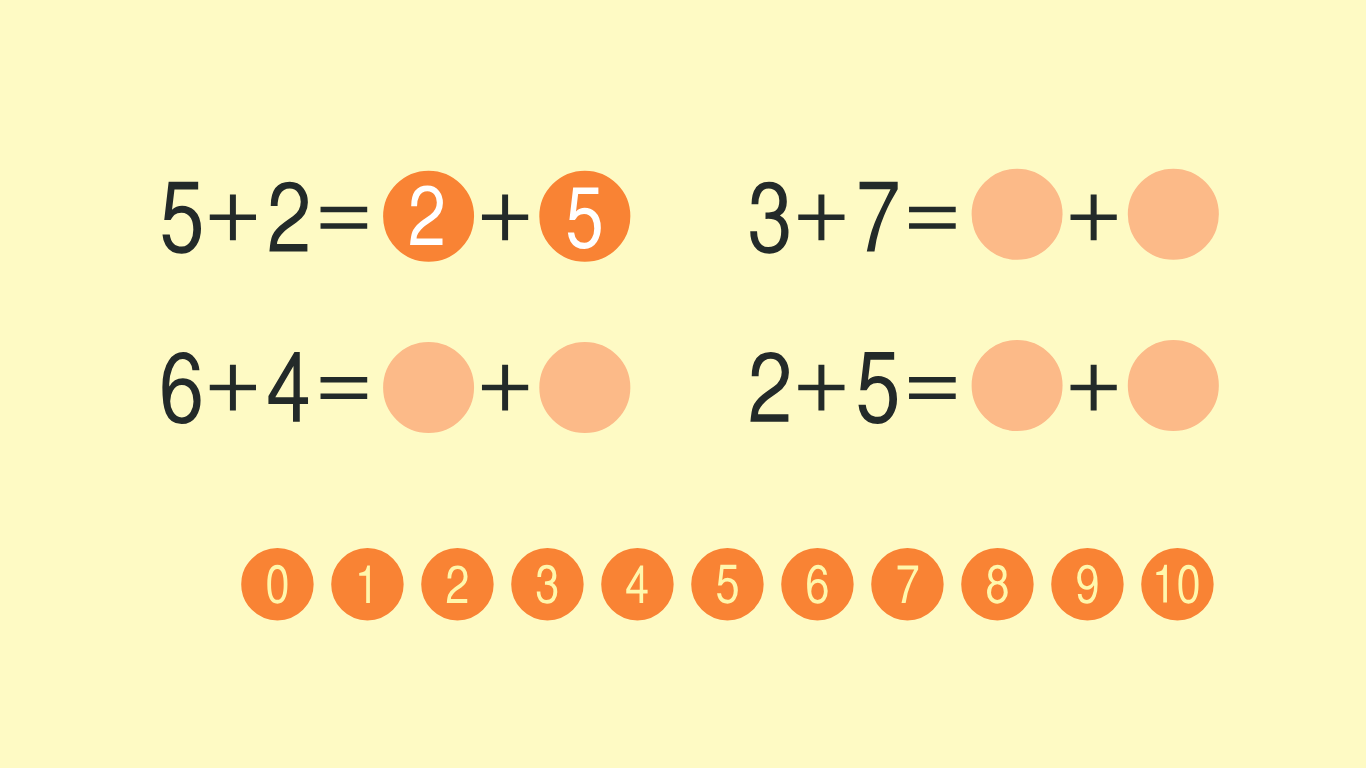
Change the order of the numbers using the example. Drag the numbers.
Change the order of the numbers using the example. Drag the numbers.
6
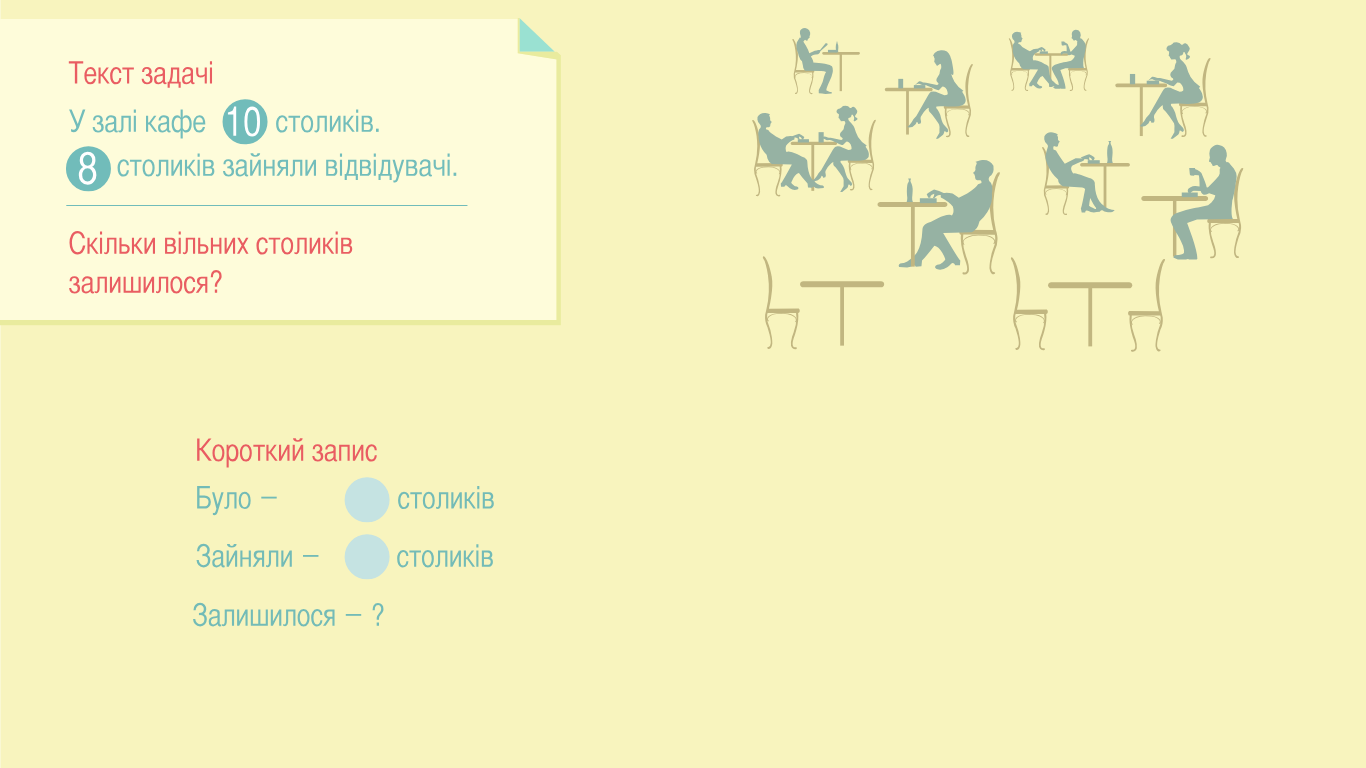
Listen to the story Problem.
There are 10 tables in a cafe. 8 tables have customers.
How many tables are empty?
Complete the number bond. Drag the numbers from the story.
Listen to the story Problem.
There are 10 tables in a cafe. 8 tables have customers.
How many tables are empty?
Complete the number bond. Drag the numbers from the story.
7
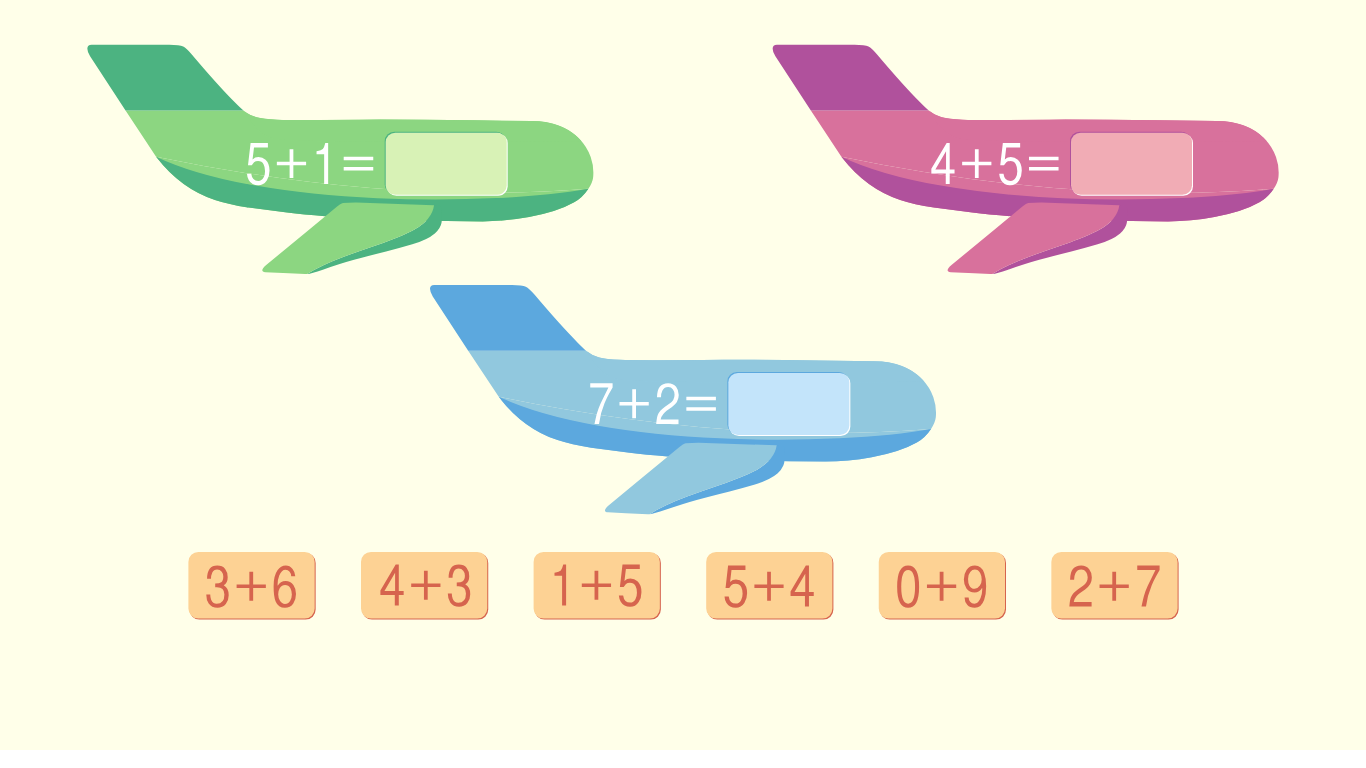
Drag an addition expression with the same numbers in a different order to each airplane.
Drag an addition expression with the same numbers in a different order to each airplane.
8
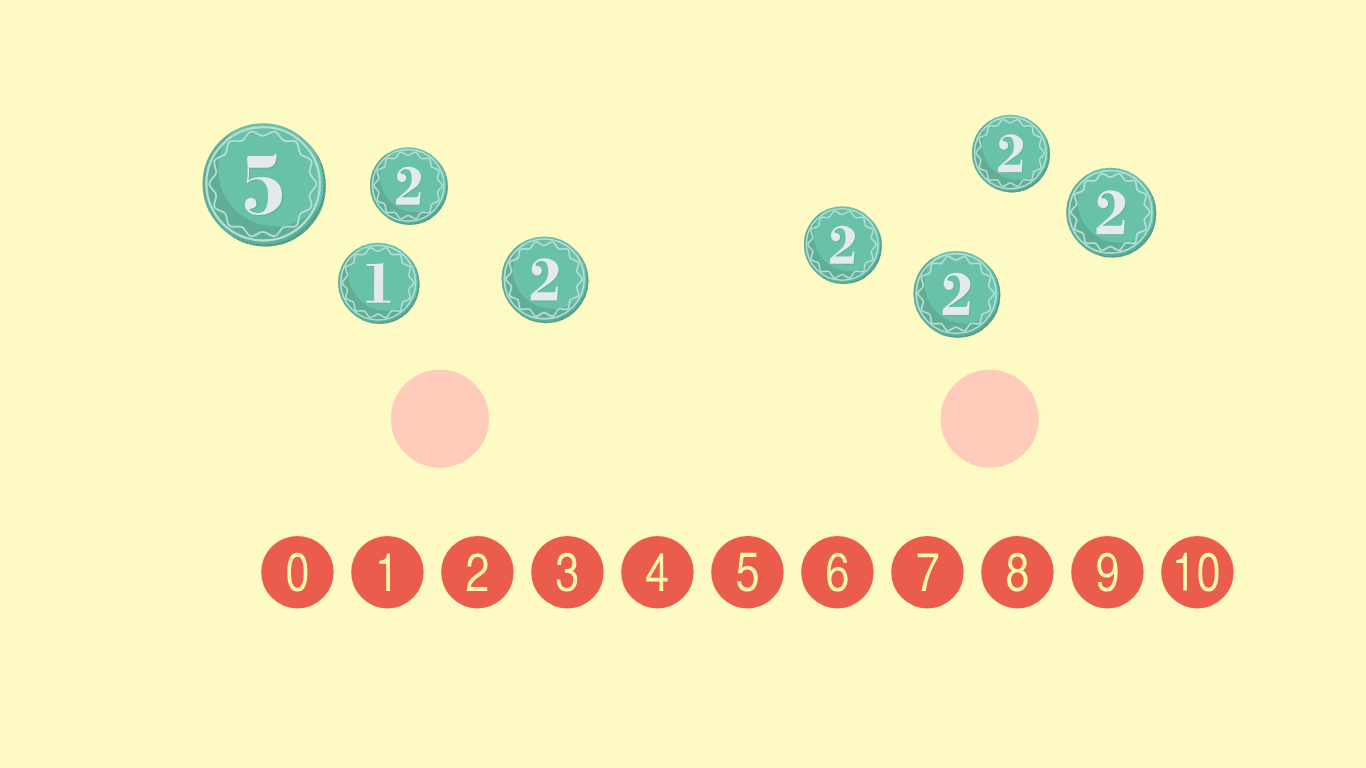
Count the total amount of cents in each group.
Drag the numbers.
Count the total amount of cents in each group.
Drag the numbers.
9
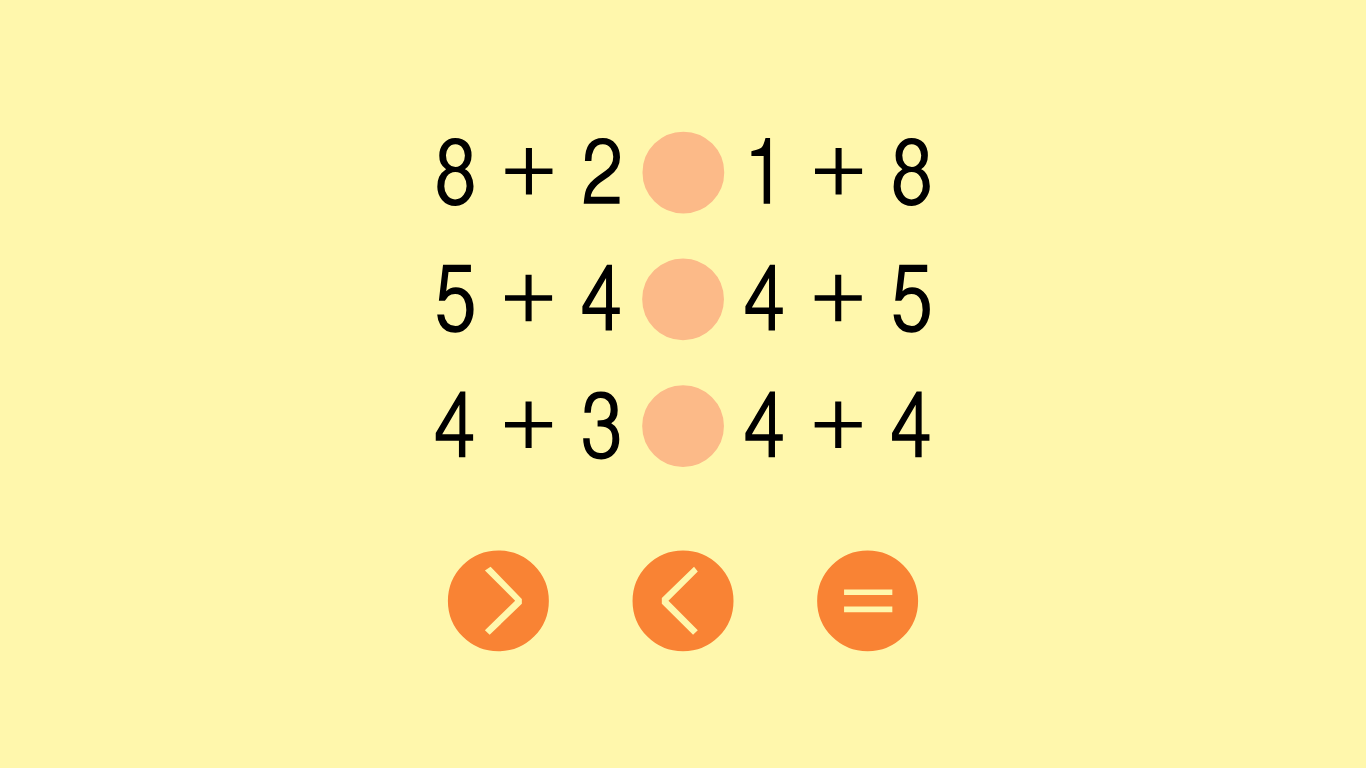
Drag and drop the correct sign: greater than, less than, or equal to.
Drag and drop the correct sign: greater than, less than, or equal to.
10
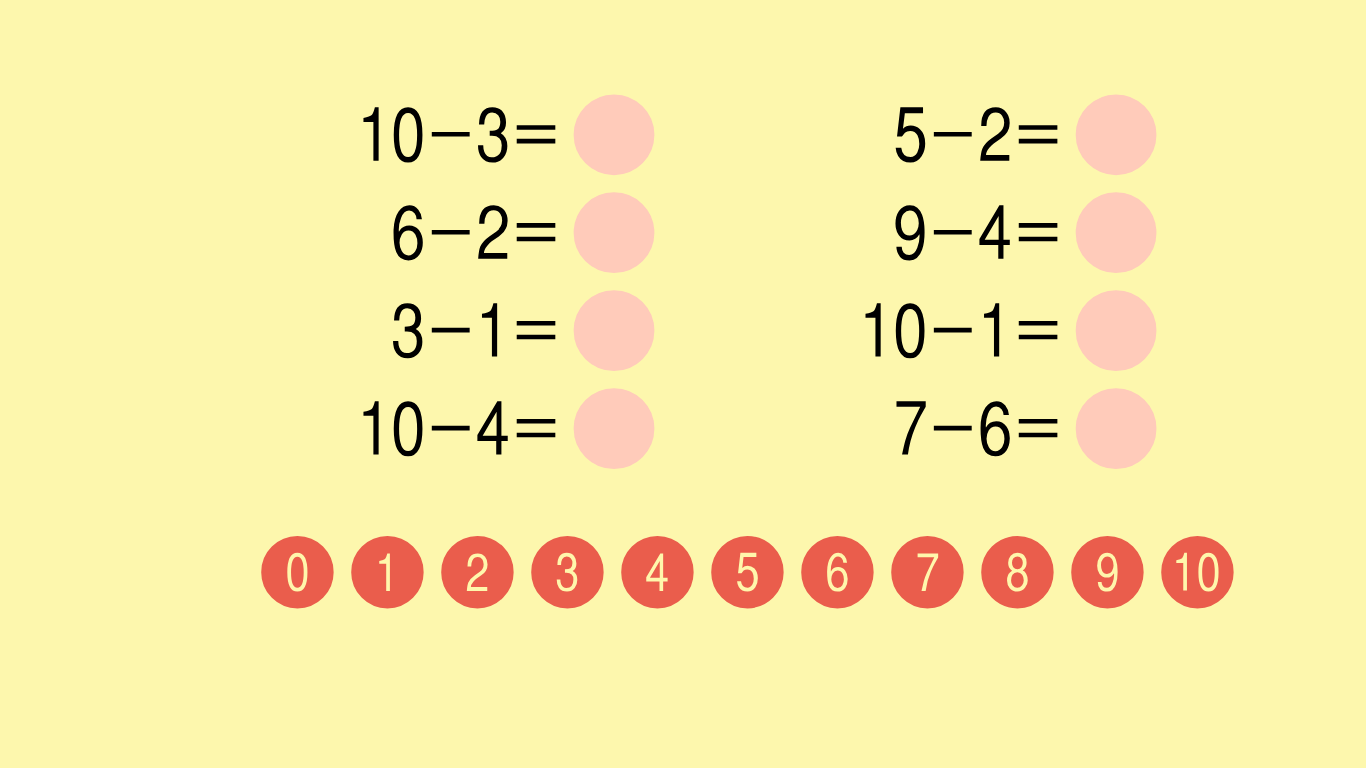
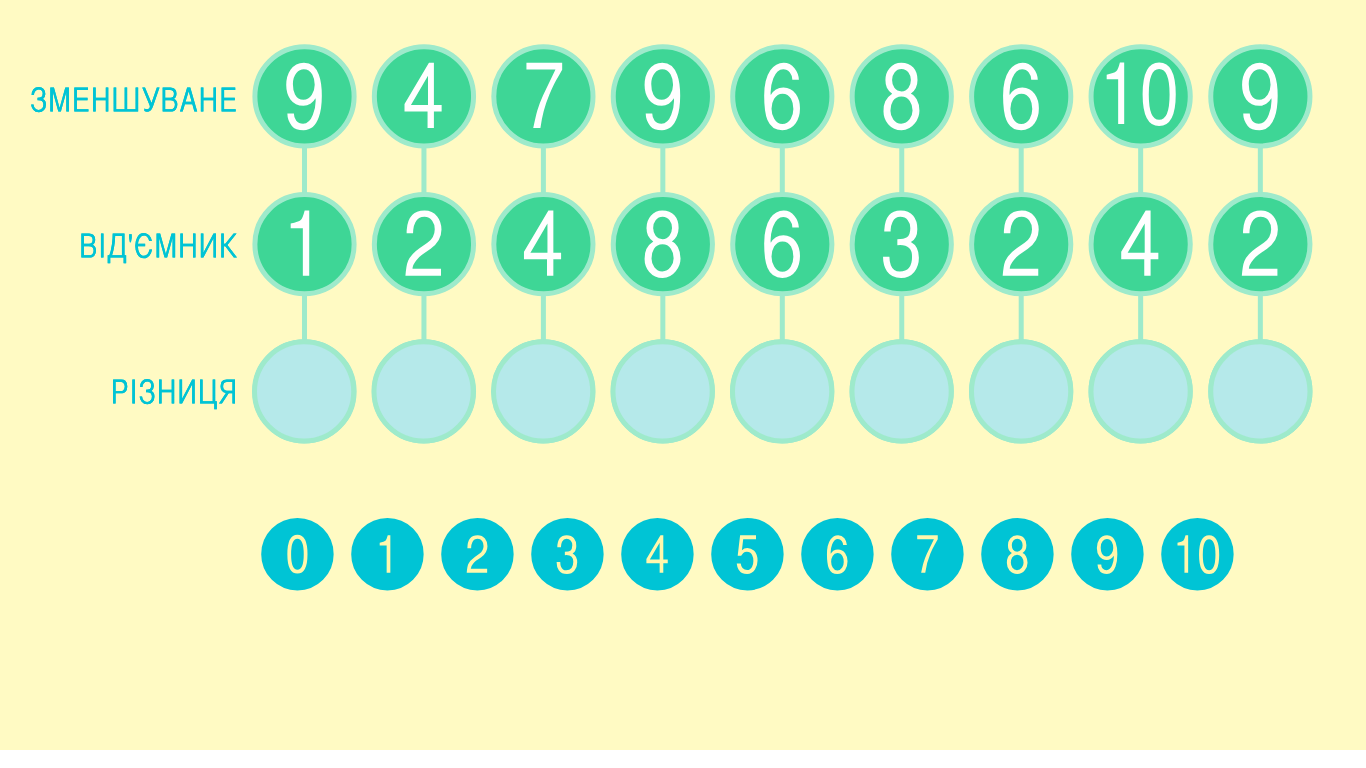
Fill in the blanks. Choose the right numbers.
Fill in the blanks. Choose the right numbers.
11
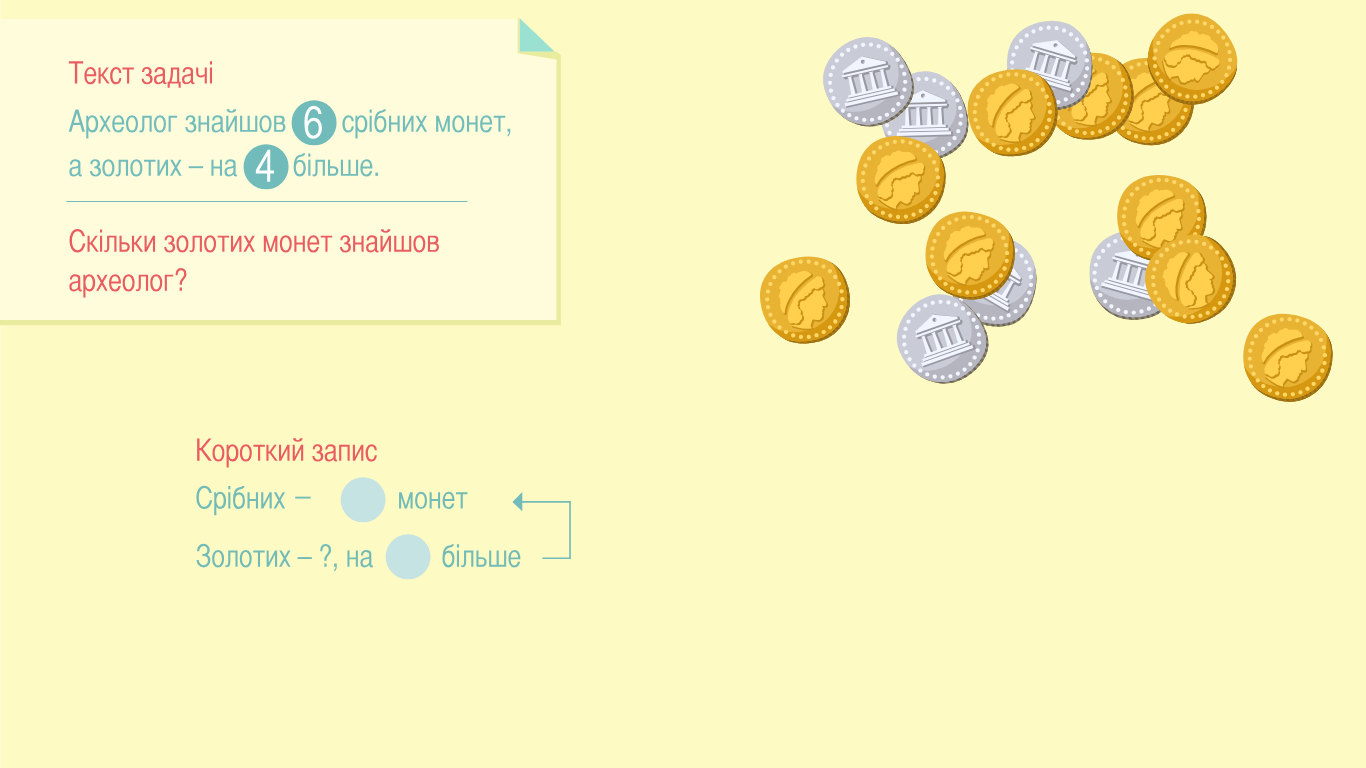
Listen to the story Problem.
Oliver found 6 smooth rocks at the beach. He found 4 more seashells than rocks.
How many seashells did Oliver find?
Complete the tape diagram. Drag and drop the numbers from the story.
Listen to the story Problem.
Oliver found 6 smooth rocks at the beach. He found 4 more seashells than rocks.
How many seashells did Oliver find?
Complete the tape diagram. Drag and drop the numbers from the story.
12
Complete the equations. Drag the correct numbers.
Complete the equations. Drag the correct numbers.