Theme Tasks catalog
Golden Autumn
• You will remember which objects belong to non-living nature and which to living nature;
• You will think about what is special about autumn and why it is called the harvest season;
• You will practice telling the weather outside the window;
• You will find out why autumn months have their names;
• You will explore how animals behave in autumn.
• You will think about what is special about autumn and why it is called the harvest season;
• You will practice telling the weather outside the window;
• You will find out why autumn months have their names;
• You will explore how animals behave in autumn.
1
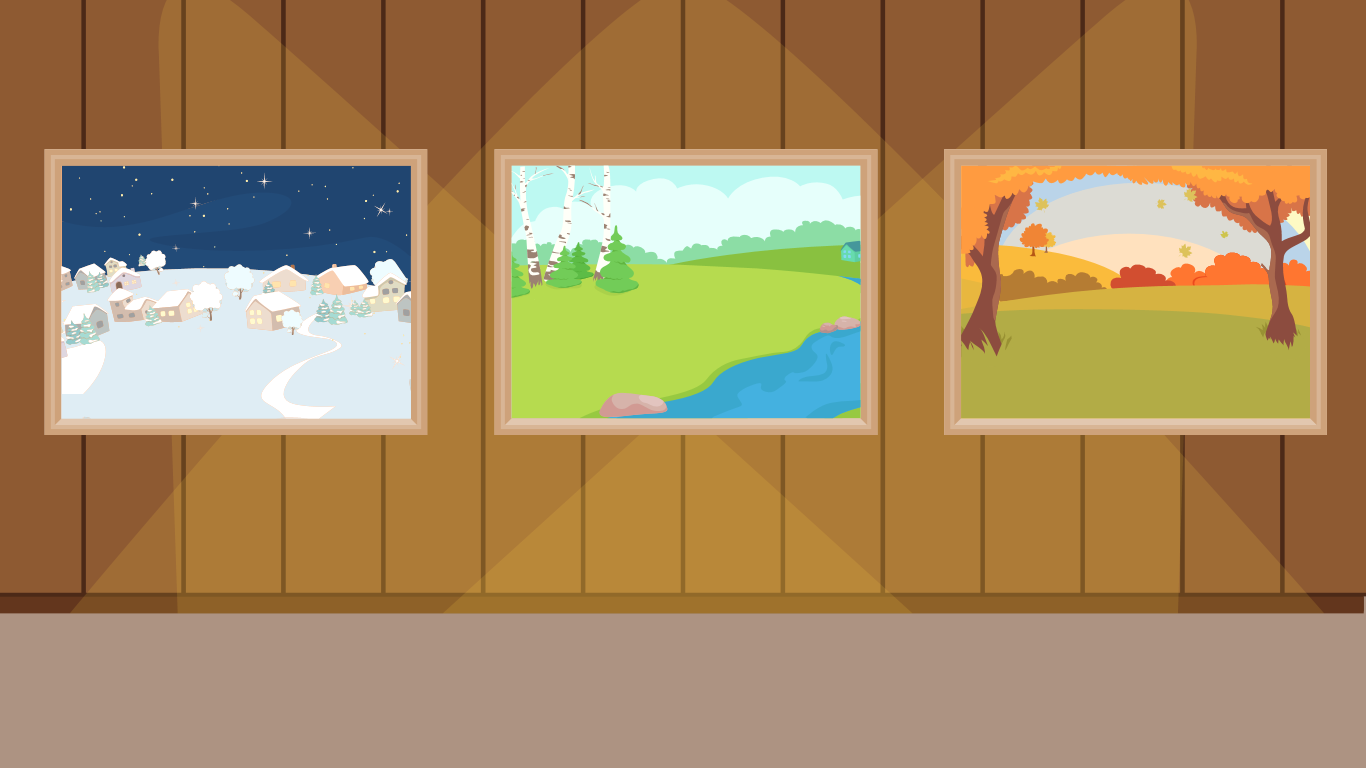
Choose the picture that shows autumn.
Choose the picture that shows autumn.
2
Choose non-living nature objects.
Choose non-living nature objects.
3
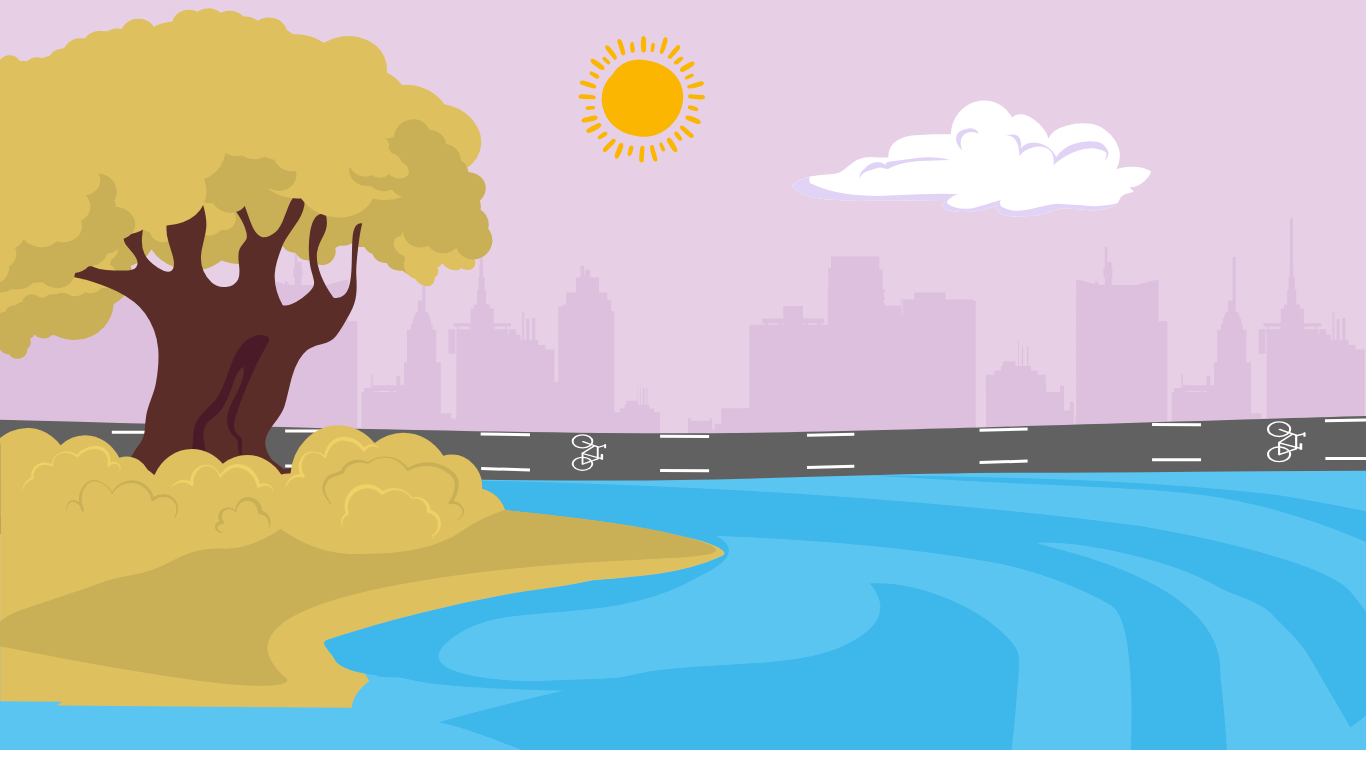
Autumn painted the leaves in different colors and shades.
That is why this season is called «golden autumn».
In autumn, the sun's rays warm the earth less, so it gets cooler than in summer.
The sky is covered with clouds, and it often rains cold.
The days get shorter and the nights get longer.
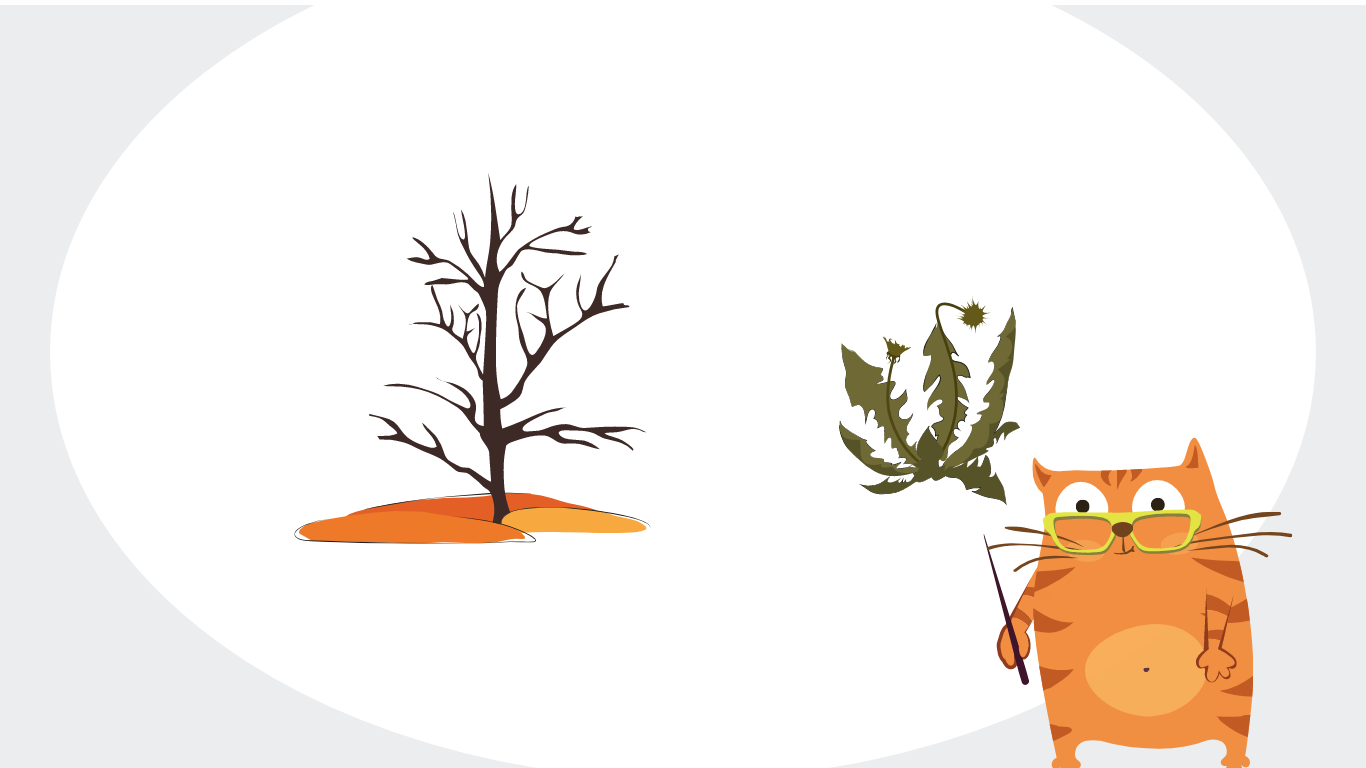
In autumn, the leaves turn yellow and then fall.
Some plants wilt and dry up.
Autumn painted the leaves in different colors and shades.
That is why this season is called «golden autumn».
In autumn, the sun's rays warm the earth less, so it gets cooler than in summer.
The sky is covered with clouds, and it often rains cold.
The days get shorter and the nights get longer.
In autumn, the leaves turn yellow and then fall.
Some plants wilt and dry up.
4
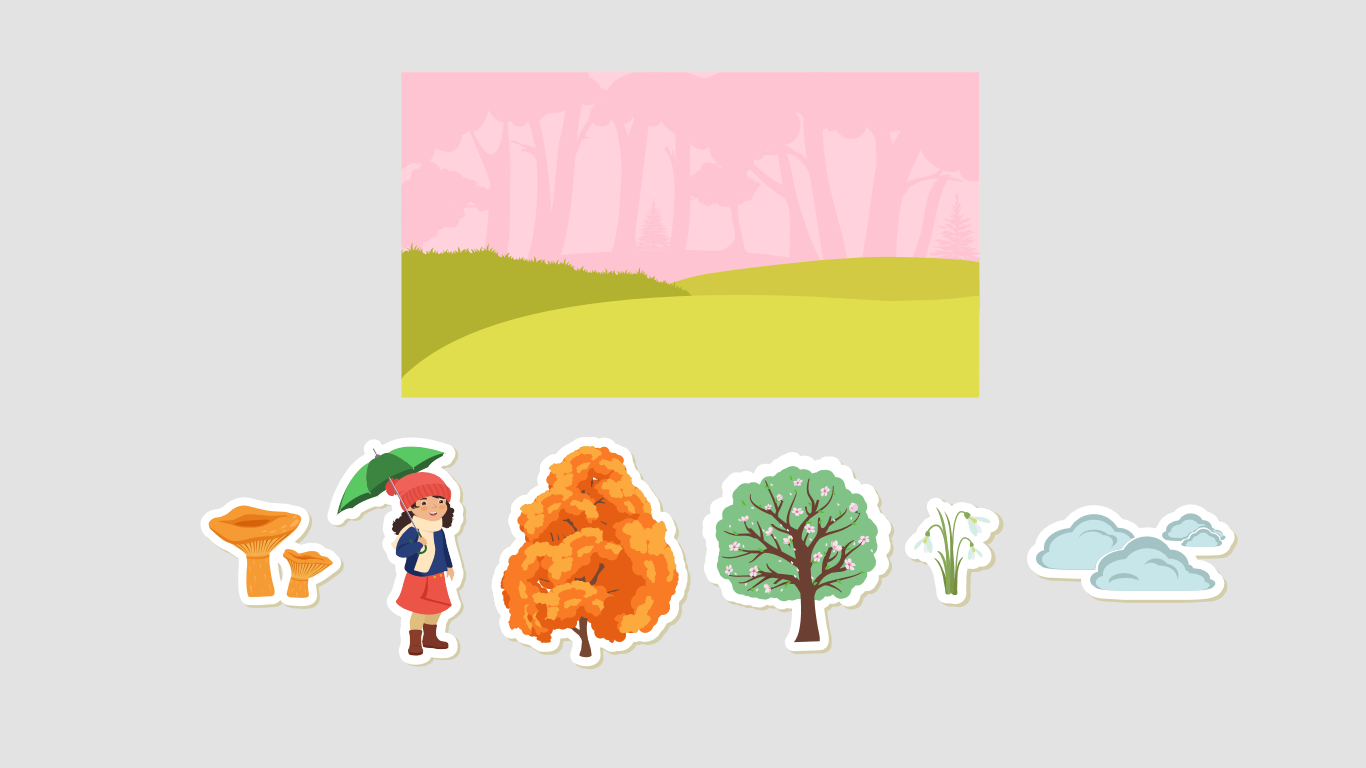
Make an autumn craft.
Move the stickers with autumn signs onto the sheet.
Make an autumn craft.
Move the stickers with autumn signs onto the sheet.
5
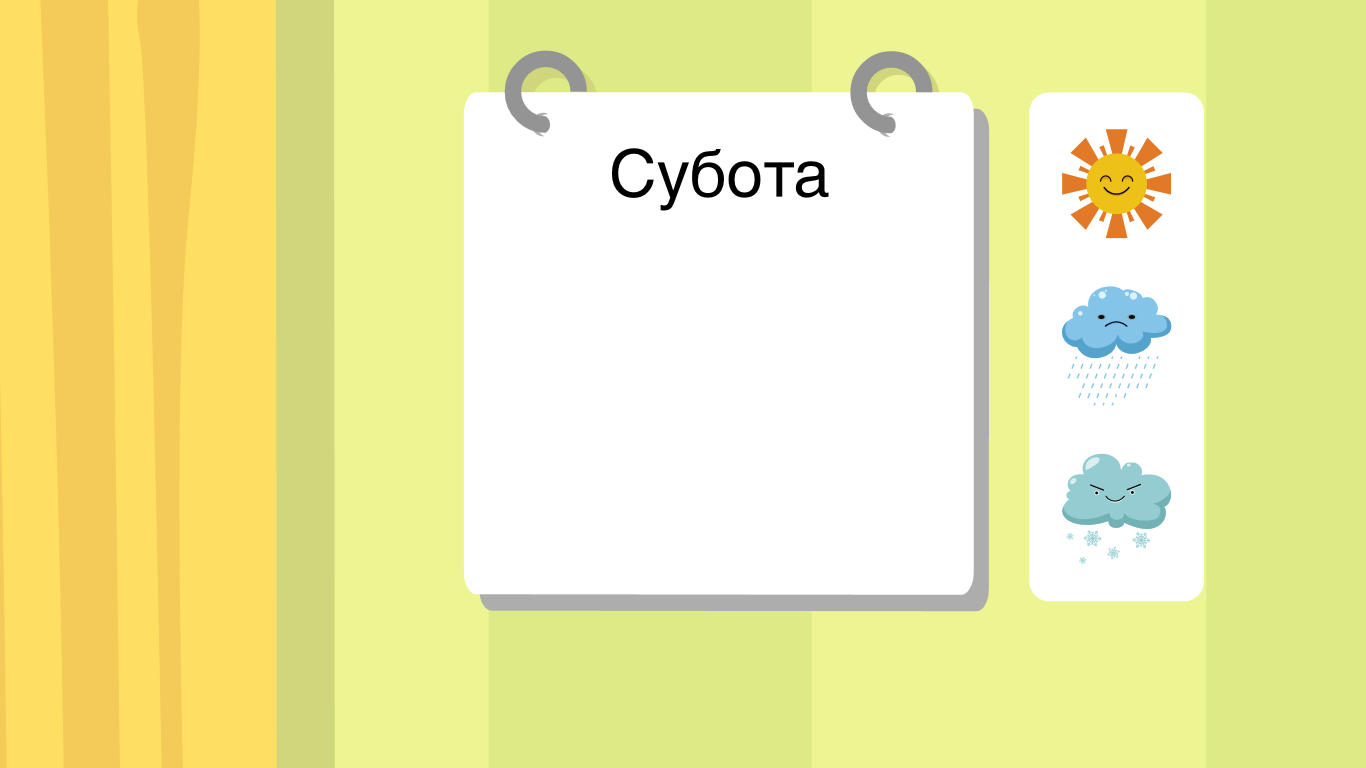
Help Olesya find out what the weather is outside the window on Saturday.
Move the right mark onto the calendar.
Help Olesya find out what the weather is outside the window on Saturday.
Move the right mark onto the calendar.
6
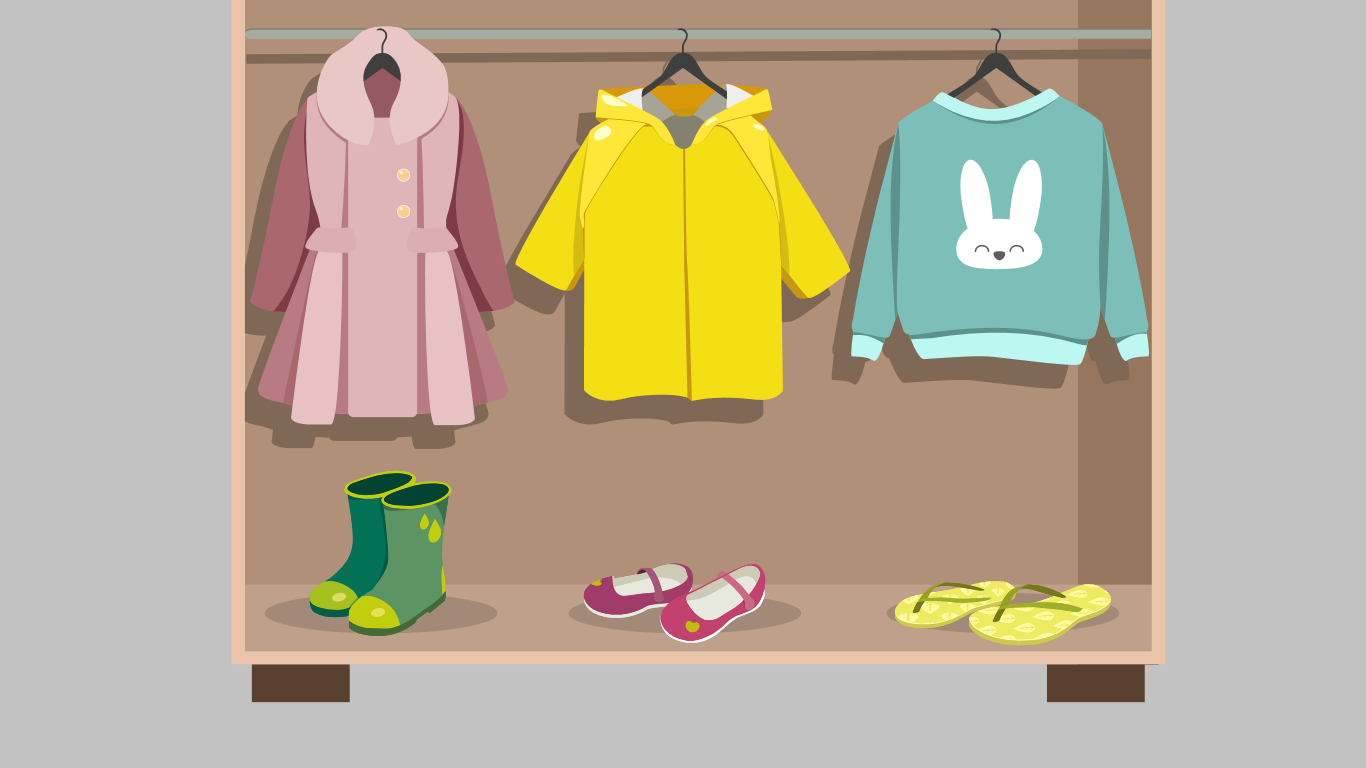
Help Zoryana get ready for an autumn walk in the city.
Choose the right clothes and shoes.
Help Zoryana get ready for an autumn walk in the city.
Choose the right clothes and shoes.
7
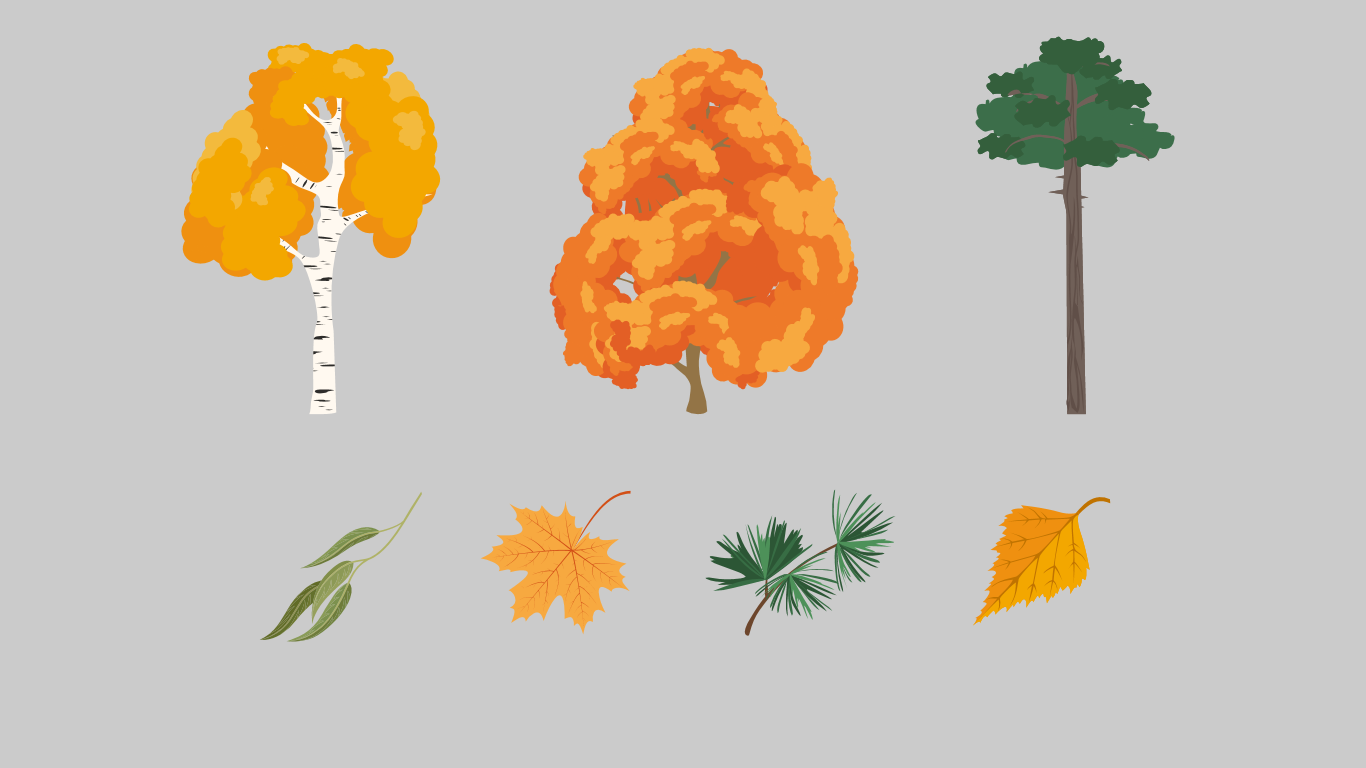
First choose a leaf, then the tree it fell from.
First choose a leaf, then the tree it fell from.
8
Autumn is one of the four seasons.
Let's remember the names of the autumn months and find out what makes them special.
The first month of autumn is September.
Its name is connected with an evergreen plant — heather, which blooms most at this time.
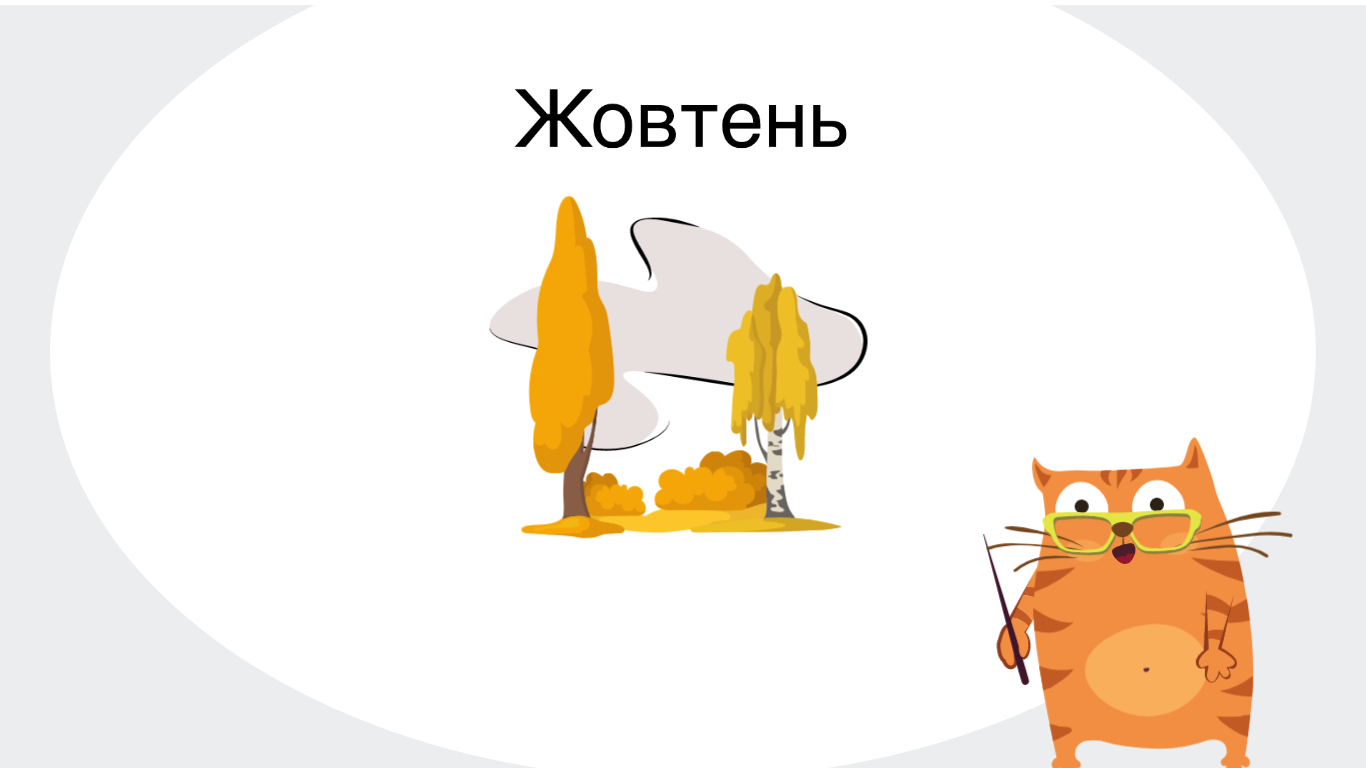
The second month of autumn is October.
It got its name because it dresses trees and bushes in yellow-orange color.
The third month of autumn is November.
Its name is connected with the fact that in this month almost all the leaves fall from the trees and cover the ground like a carpet.
Autumn is one of the four seasons.
Let's remember the names of the autumn months and find out what makes them special.
The first month of autumn is September.
Its name is connected with an evergreen plant — heather, which blooms most at this time.
The second month of autumn is October.
It got its name because it dresses trees and bushes in yellow-orange color.
The third month of autumn is November.
Its name is connected with the fact that in this month almost all the leaves fall from the trees and cover the ground like a carpet.
9
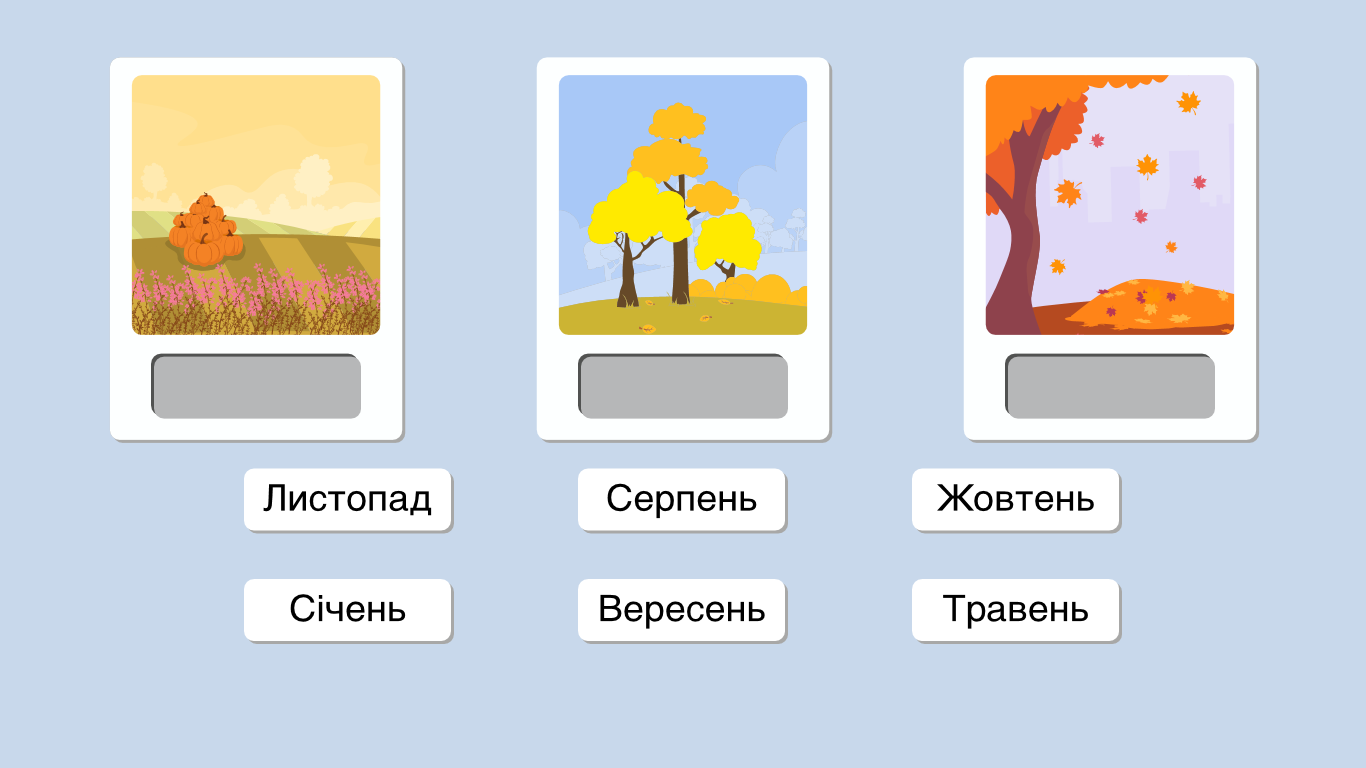
Press on the speakers and listen to the names of the months.
Move the right names of the autumn months to the pictures.
Press on the speakers and listen to the names of the months.
Move the right names of the autumn months to the pictures.
10
When autumn comes, animals' lives change.
They get ready for winter.
Some animals hide under tree bark, in the ground, and in cracks.
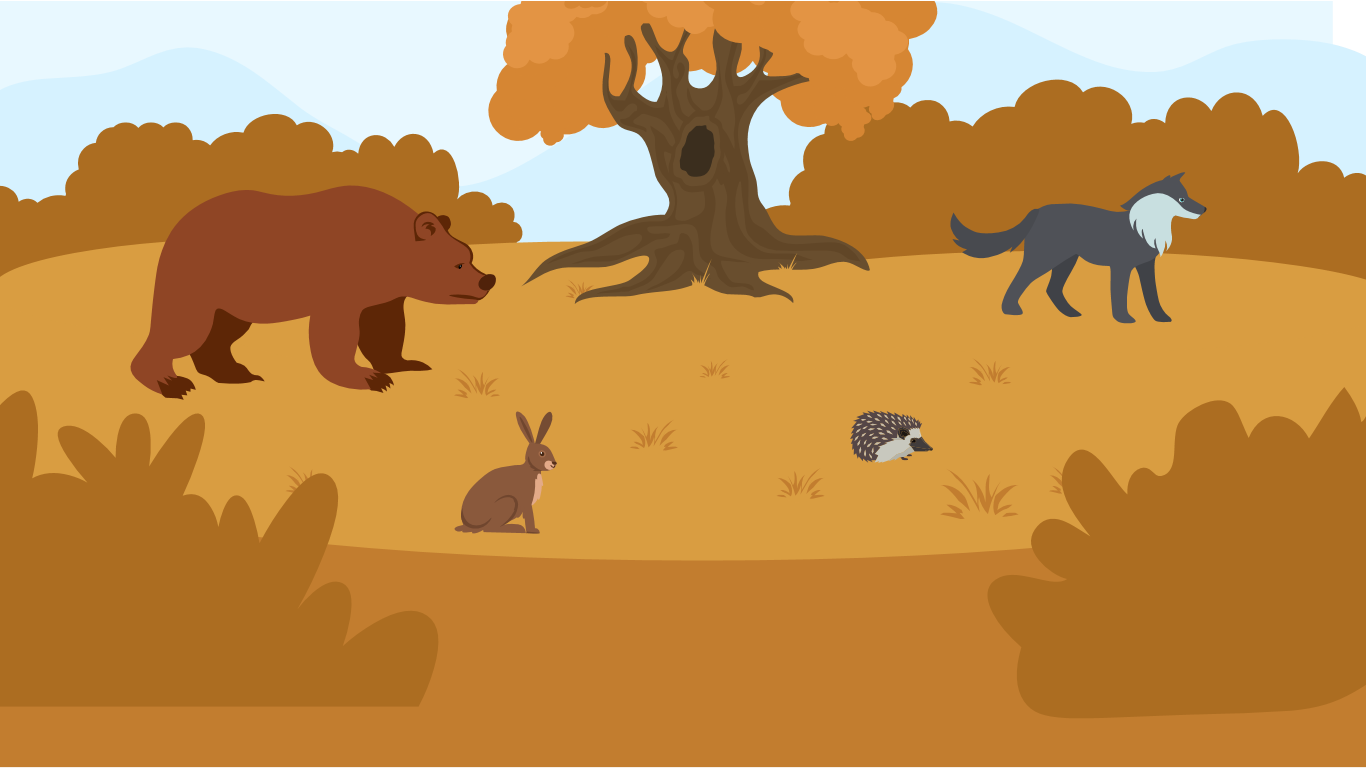
Others — bear, badger, hedgehog — get ready for winter sleep.
They make places for winter, store up fat, which will last them until spring.
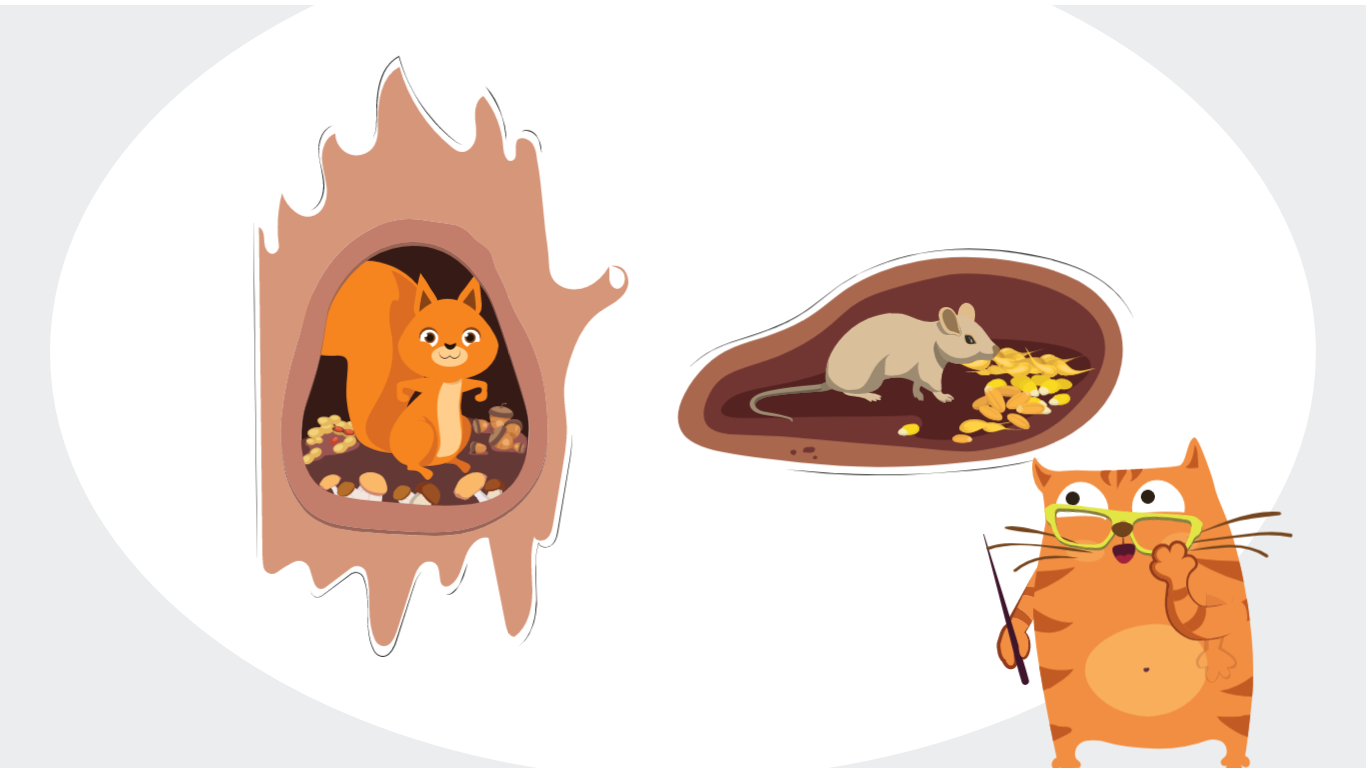
Some animals make food stores.
For example, the squirrel fills its holes with acorns, nuts, and dried mushrooms.
The mouse carries grain to its burrow.
There are animals that do not change their behavior.
For example,
fox,
wolf,
wild boar,
hare,
deer
spend all their time looking for food.
In autumn, their fur becomes thicker and warmer.
When autumn comes, animals' lives change.
They get ready for winter.
Some animals hide under tree bark, in the ground, and in cracks.
Others — bear, badger, hedgehog — get ready for winter sleep.
They make places for winter, store up fat, which will last them until spring.
Some animals make food stores.
For example, the squirrel fills its holes with acorns, nuts, and dried mushrooms.
The mouse carries grain to its burrow.
There are animals that do not change their behavior.
For example,
fox,
wolf,
wild boar,
hare,
deer
spend all their time looking for food.
In autumn, their fur becomes thicker and warmer.
11
Choose the animals that go to sleep for the winter.
Choose the animals that go to sleep for the winter.
12
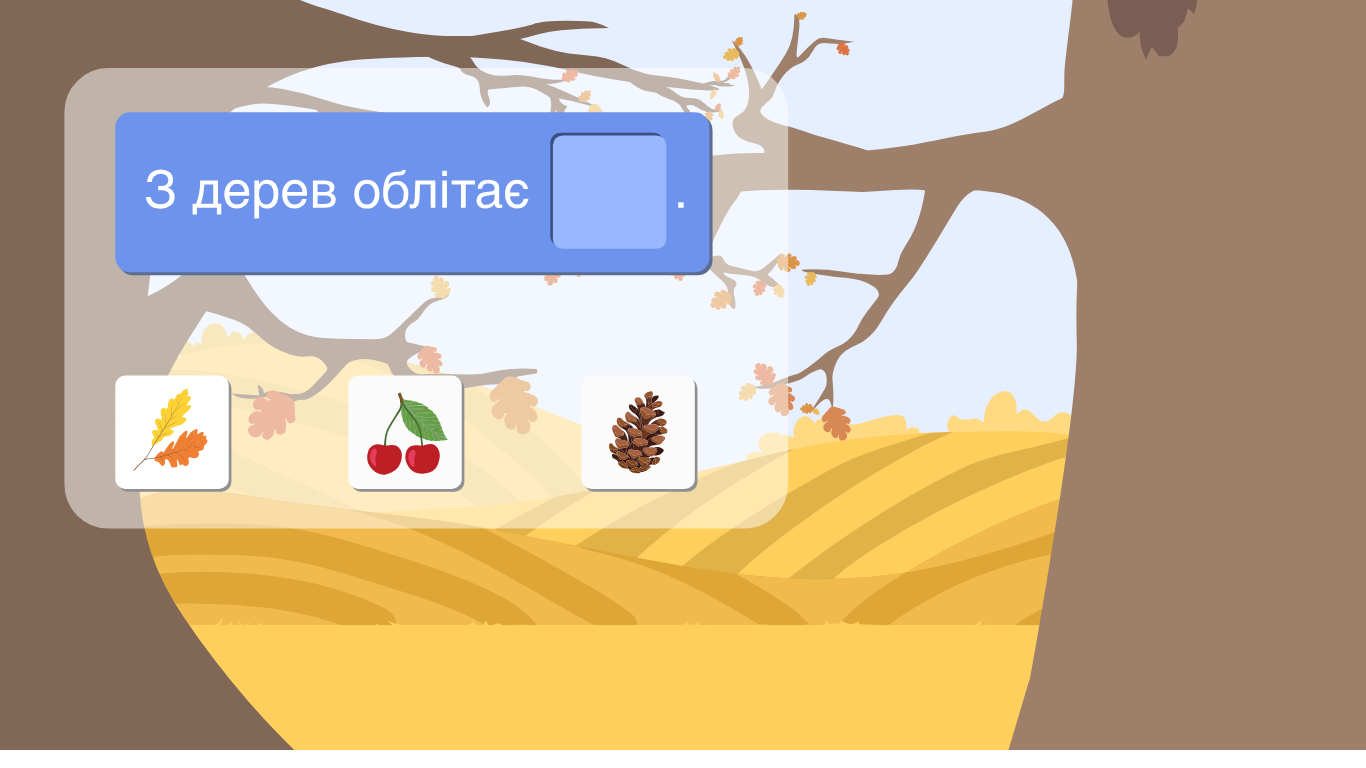
Finish the sentence.
Choose the right picture.
Finish the sentence.
Choose the right picture.
13
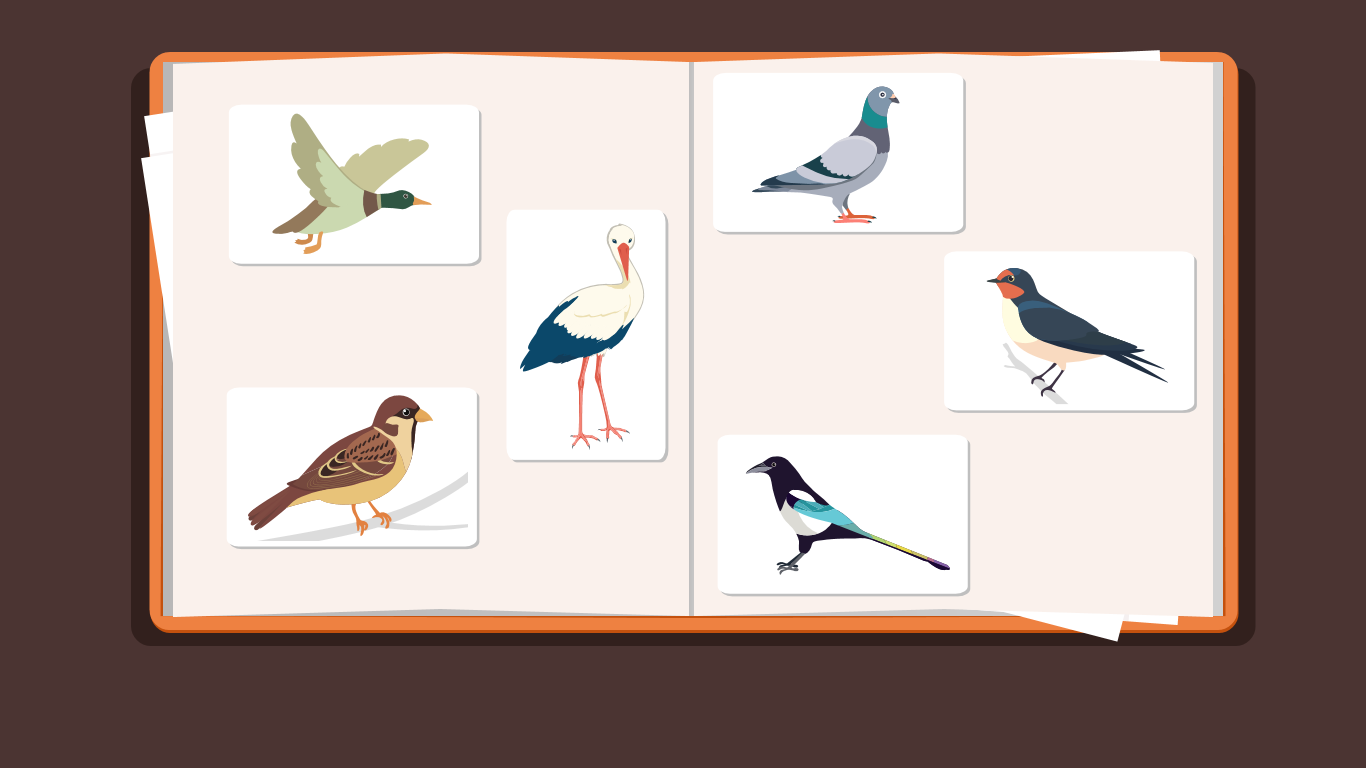
Birds get ready for winter in different ways.
Because of the cold, no insects and no plants, some birds gather in flocks and fly away to warm lands.
These are swallow,
stork,
starling,
wild duck,
quail
and many others.
These are migratory birds.
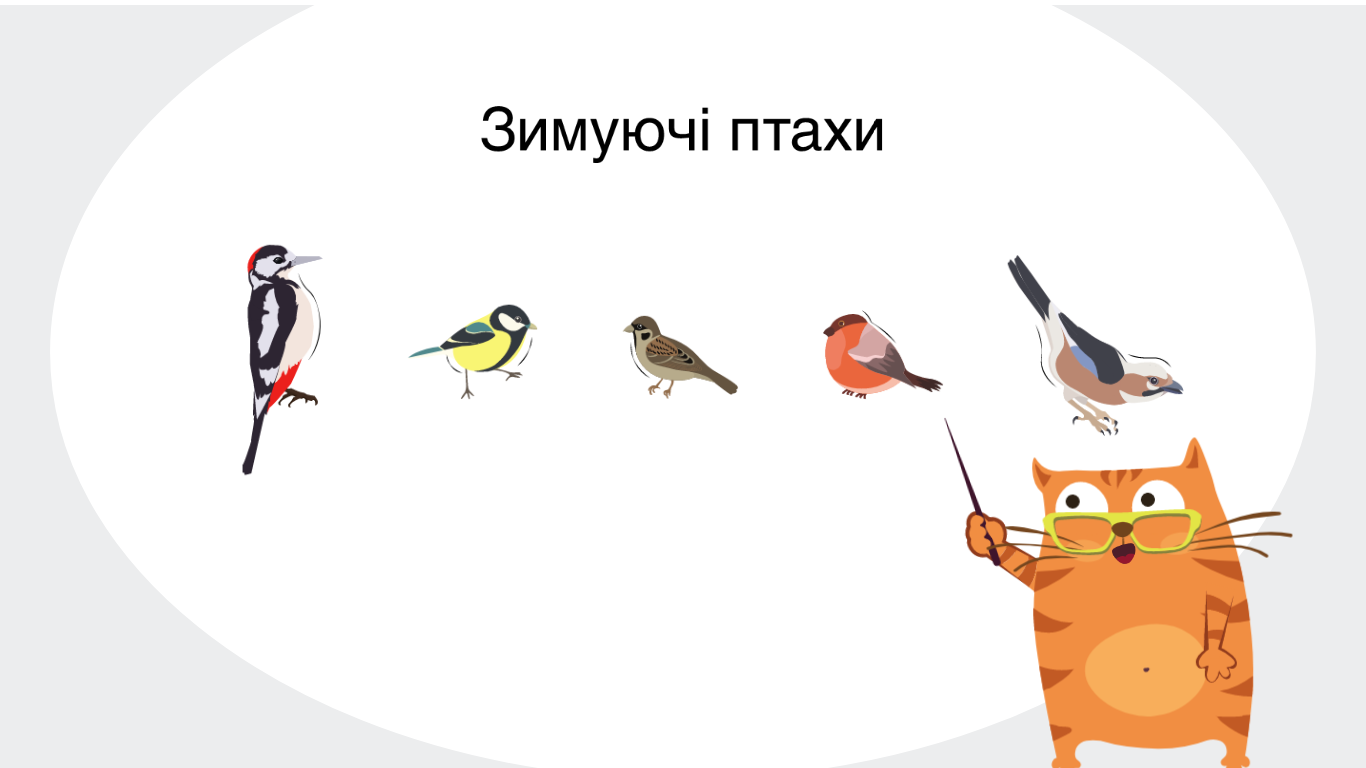
Other birds —
woodpecker,
titmouse,
sparrow,
bullfinch,
jay
stay for the winter.
These are wintering birds.
When it is very cold, some of them come closer to people's homes to find food.
We need to make bird feeders for such birds.
Birds get ready for winter in different ways.
Because of the cold, no insects and no plants, some birds gather in flocks and fly away to warm lands.
These are swallow,
stork,
starling,
wild duck,
quail
and many others.
These are migratory birds.
Other birds —
woodpecker,
titmouse,
sparrow,
bullfinch,
jay
stay for the winter.
These are wintering birds.
When it is very cold, some of them come closer to people's homes to find food.
We need to make bird feeders for such birds.
14
Choose the stickers with pictures of migratory birds.
Choose the stickers with pictures of migratory birds.
15
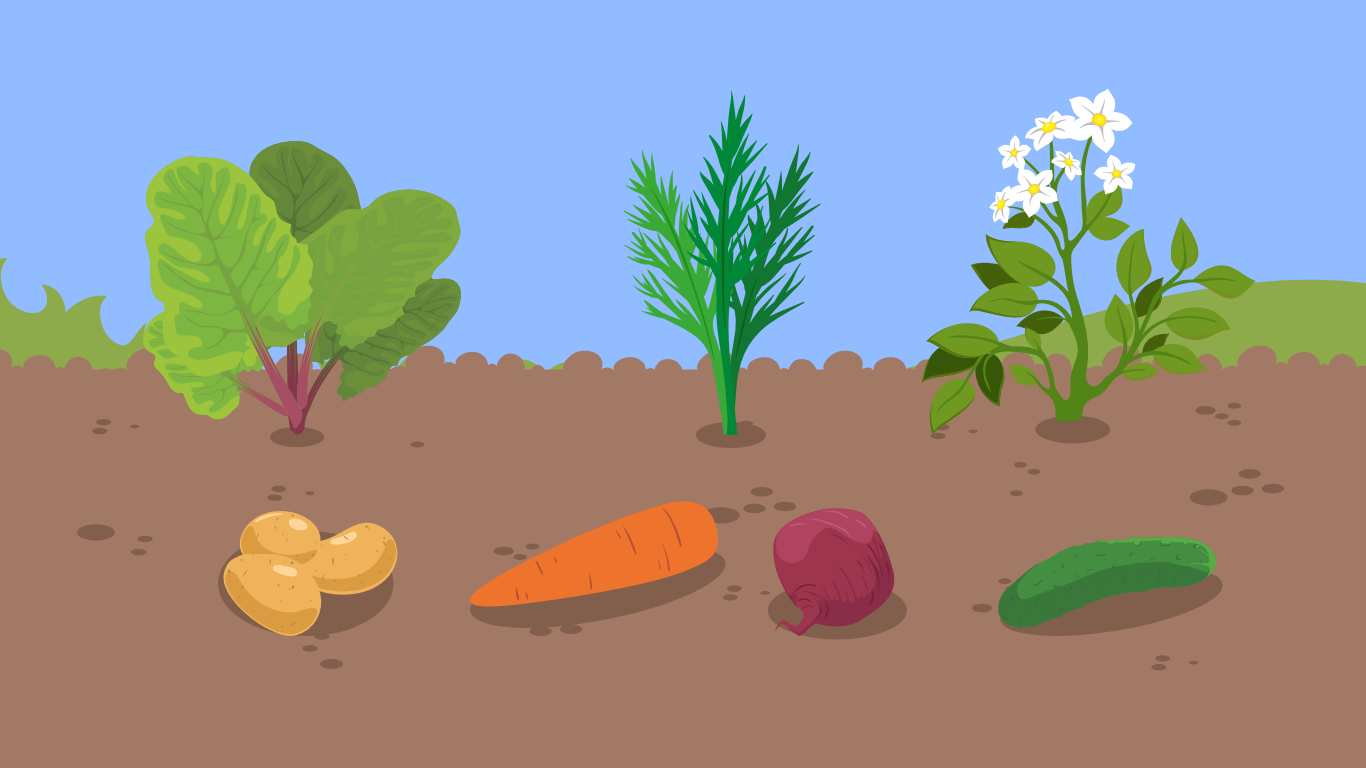
Autumn is the time to harvest.
First choose the fruit, then its stem.
Autumn is the time to harvest.
First choose the fruit, then its stem.
16
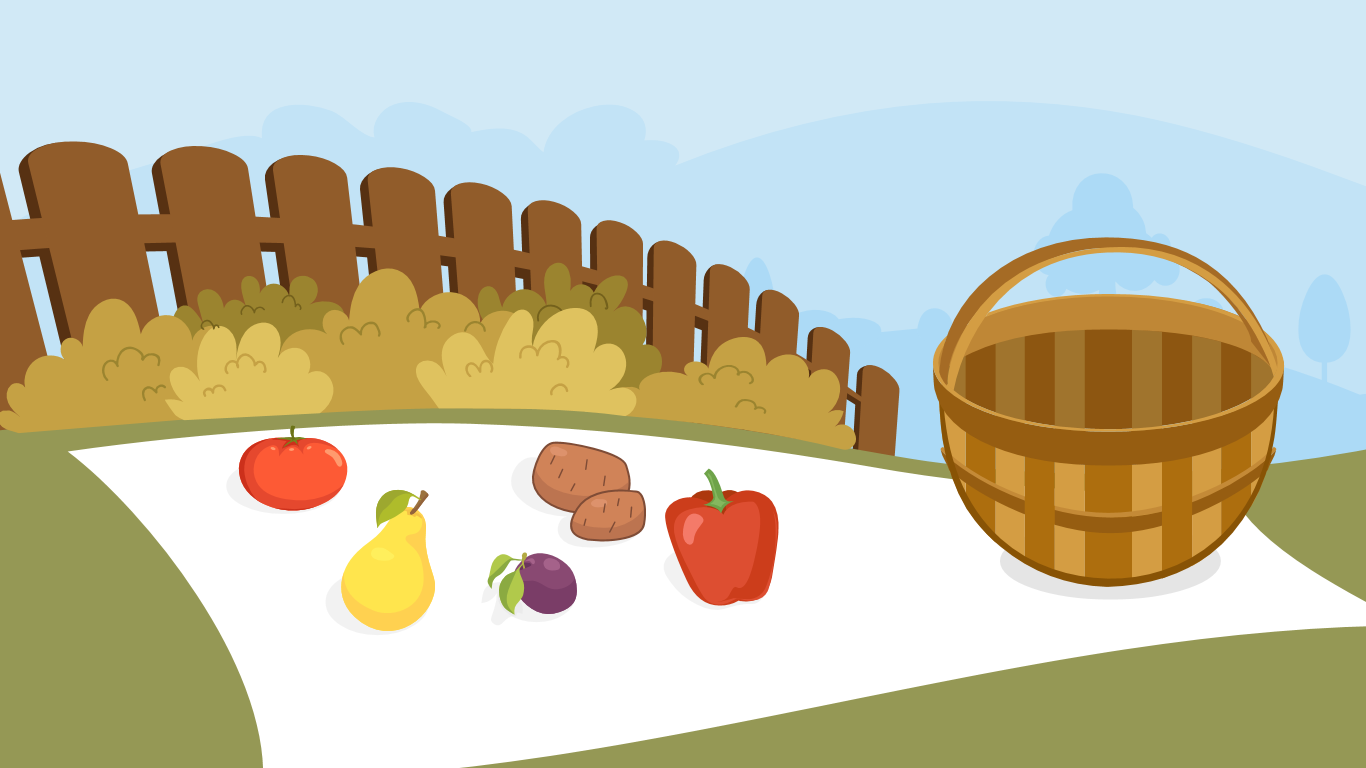
Move the vegetables into the basket.
Move the vegetables into the basket.
17
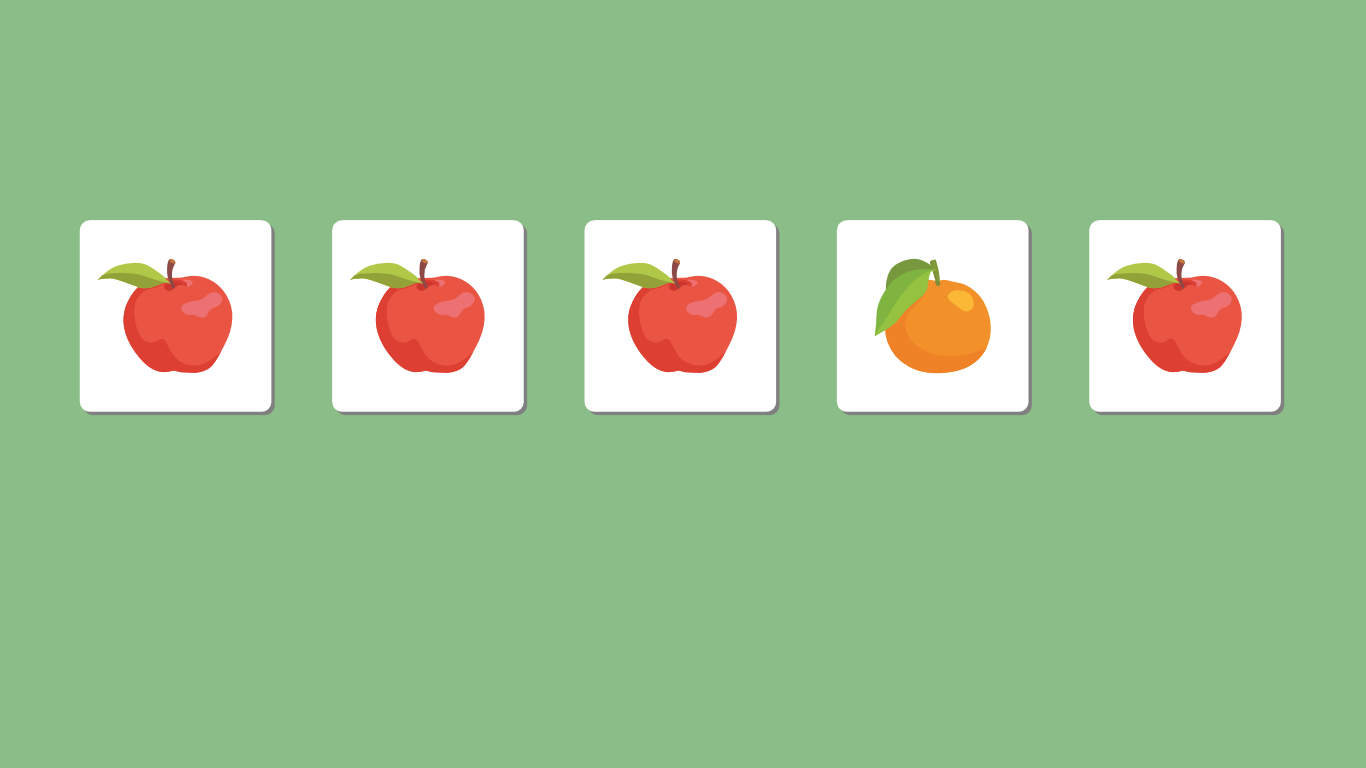
Choose the extra fruit.
Choose the extra fruit.
18
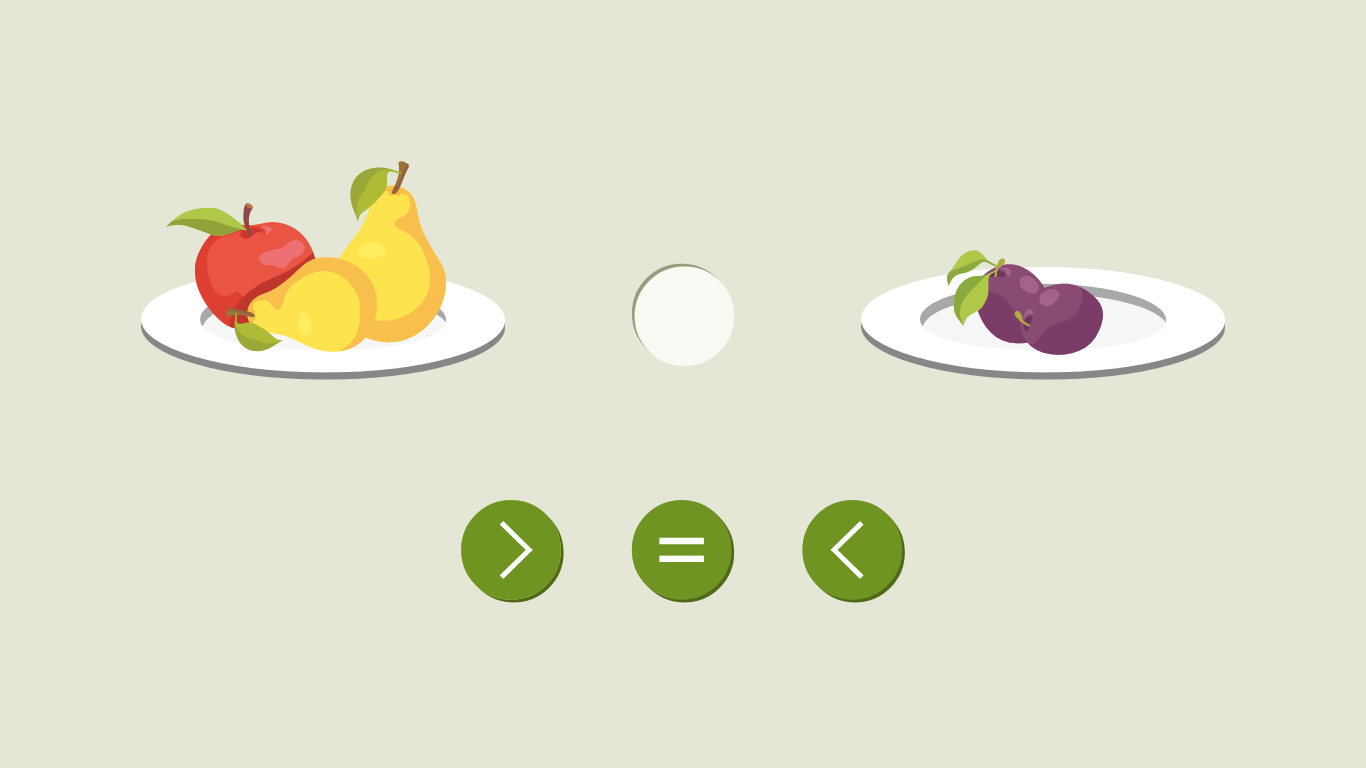
Find what is more.
Move the right sign.
Find what is more.
Move the right sign.