Theme Tasks catalog
Sentence. Helper words. Getting to know the marks at the end of a sentence
• You will learn what a «sentence» is and how many words it can have;
• You will find out that the first word in a sentence always starts with a capital letter, and at the end of a sentence we put punctuation marks: a full stop, a question mark, an exclamation mark;
• You will get to know helper words in a sentence.
• You will find out that the first word in a sentence always starts with a capital letter, and at the end of a sentence we put punctuation marks: a full stop, a question mark, an exclamation mark;
• You will get to know helper words in a sentence.
1
We hear, say, or read different words.
For example,
«школа»,
«діти»,
«йти».
If words are joined by one idea, they make a sentence.
A sentence can have one, two, three or more words.
For example:
«Діти йдуть до школи.»
A sentence always starts with a capital letter.
There are helper words in a sentence. They help us join other words by meaning.
For example:
«в»,
«на»,
«із»,
«до»,
«у»,
«над»,
«під»,
«і»,
«а»,
«але».
We can show a sentence using a scheme.
Words are shown by long horizontal lines,
and helper words are shown by short horizontal lines.
The start of a sentence is shown by a vertical line joined to the line of the first word.
Let's show the scheme of the sentence
«Діти йдуть до школи».
«Діти»
«йдуть»
«до»
«школи.»
If in a sentence we tell about something,
then we put a full stop at the end.
For example:
«Діти йдуть до школи.»
If we say a sentence with a stronger voice,
then we put an exclamation mark at the end.
«Діти йдуть до школи!»
If in a sentence we ask about something,
then we put a question mark at the end.
«Діти йдуть до школи?»
We hear, say, or read different words.
For example,
«школа»,
«діти»,
«йти».
If words are joined by one idea, they make a sentence.
A sentence can have one, two, three or more words.
For example:
«Діти йдуть до школи.»
A sentence always starts with a capital letter.
There are helper words in a sentence. They help us join other words by meaning.
For example:
«в»,
«на»,
«із»,
«до»,
«у»,
«над»,
«під»,
«і»,
«а»,
«але».
We can show a sentence using a scheme.
Words are shown by long horizontal lines,
and helper words are shown by short horizontal lines.
The start of a sentence is shown by a vertical line joined to the line of the first word.
Let's show the scheme of the sentence
«Діти йдуть до школи».
«Діти»
«йдуть»
«до»
«школи.»
If in a sentence we tell about something,
then we put a full stop at the end.
For example:
«Діти йдуть до школи.»
If we say a sentence with a stronger voice,
then we put an exclamation mark at the end.
«Діти йдуть до школи!»
If in a sentence we ask about something,
then we put a question mark at the end.
«Діти йдуть до школи?»
2
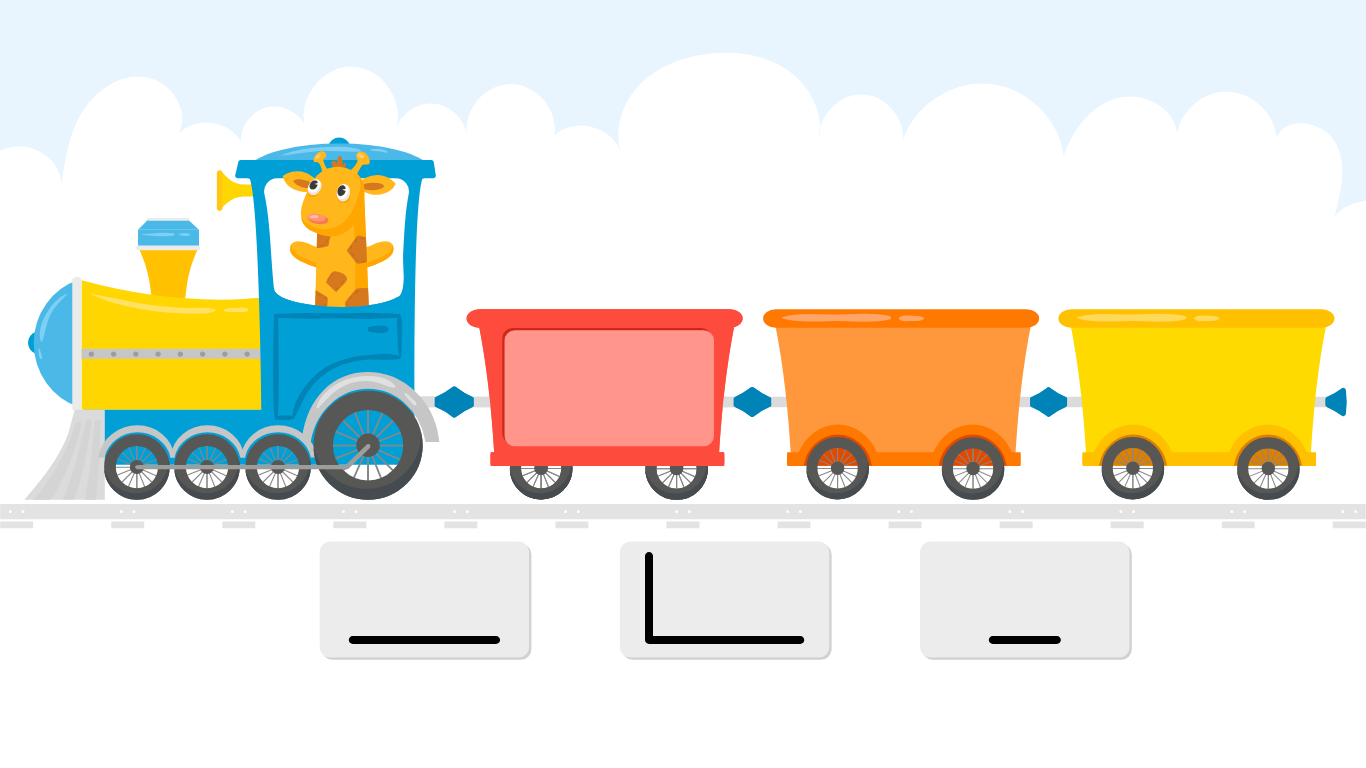
Send the train.
Move the scheme picture of the first word in the sentence.
Send the train.
Move the scheme picture of the first word in the sentence.
3
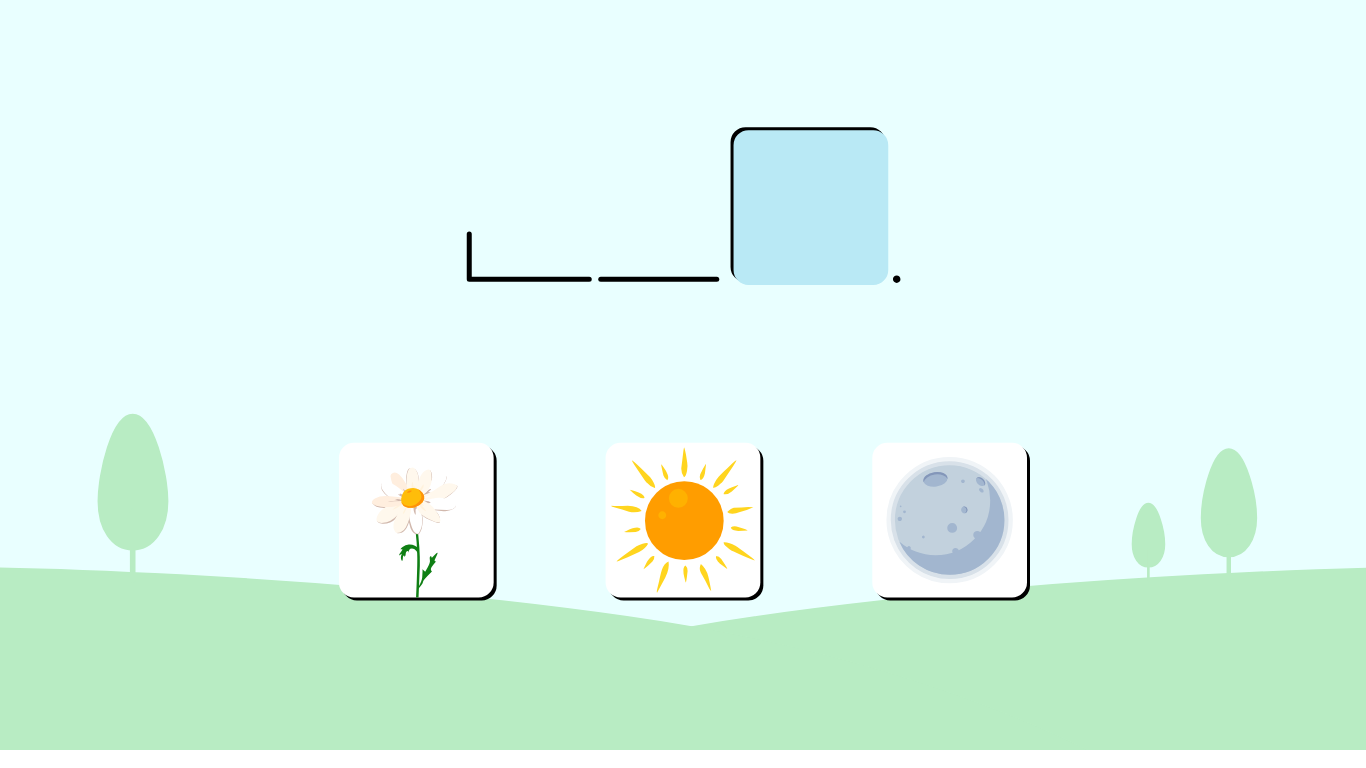
Complete the sentence scheme:
«Світить яскраве сонечко.»
Move the right picture.
Complete the sentence scheme:
«Світить яскраве сонечко.»
Move the right picture.
4
Make a sentence scheme.
«Летить літак.»
Make a sentence scheme.
«Летить літак.»

5
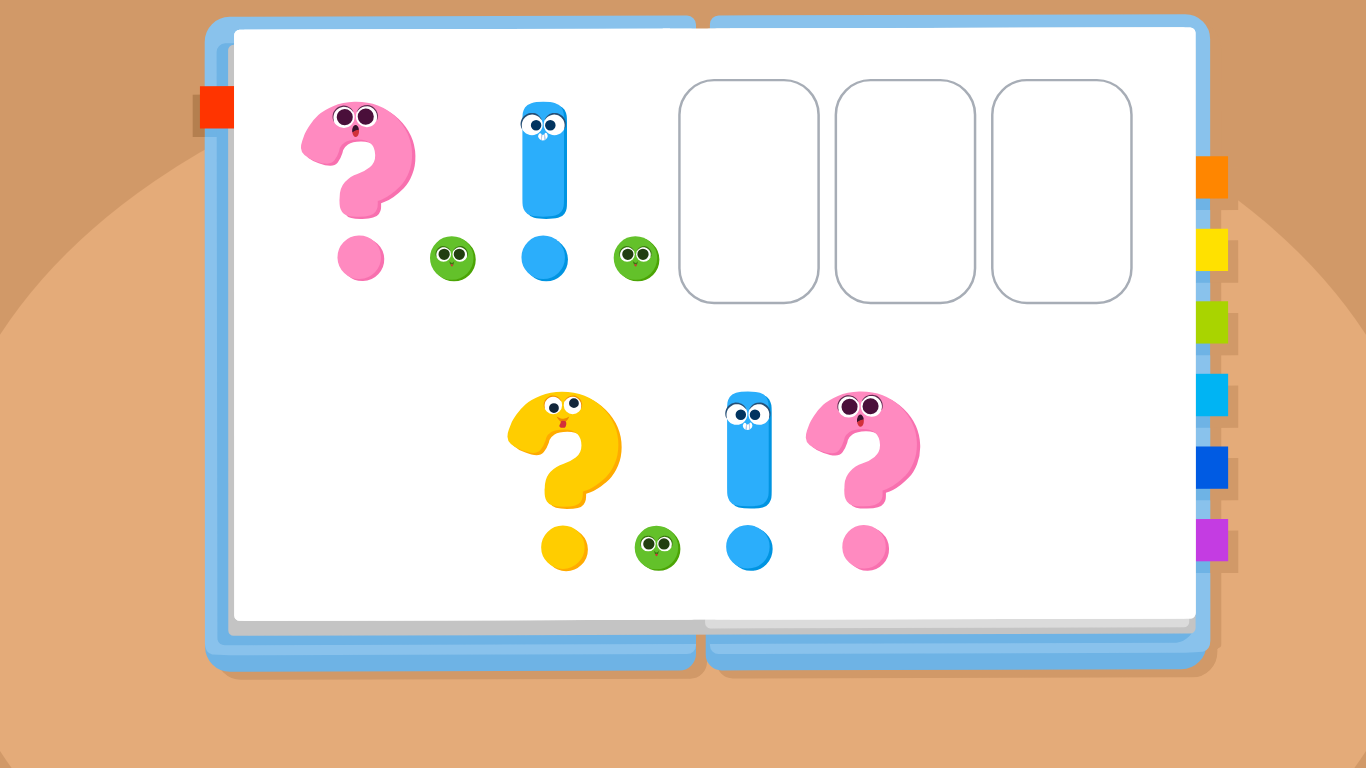
Continue the sequence.
Move the right marks.
Continue the sequence.
Move the right marks.
6
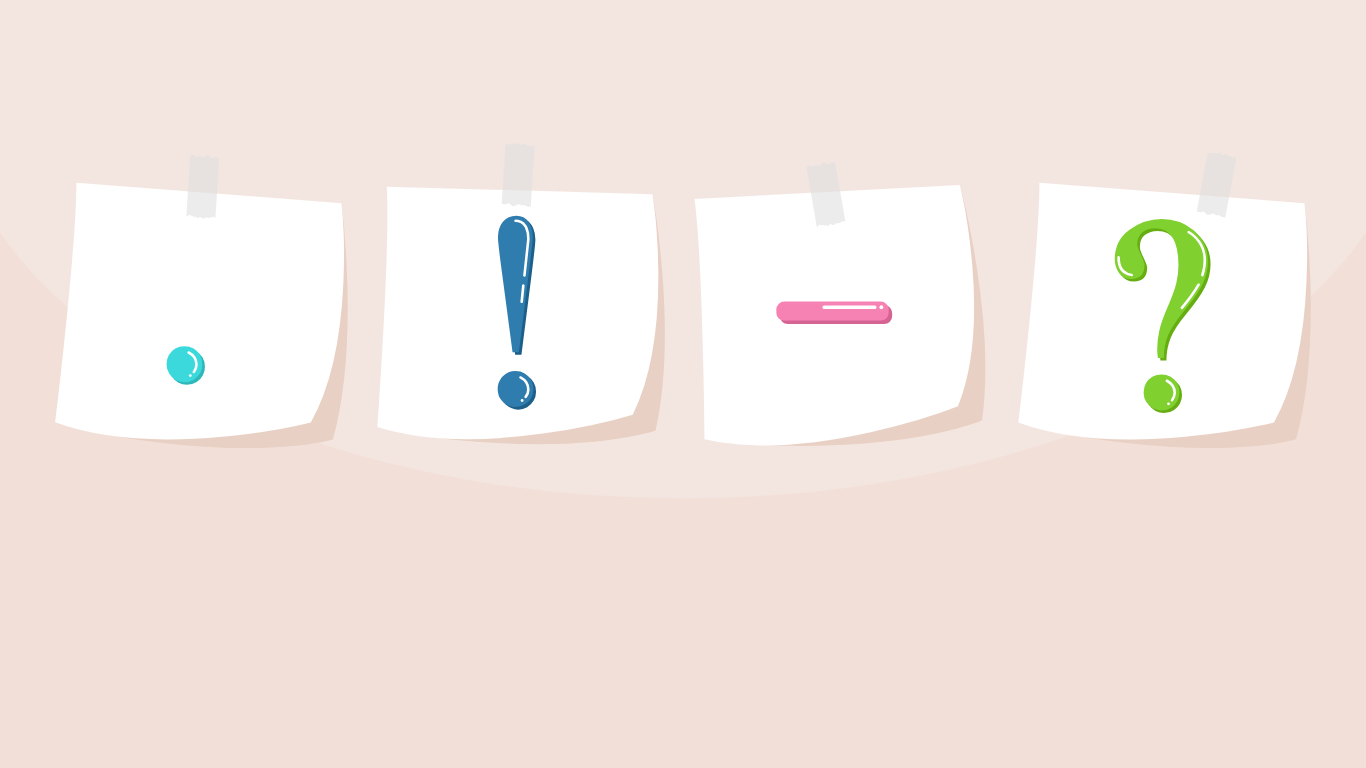
Think and choose the marks we put at the end of a sentence.
Think and choose the marks we put at the end of a sentence.
7
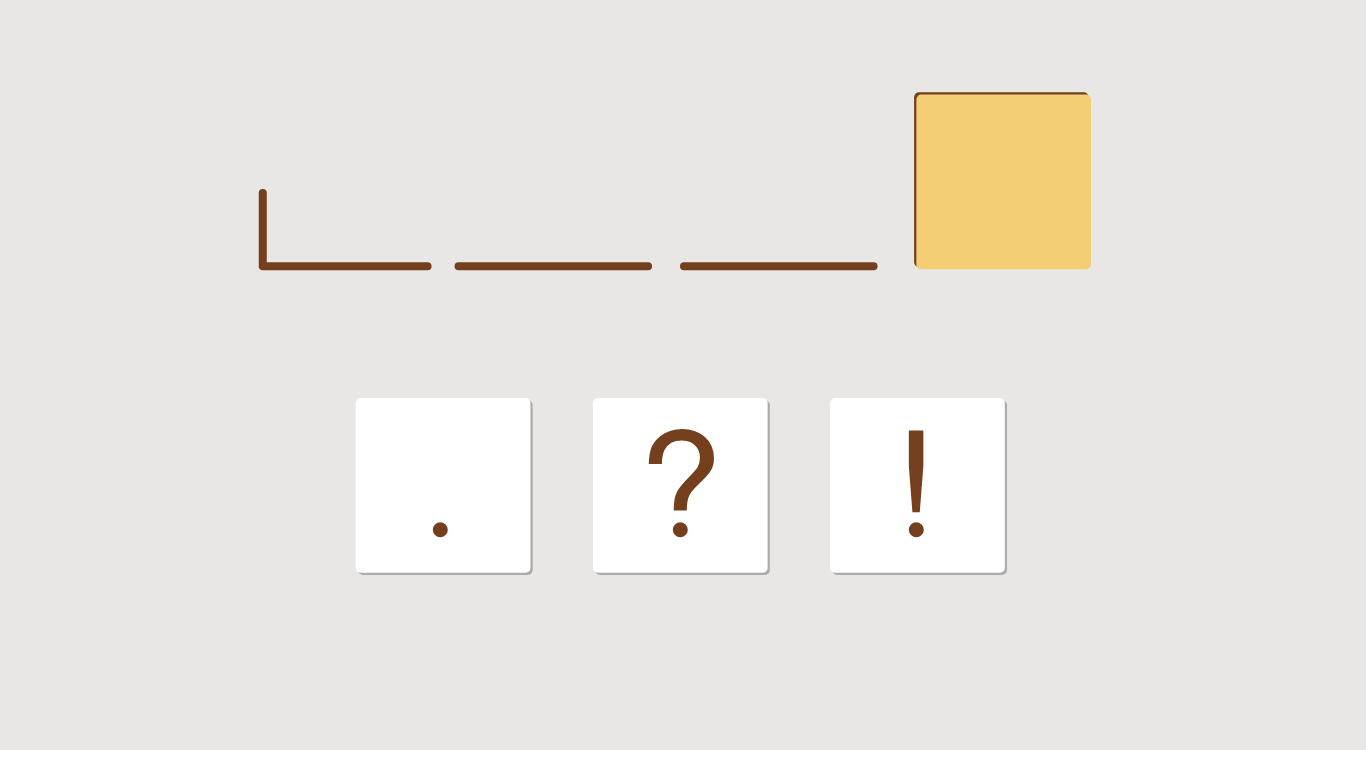
Complete the sentence scheme:
«Ведмедик їсть мед?»
Move the right mark.
Complete the sentence scheme:
«Ведмедик їсть мед?»
Move the right mark.
8
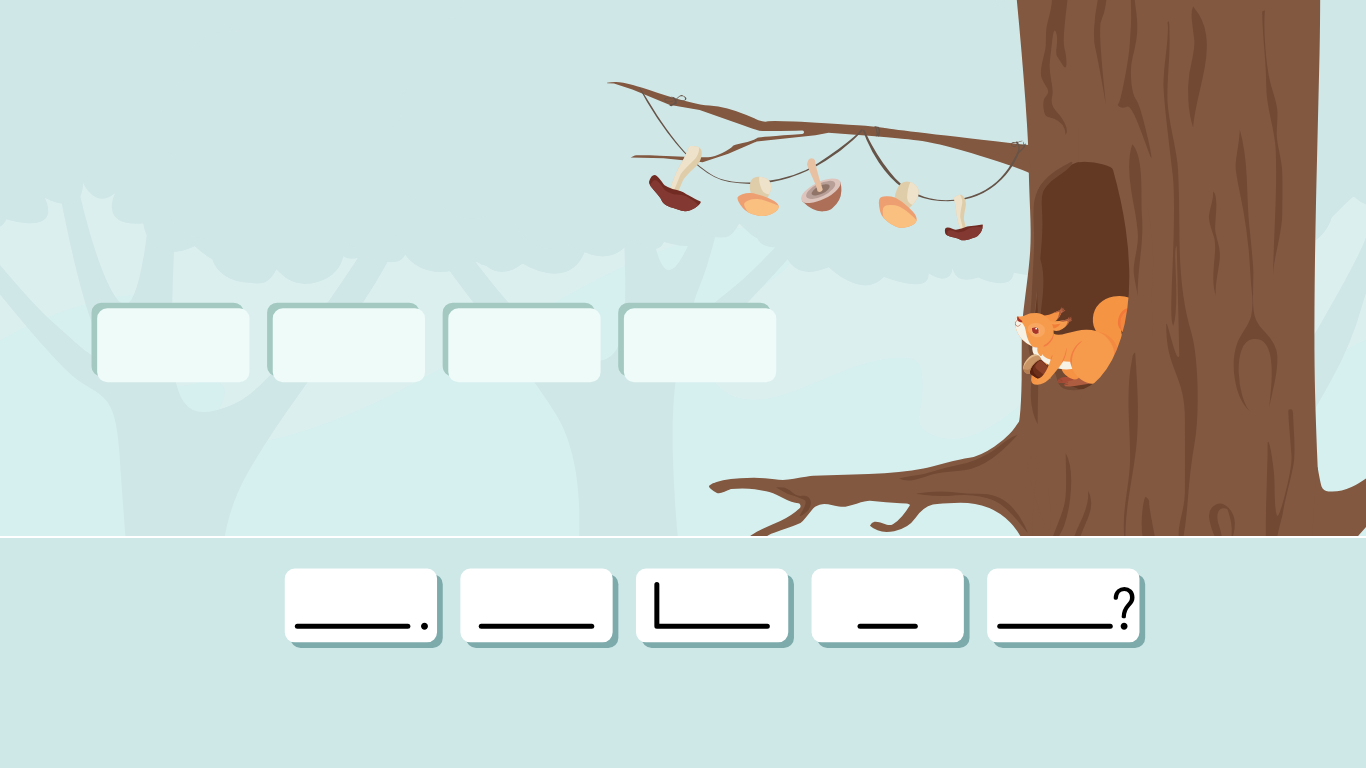
Make a sentence scheme.
«Білка сидить у дуплі.»
Make a sentence scheme.
«Білка сидить у дуплі.»
9
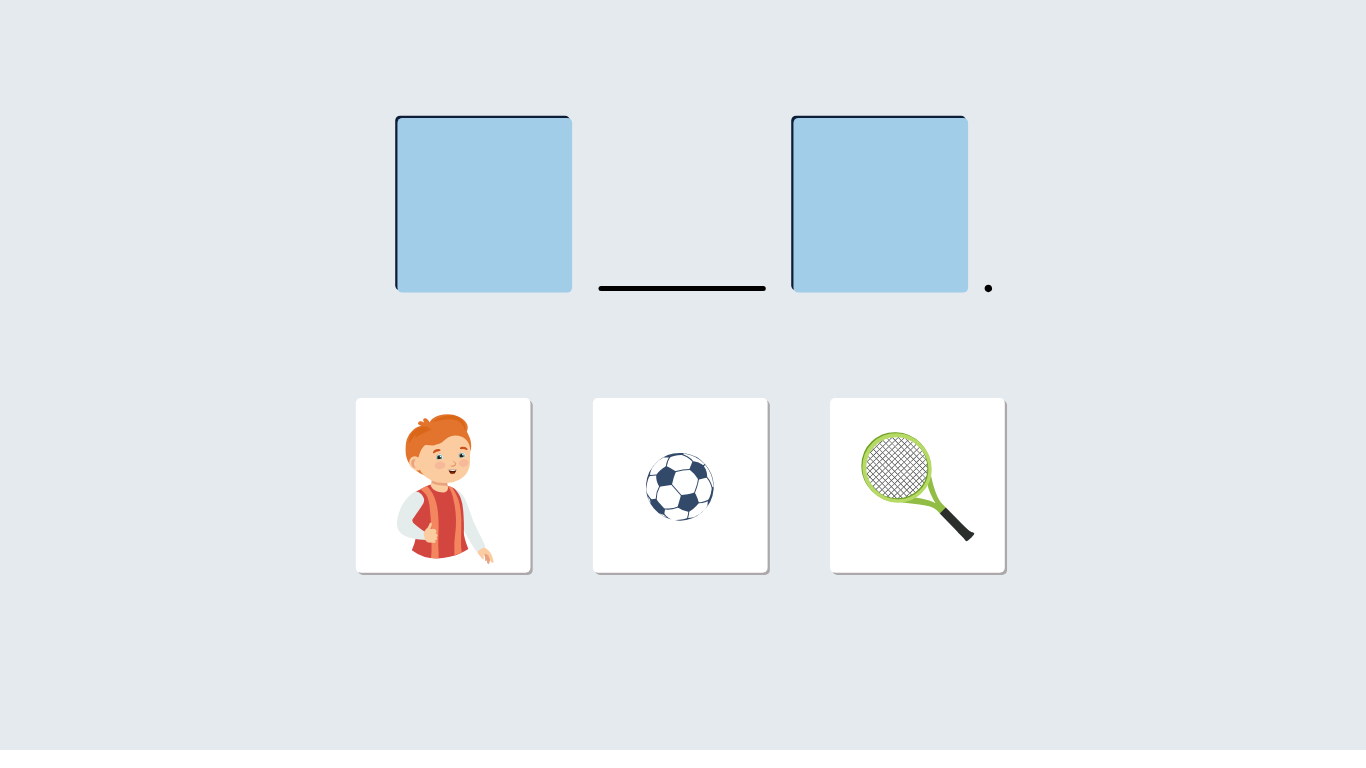
Complete the sentence scheme:
«Тарасик грається м’ячем.»
Move the right pictures.
Complete the sentence scheme:
«Тарасик грається м’ячем.»
Move the right pictures.